
The standard choice for non-surgical hair restoration has long been PRP, but the most effective path to density might actually be its slower, more sophisticated successor. We understand the exhaustion that comes from navigating an endless “alphabet soup” of treatments while watching your reflection change. You’ve likely tried the topical foams and considered the risks of surgery, yet you’re searching for something that feels more aligned with your body’s natural rhythms. If you are looking for a way to stabilize thinning without synthetic additives, prf injections for hair loss represent a significant shift in regenerative medicine.
True vitality isn’t found in a quick fix; it’s cultivated at the cellular level through sustained nourishment. This article explores how Platelet-Rich Fibrin (PRF) creates a biological scaffold that releases growth factors over several days rather than minutes. You’ll discover the clinical evidence, including a 2024 study where 73% of patients saw significant improvements. We will break down the science of the fibrin matrix and compare it to traditional PRP to help you make an empowered choice for your long-term wellness and hair density.
Key Takeaways
- Understand how the unique fibrin matrix acts as a biological scaffold, facilitating a sustained release of essential growth factors for up to one week.
- Learn why the low-speed centrifugation used in prf injections for hair loss preserves vital white blood cells and stem cells for superior scalp rejuvenation.
- Identify the differences between the liquid state of PRP and the gel-like matrix of PRF to determine which regenerative path aligns with your restoration goals.
- Gain clarity on the clinical journey, including the recommended session frequency and what to expect during the transition from stabilization to visible regrowth.
- See how a precision scalp analysis and NP-led clinical care at AgeRefine provide a sophisticated, medical-boutique experience for your hair restoration journey.
Understanding PRF Injections for Hair Loss: The Next Generation of Restoration
True restoration is an internal process, not a superficial mask. While topical solutions offer temporary support, the most profound changes occur when we harness the body’s innate capacity for self-repair. In the evolution of regenerative aesthetics, prf injections for hair loss represent a significant milestone. This treatment moves beyond the limitations of first-generation concentrates to provide a more sustained, biological intervention for those experiencing thinning. By focusing on cellular health, we can address the underlying causes of hair loss rather than just masking the symptoms.
What Exactly is Platelet-Rich Fibrin?
Platelet-Rich Fibrin is often referred to as a second-generation platelet concentrate. It represents a refined approach to autologous therapy, where we use your own blood to stimulate healing. To understand the foundation of this technology, one might ask, What is Platelet-Rich Fibrin (PRF)? Essentially, it is a complex matrix formed by spinning blood at a specific, low-speed rotation. This process is distinct because it requires no chemical additives or anticoagulants. Because we don’t use these synthetics, the product remains entirely natural. The result is a gel-like scaffold rich in white blood cells and mesenchymal stem cells, which are critical for tissue regeneration and long-term follicle health. The same regenerative fibrin technology that revitalizes hair follicles is also used in PRF under eye treatment in Irvine, where it restores volume and brightness to thinning under-eye skin through the same bio-stimulation principles.
How PRF Targets the Root Cause of Thinning
Hair loss often stems from follicle miniaturization, a process where the hair bulb shrinks and produces increasingly thinner strands. PRF addresses this decline at the cellular level by delivering a concentrated dose of growth factors directly to the scalp. These proteins encourage follicles to transition from the dormant resting phase back into the active growth phase. Beyond just stimulation, PRF significantly improves scalp vascularization. Enhanced blood flow ensures that each follicle receives the oxygen and nutrients necessary to produce a thicker, more resilient hair shaft. It’s a methodical approach to stabilizing hair loss while fostering a healthier environment for regrowth.
Ideal candidates in Orange County are typically individuals experiencing mild to moderate androgenetic alopecia. If you’ve noticed a widening part, a receding hairline, or general thinning, PRF offers a proactive way to intervene. It is a preferred choice for those who value authenticity and wish to avoid the downtime of invasive surgery. For those still weighing their options, our comprehensive guide to non surgical hair loss treatment explores the full spectrum of regenerative alternatives available in 2026, from exosome matrices to advanced platelet concentrates. This treatment is particularly effective for those whose follicles are still active but underperforming. By prioritizing cellular health over temporary fixes, patients can achieve a natural-looking restoration that reflects their internal vitality.
The Biological Edge: Why the Fibrin Matrix Changes Everything
Nature rarely works in bursts; it thrives on consistency. In the world of regenerative medicine, the most effective treatments are those that mimic the body’s natural healing rhythms. Traditional PRP provides a rapid surge of growth factors that the body often clears before the hair follicles can fully utilize them. In contrast, prf injections for hair loss create a complex, three-dimensional fibrin scaffold that remains at the injection site. This matrix acts as a biological reservoir, protecting delicate proteins and cells from immediate degradation while providing a foundation for new growth.
Growth Factor Longevity: PRP vs. PRF
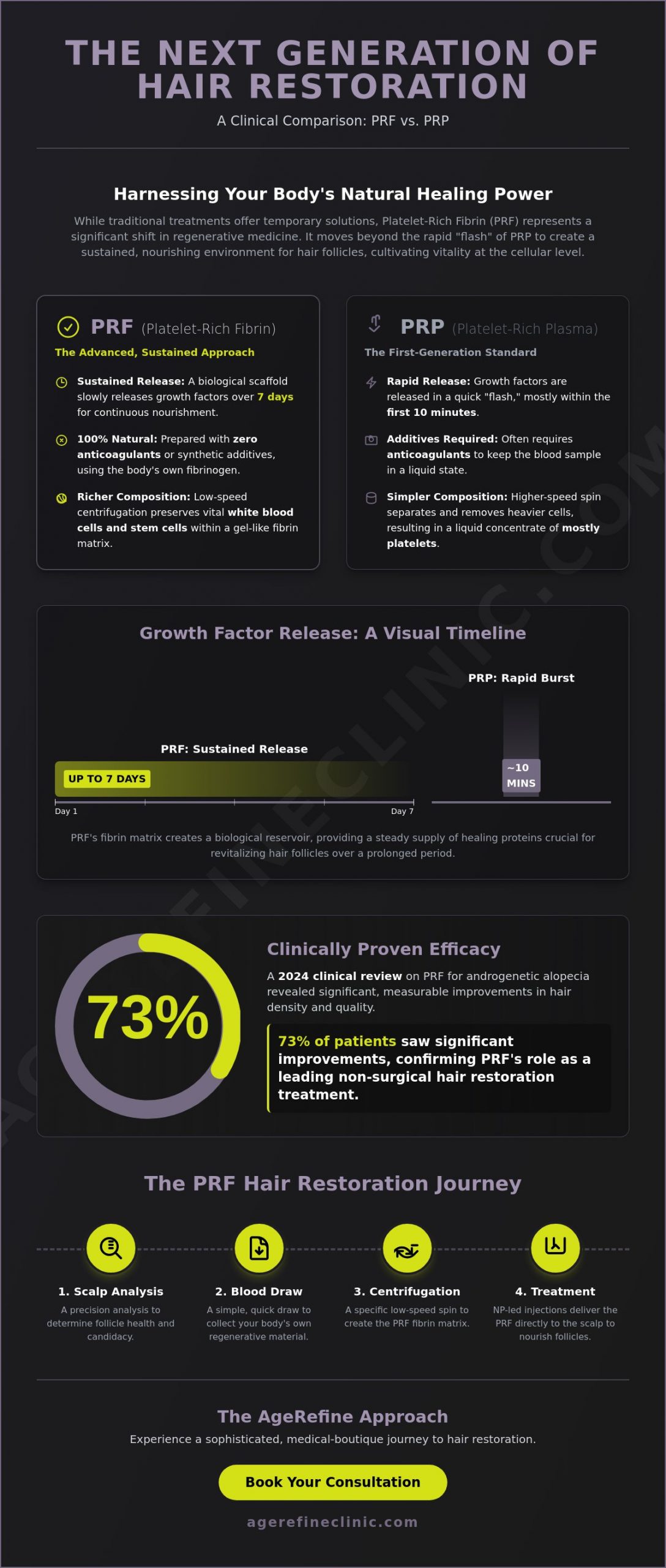
The primary limitation of liquid-based PRP is its brief therapeutic window. Most growth factors in a PRP solution are released within the first ten minutes of injection, offering a “flash” of stimulation that quickly fades. PRF utilizes a specific low-speed centrifugation process that allows for the formation of a dense, gel-like fibrin network. This network facilitates a sustained, slow release of growth factors for up to seven days. According to a recent Clinical Review of PRF for Androgenetic Alopecia, this prolonged signaling is crucial for revitalizing miniaturized follicles. By providing a steady supply of nutrients over a week, PRF encourages the hair shaft to thicken more robustly. The inclusion of white blood cells within this matrix also helps modulate the scalp’s environment, further supporting long-term cellular health.
Stem Cell Recruitment and Scalp Health
A healthy scalp is the essential foundation for resilient hair growth. Think of the fibrin matrix as a “biological greenhouse” that protects and nurtures the follicle at its most vulnerable stage. Beyond its role as a reservoir, the PRF network serves as a powerful homing signal for the body’s circulating mesenchymal stem cells. These natural repair cells are drawn to the fibrin scaffold, where they begin the work of vascularization and tissue remodeling. This process essentially improves the “soil” of the scalp, making it more hospitable for follicle survival. When the scalp environment is optimized, existing hair structures can thrive rather than struggle against the process of thinning. If you are ready to move toward a more sustainable, biological solution, exploring regenerative medicine options can provide the clarity needed for your restoration journey. This synergy between the fibrin network and your body’s own repair mechanisms is what makes PRF a truly sophisticated choice for those seeking natural results.
PRF vs. PRP: A Comparative Analysis for Hair Restoration
Innovation often requires us to reconsider the velocity of our methods. While the medical community initially embraced high-speed centrifugation to isolate platelets, we have learned that cellular integrity is best preserved through a gentler approach. Choosing prf injections for hair loss over traditional PRP is a decision based on the quality, rather than just the quantity, of the biological material. In our practice, we prioritize the vitality of the cells we reintroduce to your scalp, ensuring they arrive active and ready to perform their regenerative duties.
The Science of the Spin: Preserving Cellular Integrity
The technical distinction between these two treatments lies in the “G-force” applied during processing. Traditional PRP relies on high-speed rotation to separate blood components into distinct layers. This aggressive force can inadvertently stress or damage the very cells intended to spark regrowth. In contrast, PRF uses a low-speed centrifugation protocol. This method keeps the delicate white blood cells and mesenchymal stem cells intact, allowing them to be harvested within the fibrin scaffold.
A significant benefit for the patient is the absence of anticoagulants. PRP requires an acid-based additive, such as citrate dextrose, to prevent the blood from clotting during the spin. This additive can cause a stinging sensation upon injection. Because PRF is 100% autologous and contains no synthetic chemicals, it is often considered the gold standard for those with sensitive scalps or those who prefer a completely natural biological product. The same principle of avoiding synthetic additives makes PRF under eye rejuvenation in Irvine an increasingly popular alternative to traditional synthetic fillers for patients seeking organic, biological facial restoration. The result is a smoother, more comfortable clinical experience that aligns with a “less is more” philosophy.
Which Treatment is Right for Your Hair Loss Stage?
The choice between therapies often depends on the current state of your hair density and your long-term goals. While PRP may still serve a role in very early maintenance, PRF is generally recommended for individuals facing more aggressive thinning or miniaturization. The sustained release of growth factors provides a more potent signal for follicles that require significant revitalization.
- PRF Injections: Ideal for active thinning, widening parts, and those seeking a slow-release biological scaffold.
- Traditional PRP: Often used for mild maintenance or as a foundational entry into regenerative aesthetics.
- Combination Approaches: For some, we may integrate Exosome Injection or Peptide Therapy to enhance the scalp’s response to PRF.
From a long-term perspective, PRF often proves to be a more cost-effective investment over a 12-month period. Although a single session of PRF involves a more complex preparation process, the longevity of the results typically means fewer maintenance appointments are required compared to PRP. This methodical approach prioritizes your time and your body’s natural healing capacity, moving away from the cycle of frequent, temporary fixes toward a path of sustained restoration.
What to Expect: The PRF Hair Restoration Journey
Regenerative medicine is a journey of patience and biological partnership. While we live in a world that often demands instant gratification, the scalp requires time to remodel and revitalize at a cellular level. When embarking on a series of prf injections for hair loss, understanding the chronological milestones helps transform anxiety into informed anticipation. We approach each treatment as a vital step toward long-term follicular health, focusing on steady, natural progress rather than temporary or superficial changes.
The Treatment Timeline: A 6-Month Roadmap
The standard clinical protocol typically involves an initial series of 3 to 6 sessions, each spaced approximately four weeks apart. This frequency ensures the fibrin matrix is consistently replenished, providing a continuous signal for cellular repair and vascularization. Consistency is the key to moving follicles from a dormant state into an active, productive one.
- Months 1-3: The primary goal during this initial phase is the stabilization of hair loss. You’ll likely notice a significant reduction in daily shedding as the scalp environment begins to balance and follicles receive better blood flow.
- Months 4-6: This is where the aesthetic transformation becomes visible. A 2022 pilot study demonstrated that 11 out of 15 patients saw noticeable hair growth improvement after four PRF sessions. During this window, you may observe increased hair diameter and improved scalp coverage.
- Long-term Maintenance: Since PRF isn’t a permanent cure for genetic thinning, maintenance sessions every 3 to 6 months are essential. These “booster” treatments preserve the density you’ve achieved and continue to combat follicle miniaturization.
Preparation and Recovery in Orange County
Your internal health directly influences the quality of the PRF we can harvest from your blood sample. We recommend increasing your water intake and focusing on nutrient-dense meals for 48 hours before your appointment to optimize your platelet count. If you feel your baseline vitality needs additional support, many patients find that our IV Therapy provides a beneficial biological foundation before starting their hair restoration sessions. A well-hydrated system ensures we can collect a high-quality fibrin concentrate for your scalp.
The procedure itself is efficient, and the recovery is remarkably straightforward. You might experience a sensation of “fullness” or mild pressure in the scalp for a few hours as the gel-like matrix settles into place. This is a normal part of the regenerative process. Most of our Irvine patients return to their social activities immediately, though we suggest waiting 24 hours before resuming intense cardiovascular exercise. This brief pause allows the fibrin scaffold to remain undisturbed at the follicle site, ensuring maximum nutrient delivery and optimal results. If you are ready to begin your personalized journey, book a consultation at AgeRefine to discuss your restoration goals.
The AgeRefine Approach: PRF in Irvine, California
Beauty is a profound expression of internal health, and achieving lasting results requires a clinical environment that honors that connection. In the heart of Orange County, we have designed a sanctuary where medical rigor meets personalized care. Choosing a provider for prf injections for hair loss is a decision that extends beyond the technology itself; it’s about finding a practitioner who understands the nuances of your unique health transition. At AgeRefine, we prioritize this partnership, ensuring that every treatment plan is as distinct as the individual receiving it.
Boutique Care vs. High-Volume Clinics
High-volume settings often rely on standardized injection patterns that may not address your specific areas of thinning. We believe in a more precise approach. Under the direction of Helen Liu, NP, our clinic focuses on a “less is more” philosophy. This means we apply medical technology with restraint, prioritizing natural-looking outcomes and long-term follicular health. By conducting a precision scalp analysis during your initial consultation, we can map out a customized injection pattern that maximizes the impact of the fibrin matrix exactly where you need it most. It’s a methodical process that ensures we’re treating the root cause of your concerns rather than just the surface symptoms.
Holistic Optimization for Hair Growth
Living in Irvine offers a vibrant lifestyle, but it also presents specific environmental challenges for hair health. The local hard water and frequent UV exposure can stress the scalp, making it more difficult for follicles to thrive. We address these local factors by integrating our Regenerative Medicine protocols with systemic support. Pairing prf injections for hair loss with Peptide Therapy or IV Therapy helps optimize your internal biology, creating the best possible “soil” for your hair to grow. This multi-faceted approach ensures that your body has the micronutrients and cellular signals required to sustain new growth.
Your journey toward restoration begins with a comprehensive understanding of your scalp’s current state. We provide guidance on at-home medical-grade scalp care to protect your results between sessions, ensuring your investment in your hair density is supported by daily habits. We invite you to experience a consultation that feels like a professional partnership rather than a transaction. Take the first step toward thicker, more resilient hair by Booking your precision hair analysis at AgeRefine Clinic today.
Embracing the Future of Follicular Vitality
Restoration is a deliberate act of returning to your natural state of abundance. By choosing prf injections for hair loss, you move beyond temporary concealment toward a scientifically grounded, biological intervention. The fibrin matrix serves as a persistent nutrient source, allowing your scalp to heal and regenerate at its own pace. This approach respects the complexity of your body’s repair mechanisms, offering a path to density that is both sustainable and entirely autologous. You aren’t just treating thinning; you are investing in the long-term health of your cellular environment.
At AgeRefine, we believe that elite medical care should feel deeply personal. Led by Board Certified Nurse Practitioner Helen Liu, our clinic utilizes advanced PRF centrifugation technology to ensure the highest cellular integrity for your restoration. We offer customized, direct-pay wellness plans that prioritize your long-term health journey and internal confidence. If you are ready to reclaim your density through the power of regenerative medicine, we invite you to Schedule Your Regenerative Hair Consultation in Irvine. Your journey toward thicker, more resilient hair is a partnership we are honored to begin.
Frequently Asked Questions
How many PRF injections are needed for hair loss to see real results?
Real results typically require an initial series of 3 to 6 sessions, spaced approximately four weeks apart. This frequency allows the fibrin matrix to consistently signal the follicles to remain in the active growth phase. While early stabilization of shedding often occurs within the first few months, visible regrowth and density improvements are generally observed after the fourth session as part of a long-term restoration plan.
Is PRF more painful than traditional PRP injections?
PRF is often described as more comfortable than traditional PRP because it is processed without acid-based anticoagulants. These additives, used in PRP to prevent clotting, can cause a stinging sensation during the injection process. Since prf injections for hair loss use your own blood in its most natural state, the treatment is typically well-tolerated with only mild pressure at the injection site.
Can I combine PRF hair restoration with other treatments like exosomes?
Combining treatments is a sophisticated way to address hair thinning from multiple biological angles. Many of our patients choose to integrate Exosome Injection or Peptide Therapy alongside their PRF sessions to enhance cellular signaling and nutrient delivery. This multi-faceted approach creates a more robust regenerative environment, though we always recommend a personalized consultation to determine the most effective sequence for your scalp health.
How long do the results of PRF hair injections last?
The longevity of your results depends on consistent maintenance, as PRF is a biological management strategy rather than a permanent cure. After the initial series, most individuals require “booster” sessions every 3 to 6 months to sustain hair density and prevent the return of follicle miniaturization. Without these ongoing treatments, the hair may eventually revert to its previous state as the natural aging process continues.
Are there any side effects or downtime with PRF for hair loss?
There is virtually no downtime associated with this procedure, allowing you to return to your daily Irvine lifestyle immediately. You might experience a mild sensation of fullness or slight swelling in the treated areas for a few hours as the gel-like matrix settles. We recommend avoiding intense cardiovascular exercise for 24 hours to ensure the fibrin scaffold remains undisturbed at the follicle site for optimal nutrient release.
Is PRF for hair loss covered by insurance in California?
PRF treatments for hair restoration are generally not covered by insurance providers in California or elsewhere. Most companies classify these regenerative procedures as cosmetic or experimental. At our clinic, we operate on a direct-pay basis, focusing on providing high-end, personalized care that prioritizes your long-term wellness and aesthetic goals without the constraints of traditional insurance-based billing.
What is the difference between PRF and a hair transplant?
The primary difference lies in the approach to restoration; PRF is a non-surgical biological treatment, while a hair transplant is an invasive surgical procedure. PRF works by revitalizing your existing, underperforming follicles through cellular stimulation. In contrast, a transplant involves the surgical relocation of follicles from one area of the scalp to another. We focus on the “less is more” philosophy of regenerative medicine to achieve natural-looking density. For a deeper comparison of the full range of non surgical hair loss treatment options available today, our 2026 buying guide provides a thorough breakdown of each approach and its clinical evidence.
Can PRF help with total baldness or only thinning hair?
PRF is most effective for individuals experiencing mild to moderate thinning and is not a solution for total baldness. The treatment requires the presence of viable, living hair follicles to be successful. If a follicle has been dormant for many years or has been permanently damaged by scarring, it cannot be “reawakened” by growth factors. A precision scalp analysis is the best way to determine if your current hair density is suitable for restoration.
Leave a Reply