If you’re wondering what to expect after Onda Pro, it’s natural to have questions about warmth, redness, tenderness, and whether you’ll need to change your plans. Some people notice temporary changes in the treated area, while others notice little right away. Knowing what to monitor and which aftercare instructions to follow can make the experience easier to navigate.
Onda Pro recovery is generally associated with minimal disruption, but your experience and aftercare should reflect your treatment area and clinician’s guidance. At AgeRefine Clinic in Irvine, board-certified nurse practitioner Helen Liu takes an individualized approach to aesthetic care. This guide covers possible immediate sensations, how to think about changes over time, practical aftercare, and when to contact your clinician. It also explains why early appearance is not a reliable measure of eventual body-contouring results, so you can plan with realistic expectations in Orange County.
Key Takeaways
- Learn what to expect after Onda Pro by separating possible short-term sensations from changes in appearance, which may emerge on a different timeline.
- Think about the immediate response, early recovery, and later progress as separate stages, without assuming everyone follows the same schedule.
- Use your treating clinician’s aftercare instructions as your guide, and know when a symptom deserves prompt clinical evaluation.
- Compare recovery expectations with longer-term appearance goals so temporary sensations don’t become a measure of results.
- Prepare to discuss your goals, treatment plan, and aftercare expectations with AgeRefine Clinic in Irvine.
What to Expect Immediately After Onda Pro
There isn’t one identical recovery experience. After Onda Pro, some people notice temporary warmth, redness, or slight tenderness in the treated area, while others notice little change. Your treatment area and individual response can influence what you feel or see. Before treatment, ask your clinician what immediate sensations may be relevant to your plan and what changes you should discuss afterward.
Short-term sensations are different from body-contouring results. Onda Pro uses microwave energy to target localized fat, and the biological breakdown of fat, known as the process of lipolysis, is distinct from an immediate change in appearance. Don’t use how the area looks right after treatment to judge the eventual outcome.
What might the treated area look or feel like?
Temporary redness, warmth, or mild tenderness may occur and are generally described as short-lived. Their presence, intensity, and duration can vary. Notice whether the area is changing and follow the clinic’s instructions rather than trying a generic remedy. If a response feels unexpected, becomes more concerning, or doesn’t seem to be settling as your clinician described, contact the clinic for advice.
Can you return to your usual routine?
Onda Pro is non-invasive, but that doesn’t mean every person should automatically resume every activity right away. Follow your clinician’s directions for your treatment plan, including any guidance about exercise or other activities. If you have work, travel, or an event planned, discuss the timing beforehand. That gives you a chance to plan around your commitments without assuming you’ll have a particular recovery experience.
Individualized instructions take priority over generic aftercare guidance. Follow your clinician’s directions for the treated area and your plan. If your response differs from what you were told to expect, reach out to the clinic for guidance.
For a clearer sense of what to expect after Onda Pro, ask your clinician to describe likely immediate sensations, which visible changes may be temporary, and how to approach activities according to your individual plan. These details can help you distinguish a short-term treatment response from the gradual process of assessing body-contouring results.
Onda Pro recovery timeline: the first days and following weeks
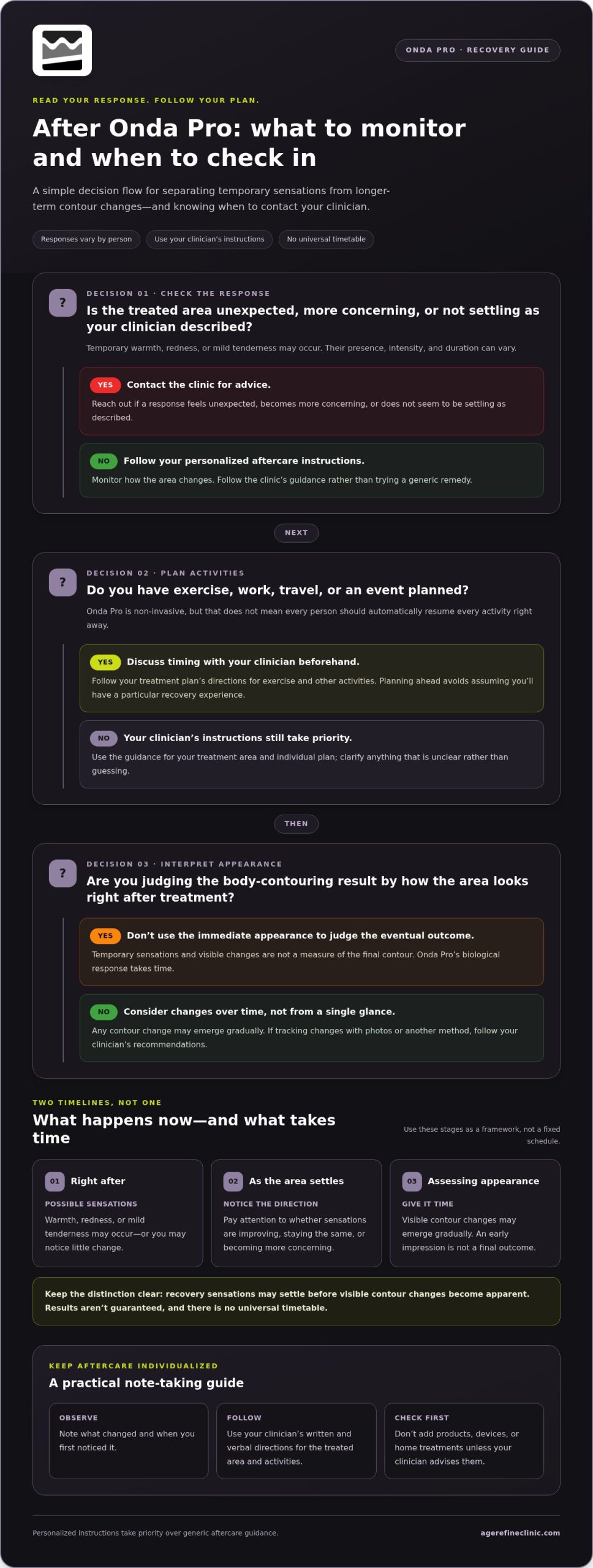
Recovery sensations and visible body-contouring changes follow different timelines. What to expect after Onda Pro depends on your treatment area, individual response, and personalized plan, so use the stages below as a framework rather than a fixed schedule. The FDA’s overview of non-invasive body contouring technologies also emphasizes understanding the treatment and its potential risks.
Immediate phase: right after treatment
You may notice a temporary change in how the treated area feels or looks, such as warmth, redness, or mild tenderness. These responses vary and don’t indicate what the final contour will look like. Follow the monitoring and aftercare instructions your clinician provides. If you notice a change that differs from what you were told to expect, make a note of it so you can describe it clearly.
Early phase: as the area settles
Pay attention to whether sensations are improving, staying the same, or becoming more concerning. Follow your clinic’s directions for keeping the area comfortable, and avoid adding products or remedies unless your clinician has advised them. If you have questions, note what changed and when you first noticed it. That information can help you explain your experience when speaking with your treating clinician.
Later phase: assessing appearance
Don’t judge visible changes by the immediate post-treatment appearance. Onda Pro is intended for body contouring, and the biological response takes time; any change may emerge gradually rather than on the day of treatment. Observations over time may be more useful than a single glance. If you’re considering photos or other ways to track changes, follow your clinician’s recommendations. An early impression is not a final outcome.
Realistic expectation: Recovery sensations may settle before any visible contour changes become apparent, and results aren’t guaranteed.
There’s no universal timetable for everyone. The timing and way progress is assessed depend on your individual response and treatment plan, so don’t assume a particular number of sessions or a results deadline. If you’re considering treatment in Irvine or Orange County, a personalized Onda Pro consultation at AgeRefine Clinic can help you discuss your goals, treatment planning, and what progress may reasonably look like for you.
Onda Pro Aftercare: Guidance and Signs to Discuss
Aftercare should reflect your treatment, not a one-size-fits-all checklist. As you consider what to expect after Onda Pro, use the instructions your treating clinician provides for your plan. General guidance can offer context, but it can’t account for your treatment area or individual response.
A simple post-treatment care checklist
Keep aftercare straightforward: follow the directions provided during your visit, and clarify anything that is unclear rather than guessing.
- Follow your plan’s instructions. Use your clinician’s written and verbal guidance, including recommendations about caring for the treated area or resuming activities.
- Don’t add treatments on your own. Avoid applying new products, using devices, or trying home treatments on the area unless your clinician advises you to do so.
- Keep a brief record. Note changes you observe, when they began, and any questions that come up. Record the guidance you receive so you can refer back to it.
A short record can help you explain what you’ve noticed and when, particularly if you want to discuss a change or clarify an instruction.
When should you contact your clinician?
Contact your treating clinician if a symptom feels severe, is worsening, or concerns you. This guidance isn’t a diagnosis, and you don’t need to decide on your own whether a response is expected. If you believe you’re experiencing an emergency, seek urgent medical care.
When you reach out, describe what you’re noticing and when it started. Include whether it has changed since you first observed it and any relevant aftercare steps you’ve taken. Clear details help your clinician understand the concern and advise you on what to do next.
Follow your clinic’s instructions, and contact your treating clinician with any concerns. If you’re unsure how to apply an aftercare direction or whether a change needs attention, ask for guidance instead of relying on generic advice.
Personalized aftercare is part of a considered treatment experience. At AgeRefine Clinic, Onda Pro care is guided by Helen Liu, a board-certified nurse practitioner specializing in aesthetic medicine. Discussing your treatment plan and questions with your clinician can help you feel prepared to monitor your response and know when to seek advice.
Onda Pro recovery compared with treatment expectations
It helps to separate what you notice after a session from what the treatment is intended to address over time. Onda Pro is non-invasive, but aftercare still matters, and people may respond differently. Your treatment area, individual response, and clinician’s plan all shape what to expect.
| Part of the experience | What to keep in mind |
|---|---|
| Immediate response | You may notice temporary changes in how the treated area looks or feels. These observations alone don’t establish your eventual result. |
| Recovery guidance | Follow the directions for your treatment plan, including any advice about activities or products. Non-invasive doesn’t mean every person has identical aftercare needs. |
| Longer-term appearance | Assess changes in the context of your goals and treatment plan. Timing and degree of visible change can vary. |
Recovery is not the same as the final result
An early look at the treated area is a snapshot, not a verdict on the outcome. Temporary sensations and visible contour changes are separate parts of the treatment experience, and neither the timing nor the degree of change is guaranteed to be identical for everyone. A follow-up discussion can help you consider what you’re noticing alongside your goals and the plan your clinician developed with you.
Questions to bring to an Onda Pro follow-up
Use the conversation to clarify what matters for your treatment area and daily routine. Consider asking:
- Which changes should I monitor for my treatment plan, and how should I describe them?
- Do I need to adjust any activities or products, and if so, for how long?
- When and how will we assess progress, and what information would be useful to bring?
These questions can turn a general idea of what to expect after Onda Pro into a more useful, individualized discussion. Notes about what you’ve observed and when it changed can also help your clinician understand your experience.
For readers in Irvine and Orange County, a personalized conversation at AgeRefine Clinic can connect recovery expectations with your goals and treatment plan. Discuss your Onda Pro expectations in Irvine with Helen Liu, a board-certified nurse practitioner specializing in aesthetic medicine.
Planning Onda Pro aftercare with AgeRefine Clinic in Irvine
Good preparation starts with a conversation, not a one-size-fits-all recovery calendar. Before treatment, discuss your goals, the area you’re considering, and what aftercare may involve for your individual plan. Knowing what to expect after Onda Pro can also help you plan for work, exercise, travel, or other commitments without assuming everyone’s experience will be the same.
What to discuss before your Onda Pro session
Share relevant health information with your clinician, along with the changes you hope to address. A thoughtful discussion can clarify how your goals and treatment plan align, what to expect for the area being treated, and how you’ll approach aftercare and progress assessment.
Consider asking:
- Which area is planned for treatment, and what should I expect immediately afterward?
- What aftercare instructions apply to my plan, including any temporary adjustments to activities or products?
- How and when will progress be discussed or assessed?
Clear answers can help you plan around your responsibilities and feel more prepared. If your schedule is especially full, mention that when discussing treatment timing so your practical needs are part of the conversation.
A supportive next step for Orange County patients
AgeRefine Clinic provides Onda Pro body-contouring care in Irvine for patients in Irvine and Orange County. The clinic is founded and led by Helen Liu, a board-certified nurse practitioner specializing in aesthetic medicine. An individualized discussion can help you understand the treatment plan and aftercare guidance relevant to your goals, without promising a particular result.
For more background on the treatment, explore the clinic’s guide, Onda Pro Irvine: The 2026 Guide to Non-Invasive Body Contouring. Reading it alongside your questions can help you prepare for a focused conversation about treatment planning and recovery expectations.
If you’re considering Onda Pro in Irvine, AgeRefine Clinic welcomes you to explore its Onda Pro care and discuss your goals with a clinician. A conversation about your treatment plan and expectations is a practical next step toward deciding whether the treatment fits your priorities.
Plan your next step with confidence
Understanding what to expect after Onda Pro starts with separating the immediate response from the pace of visible changes. Temporary sensations may be part of the experience, but they don’t predict an individual outcome. Your treatment area, personal response, and clinician’s plan all shape recovery and the guidance that applies to you.
Keep aftercare grounded in your clinician’s specific directions. Monitor changes, note questions, and reach out if something feels severe, worsens, or concerns you. A discussion about your goals, treatment planning, and how progress will be assessed can help set realistic expectations and make it easier to plan around everyday commitments.
At AgeRefine Clinic, Onda Pro is the primary service, with care led by Helen Liu, a board-certified nurse practitioner specializing in aesthetic medicine. If you’re in Irvine or Orange County and considering treatment, explore Onda Pro at AgeRefine Clinic and discuss what aligns with your goals. For a clear next step, book a conversation about your treatment goals, plan, and aftercare expectations.
Frequently Asked Questions
What should I expect immediately after Onda Pro?
Immediately after Onda Pro, you may notice temporary warmth, redness, or slight tenderness in the treated area, though some people notice little change. Your individual response and the area treated can affect what you feel or see. These short-term observations don’t establish your eventual body-contouring outcome. Follow your clinician’s aftercare directions, and contact them if your response feels unexpected or concerning.
Is there downtime after Onda Pro?
Onda Pro is generally associated with minimal downtime, and many people can return to everyday activities. That doesn’t guarantee every activity will suit every person immediately. Follow your clinician’s guidance for your treatment plan, especially for strenuous exercise, heat exposure, or other activities they address. If you have work or personal commitments, discuss timing beforehand so you can plan around your own recovery expectations.
How long does it take to see Onda Pro results?
Visible changes aren’t usually something to judge immediately after treatment. Subtle changes may become noticeable over the following weeks, while assessment can take longer and varies by individual and treatment plan. Some treatment plans assess outcomes over a period extending beyond the final session. Your clinician can help determine when to review progress and interpret changes in the context of your goals, rather than relying on one early impression.
Can I exercise after Onda Pro?
Follow the activity guidance your treating clinician gives you, since recommendations can depend on your plan and response. Don’t assume every type of exercise is appropriate immediately, even if you feel ready to resume your usual routine. Ask specifically about your preferred activities, such as a workout or a walk, and whether you should adjust them temporarily. Your clinician’s individualized directions take priority over general advice.
What should I do if I notice an unexpected change after Onda Pro?
Contact your treating clinician if a change feels concerning, is severe, or is worsening. Describe what you noticed, when it began, and how it has changed since then. Don’t try to diagnose the cause or treat the area with new products or devices unless your clinician advises you to. If you believe you’re experiencing an emergency, seek urgent medical care.
Does everyone have the same recovery experience after Onda Pro?
No. People may notice different sensations or visible responses, and the treated area and personalized plan can influence the experience. One person’s recovery isn’t a reliable timetable for someone else. For what to expect after Onda Pro, use your clinician’s instructions as your reference and discuss changes in the context of your treatment goals. Individualized guidance can help keep expectations realistic.
When should I schedule a follow-up after Onda Pro?
Ask your treating clinician when to follow up and how progress will be assessed for your treatment plan. There isn’t one schedule that applies to everyone, and a follow-up can help put your observations and goals in context. At AgeRefine Clinic in Irvine, founded and led by board-certified nurse practitioner Helen Liu, patients from Irvine and Orange County can discuss Onda Pro planning and progress with a clinician.