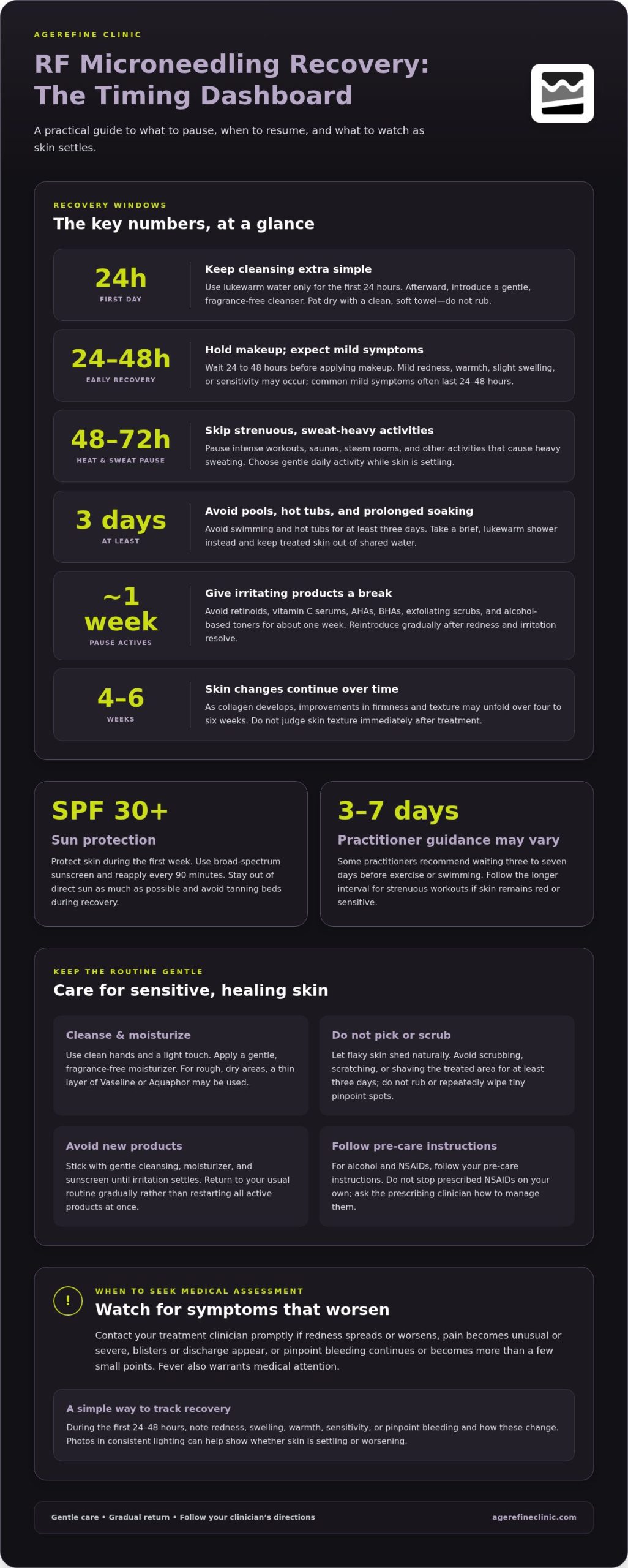
Careful recovery matters as much as the treatment: RF microneedling aftercare instructions include keeping skin clean and gentle, avoiding heat and heavy sweating for 48 to 72 hours, and protecting it with broad-spectrum SPF 30 or higher. Hold off on makeup for 24 to 48 hours and on exfoliating or active products for about a week. These steps help you care for skin while it settles after treatment.
RF microneedling combines tiny needles with radiofrequency energy to treat the skin, so it’s natural to wonder what healing will look and feel like. Temporary redness, warmth, or sensitivity can be part of the early recovery, and your routine can make a meaningful difference in how comfortably you move through it. This guide explains how the treatment works, what to do in the days that follow, which products and activities to pause, and what changes to expect as your skin heals. With clear, practical guidance, you can approach recovery with confidence and give your skin time to renew.
Key Takeaways
- Pause intense workouts, swimming, hot tubs, and other heat- or sweat-inducing activities during early recovery; timing can vary by activity.
- Mild redness, warmth, swelling, sensitivity, or pinpoint bleeding may occur after treatment, with common mild symptoms lasting 24-48 hours.
- Keep cleansing gentle: use lukewarm water during the first 24 hours, then introduce a gentle hydrating cleanser.
- Skin changes continue as collagen develops, with improvements in firmness and texture potentially unfolding over four to six weeks.
- Wait 24 to 48 hours before applying makeup, and return to your usual routine gradually as your skin settles.
Avoiding swimming, hot tubs, and excessive sweating
Protect healing skin by limiting heat, sweat, and irritating products. Cleanse gently and use sun protection while your skin barrier recovers.
-
Avoid Swimming and Hot Tubs
Avoid swimming and hot tubs for at least three days after microneedling. Pool water, hot tubs, and prolonged soaking can expose recently treated skin to heat or contaminants. Take a brief, lukewarm shower instead and keep the treated area out of shared water. Resume swimming after the initial recovery period, once your skin feels settled.
-
Limit Excessive Sweating
Pause intense workouts, saunas, steam rooms, and other sweat-heavy activities for 48 to 72 hours after treatment. Sweat and heat can irritate freshly treated skin, so choose gentle daily activity during that window. Some practitioners recommend waiting three to seven days before exercise or swimming. Follow the longer interval for strenuous workouts if your skin remains red or sensitive.
- Keep cleansing simple. For the first 24 hours, wash with lukewarm water only; afterward, introduce a gentle, fragrance-free cleanser. Pat dry with a clean, soft towel rather than rubbing. Apply a gentle, fragrance-free moisturizer to support hydration, and avoid scrubbing, scratching, or shaving the treated area for at least three days.
- Pause topical irritants while your skin heals. Avoid retinoids, vitamin C serums, AHAs, BHAs, exfoliating scrubs, and alcohol-based toners for about one week. These active ingredients can aggravate sensitivity during early recovery. Reintroduce them gradually after redness and irritation have resolved, rather than restarting everything at once.
- Protect against sun exposure for the first week, and stay out of direct sun as much as possible. Apply broad-spectrum sunscreen with SPF 30 or higher, then reapply every 90 minutes. Keep sunscreen in your daytime routine even when redness fades; healing skin still needs protection. Avoid tanning beds during recovery.
- Use a gentle moisturizer for dryness, or a thin layer of Vaseline or Aquaphor for rough, dry areas. Let flaky skin shed naturally; don’t pick or exfoliate it. Aftercare product costs depend on what you already own and which cleanser, moisturizer, and sunscreen you choose. There isn’t one fixed total for every routine.
- Before treatment, follow your pre-care instructions about alcohol and NSAIDs. Don’t stop prescribed NSAIDs on your own; ask the prescribing clinician how to manage them. During recovery, avoid adding new skincare products. Stick to gentle cleansing, moisturizer, and sunscreen until irritation settles.
Expected redness, swelling, sensitivity, and pinpoint bleeding
After RF microneedling, mild redness, warmth, or slight swelling typically lasts 24-48 hours. Sensitivity and pinpoint bleeding can also occur immediately after the procedure.
Watch for symptoms that worsen instead of settling, such as spreading redness, unusual pain, blistering, or discharge. Seek prompt medical assessment if these occur or if you develop a fever.
- Check your skin gently during the first 24-48 hours. Mild redness and warmth can resemble a light flush, while slight swelling may make treated areas feel fuller. Note whether symptoms gradually ease. Avoid rubbing the area to inspect its texture, since pressure can add irritation without helping you assess healing.
- Sensitivity is common after treatment, especially when washing or applying moisturizer. Use clean hands and a light touch rather than pressing or massaging treated skin. If lukewarm water stings, stop and follow your personalized aftercare directions. Avoid direct heat, including hot showers, while warmth or tenderness remains noticeable.
- Pinpoint bleeding can occur immediately after microneedling. Don’t pick at tiny spots or wipe them repeatedly. Keep the area clean and let it settle. If bleeding continues or becomes more than a few small points, contact the clinician who performed your treatment for guidance.
- Dryness can develop as your skin recovers. Apply a gentle, fragrance-free moisturizer with clean fingertips, then leave any flaking skin alone. Don’t use a scrub or exfoliating cloth on rough patches. If discomfort increases or redness worsens, seek prompt clinical assessment.
- For the first few days, make a brief daily note of redness, swelling, warmth, sensitivity, or pinpoint bleeding, and track how these change. Photos taken in consistent lighting can help you see whether your skin is settling or worsening. Avoid judging texture immediately after treatment.
- Contact your treatment clinician promptly if symptoms intensify, new blisters appear, or discharge develops. Fever or severe pain also warrants medical attention. For questions about treatment and skin texture, explore personalized skin texture guidance rather than trying strong products during recovery.
A treatment takes under an hour, but plan your day around the recovery instructions as well as the appointment. After Potenza RF microneedling, avoid scrubbing, scratching, or shaving the treated area during the initial recovery period. These actions can disturb skin that is already sensitive, so use a gentle approach and follow the directions provided by your clinician. If you are unsure whether an activity or product is suitable, ask the clinician who performed the treatment rather than testing it on the area.
For optimal outcomes, RF microneedling treatments may be spaced a month apart. Keep any planned follow-up in context with how your skin responds, and share persistent or worsening symptoms with your clinician before proceeding. A simple record of changes can help you explain what you have noticed, including whether redness, swelling, sensitivity, or pinpoint bleeding is easing. Keep aftercare uncomplicated while the treated area settles, and avoid trying to speed the process by scrubbing, scratching, shaving, or adding unnecessary irritation. Use your personalized instructions if they differ from general guidance, and seek clinical advice when you are uncertain about a change in your recovery.
Bathing, swimming, and skin cleansing
During the first days after RF microneedling, keep water contact and skincare gentle. Use these steps to cleanse and moisturize, and to return to makeup without unnecessary friction.
- For the first 24 hours, cleanse your face with lukewarm water only. Use clean hands, and let water flow gently over treated skin. Don’t use a washcloth, cleansing brush, or facial sponge. After that first day, introduce a gentle, hydrating cleanser if your skin tolerates it.
- For the first three days, wash with cool water and gentle soap. Keep showers comfortable rather than hot, and avoid soaking treated skin. Pat the area dry with a clean, soft towel. Don’t rub back and forth, even if your skin feels rough or tight.
- Choose a fragrance-free, gentle cleanser when you resume your usual skincare. Use lukewarm water, wash lightly, and rinse without scrubbing. Avoid active ingredients, including retinoids, acids, and exfoliants, while your skin heals. Reintroduce them gradually after redness and irritation have resolved.
- After cleansing, apply a gentle, fragrance-free moisturizer to maintain hydration. Use clean fingertips and a light touch rather than massaging it into your face. Keep your routine simple: cleanser, moisturizer, and daytime sunscreen. Avoid products marketed for fine lines or elastin support if they contain irritating active ingredients.
- Wait at least 24 to 48 hours before wearing makeup. If redness or sensitivity remains, give your skin more time before applying foundation, concealer, or powder. When you resume, use clean hands or freshly cleaned makeup brushes and sponges. Apply lightly; don’t press, drag, or buff over treated areas.
- Avoid scrubbing, scratching, and shaving the treated area for at least three days. Skip exfoliating tools and products, including face scrubs and textured cleansing pads. If dry flakes appear, let them shed naturally instead of lifting them. A gentle moisturizer can help with comfort without adding friction.
- Keep your routine simple on the first day, even if your skin looks ready for more. Don’t layer new skincare, makeup, and active ingredients together as soon as the initial period ends. Add products one at a time after irritation has settled, so you can identify what causes discomfort.
Recovery timelines and collagen development
Recovery unfolds in stages, from early surface healing to gradual changes in skin texture. Improvements in firmness, texture, and appearance can continue for four to six weeks after microneedling.
Yes. Aftercare can vary depending on the device, treatment depth, treated area, skin type, and your skin’s response. These factors influence the degree of irritation and which recovery steps suit your treatment.
-
Follow the Skin-Healing Timeline
Track your skin each day, and let small flakes or micro-scabs shed naturally. Don’t scratch, peel, or scrub them away. During the first 24-48 hours, mild redness, warmth, or swelling can occur. In the first week, smoother, tighter skin may become noticeable, while mild dryness or sensitivity can still affect your routine.
Use a brief daily note to track redness, texture, dryness, and sensitivity. Compare how your skin feels rather than judging it in changing light. If irritation is increasing instead of settling, avoid exfoliants and other active products. Let the surface recover without picking at rough areas.
-
Account for Treatment Differences
Follow the aftercare plan for your device and treatment depth. Different settings and treated areas can affect your skin’s response, so another person’s timeline may not fit yours. Skin type and sensitivity also matter. Keep your routine gentle, and don’t assume a friend’s recovery schedule applies to your procedure.
Pay attention to your skin’s response after each step. If a cleanser or moisturizer causes new irritation, stop using it and return to simpler care. Don’t restart retinoids, acids, or exfoliation just because several days have passed. Wait until redness and irritation have resolved, then gradually bring active ingredients back.
- Collagen development is gradual, not an overnight change. Microneedling prompts a skin-repair response, while radiofrequency adds heat below the surface. Improvements in firmness, texture, and appearance may continue for four to six weeks. A smoother look during the first week can be an early change, not the final result.
- Use the longer timeline to assess progress. Take a clear photo before treatment and compare it with another after several weeks, using similar lighting and angles. Focus on texture and firmness rather than expecting every fine line to change at once. Skin rejuvenation develops progressively as collagen and elastin production responds to treatment.
- Plan a treatment series according to the timing recommended for your procedure. Many patients choose three to four sessions, and treatments may be spaced a month apart. Another common interval is four to six weeks. Allow time for healing between sessions, and assess changes across the series rather than judging collagen development immediately after one visit.
When to resume makeup
Wait at least 24 to 48 hours before applying makeup after RF microneedling. Since some guidance recommends avoiding it for the first few days, let your skin’s condition and session-specific instructions guide your timing.
- Keep makeup off treated skin for at least 24 to 48 hours. Foundation, concealer, and powder can involve rubbing or repeated touch, which may irritate a recovering skin barrier. If redness or sensitivity persists beyond that window, wait until it settles before applying cosmetics.
- If you need coverage after the initial waiting period, choose mineral-based makeup. Apply a light layer with clean hands or a clean applicator. Avoid pressing, buffing, or dragging products across treated areas. Stop if application causes stinging or discomfort.
- Clean makeup tools before using them again. Wash brushes and sponges according to their care instructions, then let them dry completely. Don’t use an applicator that has touched unwashed hands, a shared surface, or old makeup. Clean tools help avoid unnecessary contact with healing skin.
- Skip skincare devices during early recovery, including cleansing brushes and exfoliating tools. Their movement can add friction to recently treated skin. Use clean fingertips instead, and avoid scrubbing or scratching. Keep this simple approach while sensitivity or visible redness remains.
- Keep retinol, vitamin C, acids, and exfoliants out of your routine for about one week. These active ingredients can irritate skin before its barrier has recovered. Once redness and irritation have resolved, reintroduce products gradually, one at a time. Don’t restart every active ingredient on the same day.
- Apply a gentle, fragrance-free moisturizer before considering makeup. If it stings, skip makeup and return to simple care. Avoid layering multiple new skincare products under foundation, since that makes it harder to identify what caused irritation. Keep daytime sunscreen in your routine.
- Use your post-treatment consultation to clarify timing for your specific session, especially if sensitivity continues. Treatment depth, your skin’s response, and the products you plan to use can affect when makeup feels comfortable. For tailored guidance on skin texture treatments, schedule a skin treatment consultation.
AgeRefine Clinic: Onda Pro
AgeRefine Clinic offers Onda Pro for people exploring non-invasive body contouring, a different goal from caring for skin after RF microneedling. Onda Pro is not a substitute for post-treatment skincare or a way to speed healing. If your focus is skin texture, continue your treatment-specific aftercare while your skin recovers.
If you’re considering body contouring in addition to your skin goals, AgeRefine Clinic can help you explore whether Onda Pro aligns with what you’re looking for. For more information, visit AgeRefine Clinic’s website.
Choose a thoughtful next step for your skin
Your skin goals can evolve as you notice what matters most to you. Once recovery is complete, consider what you’d like to address next, whether that’s texture, expression lines, or another aesthetic concern. A focused conversation can help connect your priorities with an appropriate treatment approach, without rushing into a new procedure.
AgeRefine Clinic offers RF microneedling for skin texture, along with XERF and wrinkle relaxer Xeomin for other aesthetic goals. Keep your RF microneedling aftercare instructions handy, and bring questions about your recovery or future plans to a personalized discussion. The right next step is one that reflects your concerns and feels appropriate for your care journey.
Contact AgeRefine Clinic today to discuss your skin goals. Move forward at your own pace, with care that keeps your well-being at the center.
Frequently Asked Questions
What is RF Microneedling?
RF microneedling combines fine needles with radiofrequency energy delivered into the skin. The treatment creates controlled stimulation that supports skin renewal and collagen development. It’s used to address concerns such as uneven texture and the appearance of fine lines. Settings and treatment depth can vary, so the experience and recovery may differ from person to person.
Are You Making These Common Aftercare Mistakes?
Common mistakes include picking at flakes, scrubbing treated skin, or restarting retinol before irritation has settled. Applying makeup with an unclean brush can also add unnecessary contact with healing skin. Another easy-to-miss mistake is returning to hot yoga or a sauna while your skin is still sensitive. Keep products simple, avoid friction, and follow the recovery plan for your session.
When Can I Use Retinols and Acids Again?
Wait about one week before reintroducing retinol, exfoliating acids, or other active ingredients. If redness or irritation remains, keep them paused until your skin has settled. Restart gradually rather than layering several strong products on the same evening. For example, introduce one product first, then observe your skin’s response before adding another.
When Can You Exercise and Swim?
Avoid intense workouts and heavy sweating for 48 to 72 hours after treatment. Swimming may require a longer pause: many practitioners recommend waiting three to seven days before exercise or swimming. Hot tubs should also be avoided for at least three days. If a planned activity involves heat, sweat, or shared water, choose a gentler alternative during early recovery.
When Can You Wear Makeup Again?
Wait at least 24 to 48 hours before applying makeup, and give sensitive or visibly irritated skin more time. When you resume, mineral-based products may be a gentler option. Use clean hands or freshly cleaned brushes and sponges, and apply makeup without rubbing or buffing. Avoid sharing applicators, which can transfer residue onto recently treated skin.
Which Activities Should You Put on Hold?
Temporarily pause activities that expose healing skin to excessive heat, sweat, friction, or direct sun. Examples include saunas, steam rooms, hot tubs, strenuous exercise, swimming, and tanning beds. Also avoid waxing, chemical peels, and laser treatments while your skin barrier recovers. Choose low-intensity activities and shaded settings, then return to your usual schedule gradually as your skin settles.
What should you do immediately after RF microneedling?
Keep the first few hours simple: avoid touching or rubbing your face, and follow the specific care directions provided for your session. During the first 24 hours, cleanse with lukewarm water only. Avoid applying makeup or active skincare ingredients, and don’t use ice packs unless your provider directs you to. Use clean hands if you need to apply a recommended moisturizer.