A peel belongs earlier in the wedding timeline, not in the final month. Avoid peels and harsh exfoliation during the month before your wedding so your skin has time to settle. For pre-wedding skincare treatments in Irvine, timing depends on the peel’s intensity, your skin’s response, and the recovery time you want before the big day. Keep the final stretch calm rather than introducing an aggressive treatment close to the event.
It’s understandable to want a fresh, even-looking complexion in wedding photos, but starting too late leaves little time to respond to irritation. This guide explains how to plan peels, facials, laser resurfacing, and microneedling around your wedding date. Treatments that need a series or recovery time are better planned earlier; the final weeks are better suited to familiar, gentle skincare.
Key Takeaways
- Schedule peels well ahead of the wedding, and avoid harsh exfoliation during the final month to give skin time to settle.
- Plan laser resurfacing and microneedling early, since these treatments may need recovery time or a series of sessions.
- Keep late-stage facials gentle: time extractions well in advance and choose hydration, rather than aggressive exfoliation, close to the wedding.
- Build your skincare timeline around your skin’s response, treatment intensity, and wedding date, and avoid introducing unfamiliar products in the final stretch.
1. Final facials and pre-wedding hydration
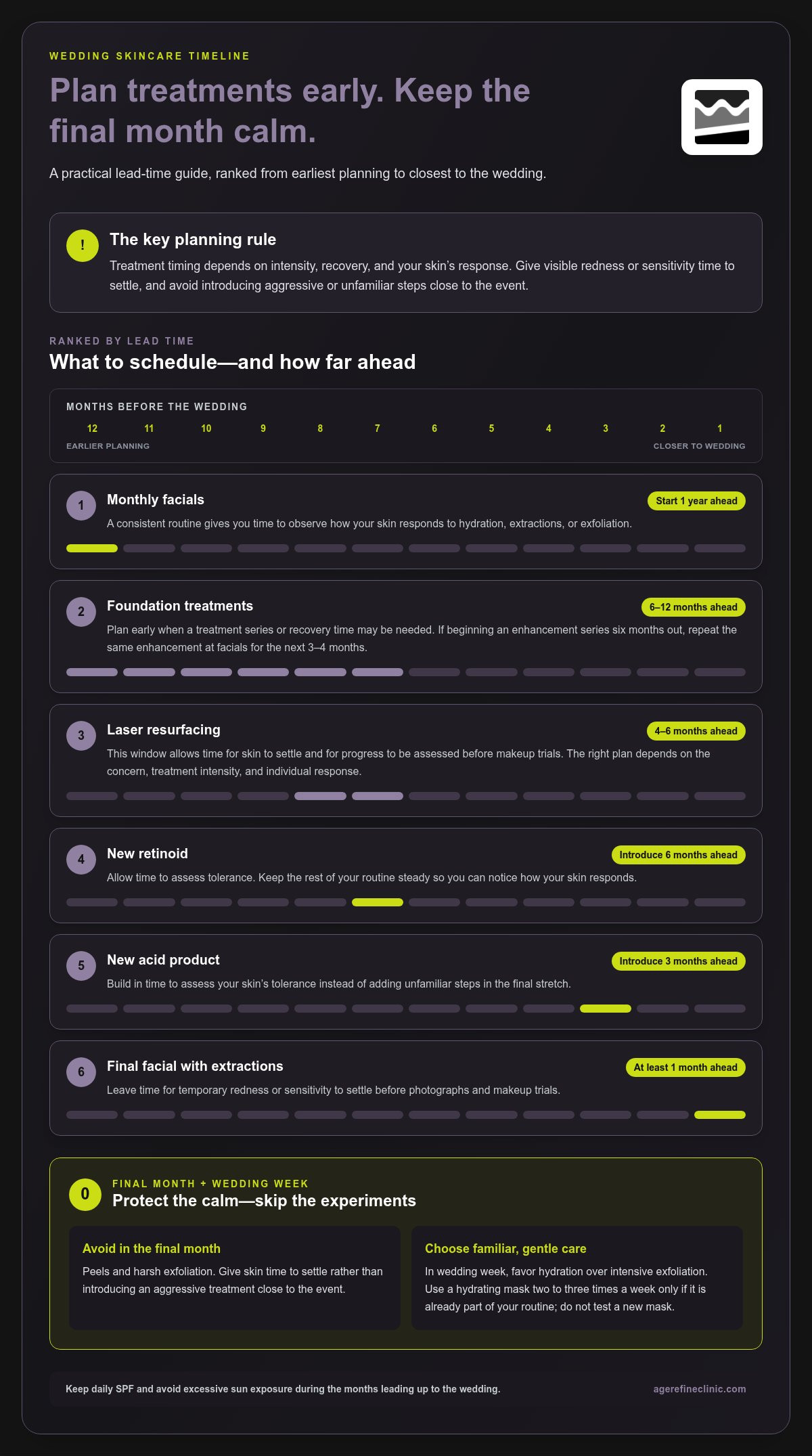
Start monthly facials a year before the wedding if they fit your routine and skin goals. A consistent appointment gives you time to notice how your skin responds to hydration, extractions, or exfoliation. If you begin an enhancement series six months before the date, repeat the same enhancement at each facial for the next 3-4 months. This steady approach can help you assess changes in texture or pigmentation without layering unfamiliar steps.
For bridal facial planning in Irvine, focus on the treatment goal rather than the package name. A hydration-focused facial can support a brighter, more radiant appearance, while an appointment with extractions may need more recovery time. Choose a familiar facial approach that suits your skin and schedule. Combining several new steps at once makes it harder to tell what your complexion tolerates.
Schedule your final facial with extractions at least a month before the wedding. This leaves time for temporary redness or sensitivity to settle before photographs and makeup trials. If you’re managing pigmentation or uneven texture, use earlier appointments to assess your routine rather than expecting one facial to change your complexion overnight. Keep your regular products consistent around appointments, especially if your skin tends to react.
During wedding week, choose hydration over intensive exfoliation. A gentle hydrating facial may fit this window, but avoid aggressive exfoliation and extractions that could irritate your skin. At home, use a hydrating mask two to three times a week if it’s already part of your routine. Don’t test a new mask during the final week. Familiar, moisture-focused care is more practical than chasing an overnight glow with unfamiliar products.
2. Laser resurfacing and microneedling timing
Laser resurfacing and microneedling belong in the earlier stages of wedding preparation. Start foundation treatments 6-12 months before the wedding when a series or recovery period may be needed. For laser treatments specifically, a four-to-six-month window provides time for skin to settle and for progress to be assessed before makeup trials. RF microneedling may address skin texture concerns by stimulating collagen, while laser skin rejuvenation targets broader complexion goals.
For acne marks, uneven tone, or visible pigmentation, the right treatment depends on the concern and your skin’s response. Laser resurfacing and microneedling may suit texture-focused plans, while a chemical peel may be appropriate for some tone concerns. Schedule peels well in advance, and avoid harsh exfoliation or peels during the month before the wedding. Consider treatment intensity and recovery, including the possibility of redness, sensitivity, and irritation, when planning your calendar.
These treatments can be part of a wedding plan, but timing and recovery depend on the procedure, its intensity, and your individual skin response. A lighter treatment may involve a different recovery experience than more intensive resurfacing. There is no single recovery period for every peel, microneedling session, or laser treatment. Allow time for visible irritation to resolve before wedding events.
Plan injectables separately from resurfacing. Some wedding timelines place final Botox about one month before the wedding, while others schedule final Botox and any needed fillers two to three months ahead. These are distinct timing recommendations, not a reason to combine new treatments close to the event. Schedule final extractions at least a month before the wedding so temporary redness has time to settle.
For a smooth, glowing finish, write the wedding date first, then work backward from treatment and makeup milestones. Mark the final month as a no-peel, no-harsh-exfoliation period. If texture is the priority, explore RF microneedling for skin texture as one option to discuss within an earlier treatment timeline.
3. Customized, timeline-based wedding skincare planning
A wedding skincare timeline should begin 6-12 months before the date, especially when planning a treatment series. Start with your main goal, such as a healthier-looking complexion, smoother texture, or reduced pigmentation. Keep a simple record of treatments and reactions, then adjust the routine gradually. Daily SPF and avoiding excessive sun exposure help protect skin during the months leading up to the wedding.
Use the calendar to separate complexion goals from body goals. Body contouring addresses a different concern from facial skincare, so plan it as its own treatment track. Lead time depends on the treatment plan and how progress is assessed. Avoid stacking new treatments just because they fit the same appointment window. A measured plan makes room to consider facial goals, body goals, and recovery separately.
Injectables also need their own schedule. Begin planning them 6 to 12 months before the wedding, rather than making decisions in the final weeks. Some wedding timelines place final Botox and any needed fillers two to three months before the event; another recommendation is to schedule the final neurotoxin or filler appointment at least a month ahead. These timings differ, so include the treatment type and settling period in the overall plan.
For laser treatments, allow an early planning window. Laser resurfacing and other foundation treatments can start 6-12 months before the wedding, while laser treatments are also commonly scheduled four to six months beforehand. That advance time helps coordinate sessions and observe the skin’s response. A new retinoid is best introduced six months before, and a new acid product three months before, allowing time to assess tolerance.
Compare bridal skincare plans by how clearly each step connects to your goals, wedding date, and existing routine. A useful timeline identifies what to do early, what to keep gentle, and when to stop adding new steps. Keep the final stretch focused on familiar care. This structure helps you refresh your complexion without turning the weeks before the ceremony into a series of experiments.
4. Avoiding new products and treatments close to the wedding
During the month before your wedding, keep your skincare routine stable and familiar. Avoid new products and treatments close to the date, since an unfamiliar cleanser, acid, or peel can trigger a reaction. Skin type matters: a product that feels gentle on one complexion may irritate another. If you want to address texture or tone, plan that step well in advance instead of testing it during wedding preparations.
The main risks of late skincare treatments are unwanted reactions and irritation close to photographs, events, or makeup appointments. A peel, laser session, or microneedling treatment may leave skin needing time to settle, so both treatment intensity and timing matter. Because responses vary by procedure and person, a last-minute experiment is a poor fit for a calm bridal routine.
Use the final month to protect consistency, not to chase an ultimate beauty fix. Keep using products your skin already tolerates, and avoid adding several new steps together. For example, don’t introduce a new retinoid and exfoliating acid in the same week. If irritation develops, it may be difficult to identify which change caused it. Save new active ingredients for earlier planning, when there’s time to observe your skin’s response.
Write a simple final-month plan: maintain familiar cleansing and moisturizing, continue daily SPF, and decline new peels or harsh exfoliation. Keep any scheduled facial gentle, and choose hydration rather than extractions or aggressive resurfacing close to the event. If skin texture is a longer-term concern, explore RF microneedling for skin texture as an earlier planning option, not a last-minute refresh. The best final-week routine is one your complexion already knows.
AgeRefine Clinic: Onda Pro
AgeRefine Clinic may be a next step when your wedding plan includes aesthetic goals beyond facial skincare. The clinic offers Onda Pro for fat reduction, while wrinkle relaxer Xeomin may be relevant if expression lines are part of your plan. These address different concerns from peels, facials, and skin resurfacing, so consider them separately rather than as substitutes for complexion treatments.
Bring your wedding date and priorities into the planning conversation. You might discuss whether body contouring or wrinkle relaxer treatment fits your goals, while keeping your facial routine and recovery timeline in view. A focused plan helps clarify how each option relates to the outcome you want, without adding treatments simply because the wedding is approaching.
Contact AgeRefine Clinic to discuss your aesthetic goals and plan a personalized consultation.
Make Your Wedding Skin Plan Feel Personal
Preparing for your wedding is a chance to choose care that feels right for you, not a reason to pursue every available treatment. A thoughtful plan for pre-wedding skincare treatments in Irvine starts with your priorities, your comfort with treatment, and the look you want to feel confident wearing. Let those preferences guide your next conversation.
AgeRefine Clinic offers Onda Pro, XERF, and wrinkle relaxer Xeomin among its aesthetic options. These treatments address different goals, so start by discussing what matters most to you and how it fits your plans. Individual needs and treatment choices vary.
If you’re ready to explore options with a measured, personalized approach, contact AgeRefine Clinic to plan. Your next step can be simple: share your priorities and build a plan that feels considered, comfortable, and true to you.
Frequently Asked Questions
When Should You Schedule a Peel Before Your Wedding?
Schedule a peel early enough to observe how your skin responds, and avoid peels during the month before your wedding. Timing depends on the peel’s intensity and your skin’s reaction. If your date is approaching, prioritize familiar, gentle care instead of trying a peel for the first time. Keep your makeup trial and wedding events in mind when planning recovery time.
What pre-wedding skincare treatments are available in Irvine, California?
For pre-wedding skincare treatments, Irvine residents may consider facials, peels, laser treatments, and microneedling, depending on their goals. AgeRefine Clinic offers laser skin rejuvenation and RF microneedling for skin texture, which address different concerns. If texture is your priority, you may explore microneedling; complexion concerns may prompt a discussion about laser rejuvenation.
When should I start pre-wedding skincare treatments before the wedding?
Begin planning six to twelve months before your wedding if your goals may involve a treatment series or recovery time. If you’re considering pre-wedding skincare treatments in Irvine, start by identifying one priority, such as texture, and noting your current products and treatments. This gives you a clear starting point for discussing options and tracking your skin’s response, rather than making several changes at once.
How far in advance should I avoid trying new products or treatments before the wedding?
Avoid introducing unfamiliar products and treatments close to the wedding. During the final month, avoid peels and harsh exfoliation, and stick to products your skin already tolerates. For example, don’t add a new exfoliating product during wedding-week preparations. If you want to try a different product or treatment, leave enough time for your skin to respond before the final stretch.
How should I compare Irvine med spas and estheticians for bridal skincare?
Compare plans by how clearly each step fits your skincare goals, wedding date, and existing routine. Look for a timeline that accounts for treatment intensity, your skin’s response, and recovery, while keeping the final month focused on familiar, gentle care.