A treatment that relaxes overworked jaw muscles can also affect nearby muscles. Xeomin is botulinum toxin type A; it blocks nerve signals to the injected muscle. Possible Xeomin side effects in the jaw include soreness, bruising or swelling at the injection site, headache, and temporary weakness that may affect your smile. Use for TMJ disorders or bruxism is off-label. Rarely, toxin effects can spread and cause trouble swallowing, speaking, or breathing hours to weeks after injection. Seek immediate medical help for these symptoms.
It’s understandable to want a clear picture of recovery and warning signs before considering injections. This guide explains how Xeomin relaxes overactive jaw muscles, which local effects and toxin-spread symptoms may occur, and how treatment may relate to ongoing jaw pain or clenching. You’ll also learn what to expect as the effect develops and why an individualized assessment matters.
Key Takeaways
- Learn which injection-site reactions can occur and what to notice as the jaw area recovers.
- Understand how relaxing an overworked muscle may also affect nearby muscles and influence chewing or smiling.
- Recognize symptoms that may signal toxin effects beyond the injection area and require urgent medical attention.
- Get a clearer sense of how side-effect duration differs from the temporary muscle-relaxing effect of treatment.
What are the possible Side Effects of XEOMIN?
Jaw treatment can cause local reactions, temporary muscle weakness, or other effects. Possible Xeomin side effects in the jaw depend on the injection plan and the person’s health.
Injection-Site Reactions
Common injection-site reactions include pain, bruising, bleeding, and swelling. Jaw injections may also cause temporary soreness or a headache. Notice whether discomfort is limited to the treated area or comes with new symptoms, such as trouble swallowing. Dry mouth can also occur with Xeomin and may contribute to dental problems, including tooth decay.
Swelling, Redness, and Bruising
Swelling, redness, and bruising can develop where the needle enters the skin. These local effects are distinct from muscle weakness or symptoms affecting vision. In the jaw area, note whether swelling or soreness changes over time or affects everyday activities such as chewing. When considering Xeomin side effects in the jaw, distinguish a local reaction from a new or worsening symptom.
Duration of Side Effects
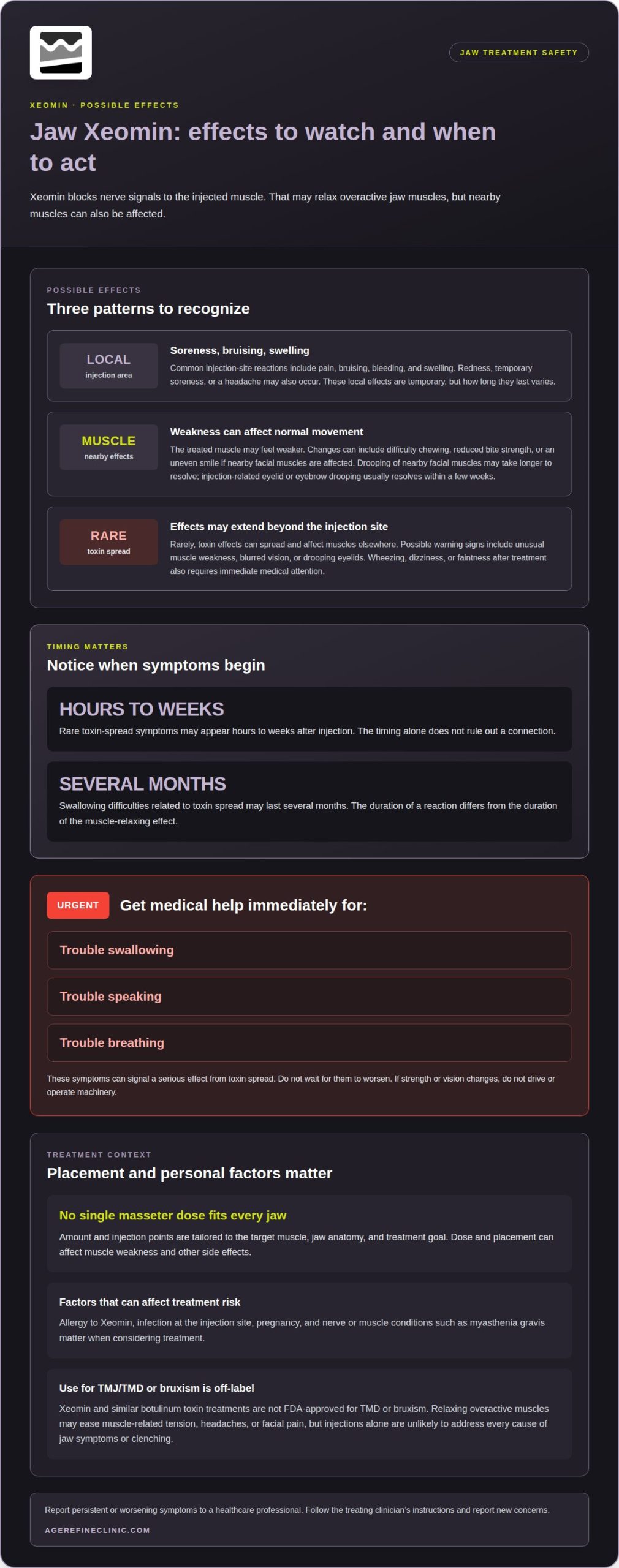
Local soreness, swelling, and bruising are temporary, but how long they last varies. Drooping of nearby facial muscles, such as an uneven smile, may take longer to resolve; injection-related eyelid or eyebrow drooping usually resolves within a few weeks. The duration of a reaction differs from the duration of the muscle-relaxing effect. Report persistent or worsening symptoms to a healthcare professional.
Dose: There is no single masseter dose that suits every jaw. The amount and injection points are tailored to the target muscle, jaw anatomy, and treatment goal. Dose and placement can affect muscle weakness and other side effects.
Who should avoid treatment? Allergies to Xeomin, infection at the injection site, pregnancy, and nerve or muscle conditions such as myasthenia gravis can affect treatment risk. These factors matter before proceeding.
The treatment plan determines the number of injection points; the target muscles and individual anatomy guide placement. After treatment, follow the clinician’s instructions and report new concerns.
How Does Xeomin Relax Overworked Jaw Muscles?
Xeomin acts on the nerve signals that activate an injected muscle. In the jaw, reduced activity can ease excessive contraction, but it can also weaken muscles used for chewing.
Muscle Weakness and Chewing Changes
Botulinum toxin type A blocks signals from nerves to the targeted muscle. This temporary change can reduce forceful clenching, but it can also make the treated muscle feel weaker. Because nearby muscles may be affected, notice changes in chewing, bite strength, or smile symmetry. An uneven smile can occur if temporary weakness affects muscles near the injection area.
Chewing muscles have an important role beyond clenching. If chewing feels unusually difficult or weakness affects everyday activities, report the change to the treating provider. The effect depends on which muscles are injected and how treatment is planned. Rarely, toxin effects can spread beyond the injection site and cause serious side effects, including trouble swallowing or breathing problems.
Muscle Relaxation and TMJ/TMD Relief
Temporomandibular disorder (TMD), often called TMJ, can involve jaw tension and discomfort. Relaxing overactive muscles may ease muscle-related tension, headaches, or facial pain. It does not directly address every cause of jaw symptoms, such as a mechanical problem or habitual grinding.
Xeomin and similar botulinum toxin treatments aren’t FDA-approved for TMD or bruxism; use for these concerns is off-label. Injections alone are unlikely to address the root cause of clenching or grinding. Some people continue using a splint, physical therapy, or specialized care from providers like Restore Chiropractic Center alongside treatment, depending on their care plan.
During an assessment, a provider considers the muscles contributing to symptoms, chewing function, and treatment goals. Precise placement matters: the aim is to reduce excessive activity without unnecessarily impairing normal movement. Discussing jaw symptoms and muscle function can help clarify whether a muscle-relaxing approach fits your concerns. Persistent trouble swallowing, speaking, or breathing after injection requires immediate medical attention.
Spread of toxin effects
Rarely, botulinum toxin effects can extend beyond the injection site. Symptoms may appear hours to weeks after treatment, so the timing alone doesn’t rule out a connection.
Rare Toxin Spread Effects
When botulinum toxin spreads beyond the targeted area, it may affect muscles elsewhere in the body. Watch for unusual muscle weakness, blurred vision, or drooping eyelids rather than assuming these are ordinary local reactions. Such symptoms can begin hours to weeks after an injection. If your strength or vision changes, don’t drive or operate machinery.
Swallowing and Breathing Problems
Difficulty swallowing, speaking, or breathing can signal a serious effect from toxin spread. These problems may start hours to weeks after treatment, and swallowing difficulties may last several months. Seek medical help immediately for trouble swallowing, speaking, or breathing. Wheezing, dizziness, or faintness after treatment also requires immediate medical attention.
Boxed Warning for Toxin Spread
Botulinum toxin products carry an FDA boxed warning about the possibility of effects spreading beyond the injection site. The warning addresses rare but potentially serious symptoms, including muscle weakness and problems with swallowing or breathing. It doesn’t mean every jaw injection causes these effects. It does make recognizing symptoms and responding promptly an important part of treatment safety.
When seeking urgent care, clearly describe when new symptoms began and what they are. For example, note whether swallowing trouble, vision changes, or weakness appeared hours or weeks after the injection. Don’t wait for symptoms to worsen before seeking help for breathing, speaking, or swallowing problems. Prompt medical attention is the right response to these warning signs.
How long do side effects from Xeomin jaw injections usually last?
Reactions after a jaw injection don’t all last the same amount of time. Local soreness, swelling, and bruising are temporary, while toxin-related muscle weakness follows a different course. Xeomin’s muscle-relaxing effects typically last three to four months. Relief from jaw discomfort is reported to last four to six months, but that refers to symptom relief, not the duration of an injection-site reaction.
Keep these timelines separate. A tender injection site is not the same as reduced clenching, and neither timeline predicts how long every side effect will last. The location and type of symptom matter. For example, note when soreness starts and whether it changes, then distinguish it from new difficulty chewing or an uneven smile.
Effects from toxin spread follow a different timeline. Symptoms may appear hours to weeks after an injection, and swallowing problems associated with XEOMIN may last several months. Trouble swallowing, speaking, or breathing requires immediate medical attention, regardless of how long ago treatment occurred. Don’t wait for a routine follow-up if these serious symptoms arise.
For ordinary jaw-area reactions, track the symptom and how it changes rather than applying the treatment’s three-to-four-month effect period to every concern. Note whether swelling, bruising, or soreness is improving, stable, or worsening. Share that timeline with the treating healthcare professional if a reaction persists or changes. The symptom, its progression, and whether it affects chewing can help distinguish a local reaction from a functional change.
Xeomin’s effects wear off gradually, while a local reaction and muscle weakness may resolve on separate timelines. Comparing these changes can help clarify what you’re experiencing. If jaw discomfort returns as the muscle-relaxing effect fades, discuss the change and your treatment goals with a qualified healthcare professional. Immediate care remains essential for breathing, speaking, or swallowing problems.
AgeRefine Clinic: Wrinkle relaxer Xeomin
AgeRefine Clinic offers wrinkle relaxer Xeomin for people exploring treatment options. If you’re considering jaw injections, discuss your symptoms, treatment goals, and relevant health history. This can help frame whether relaxing overactive muscles aligns with your concerns, especially since Xeomin use for TMJ disorders or bruxism is off-label and may not address every cause of jaw discomfort.
A thoughtful next step is to discuss expected muscle changes, possible side effects, and symptoms that need urgent attention before deciding. Contact AgeRefine Clinic to discuss wrinkle relaxer Xeomin and your jaw-treatment questions.
Make your next step an informed one
Your jaw symptoms deserve an assessment that considers function, comfort, and your goals together. Before deciding on treatment, identify what you hope to change, how clenching or discomfort affects daily life, and what questions you have about possible Xeomin side effects in the jaw. Clear priorities can make a clinical conversation more focused and help you weigh potential benefits against your concerns.
Xeomin may not address every cause of jaw discomfort, so a personalized discussion is a sensible next step. Whether it suits your concerns depends on your symptoms, health history, and treatment goals. AgeRefine Clinic offers wrinkle relaxer Xeomin. Its Onda Pro and XERF treatments address different aesthetic concerns, not jaw symptoms.
Contact AgeRefine Clinic about Xeomin to discuss your questions and next steps. A measured decision begins with understanding what matters most to you.
Frequently Asked Questions
What is XEOMIN?
XEOMIN is incobotulinumtoxinA, a botulinum toxin type A product without additives. It works by temporarily blocking nerve signals to treated muscles. For jaw clenching or temporomandibular disorders, its use is off-label, meaning those conditions aren’t among its FDA-approved uses. This distinction helps set expectations: treatment targets muscle activity, not every possible cause of jaw pain.
Will Xeomin Help if I Grind at Night?
Xeomin may reduce activity in overworked jaw muscles, but injections alone are unlikely to address the root cause of nighttime grinding. Some people continue using a dental splint or physical therapy alongside injections. If grinding is your concern, consider how it affects your jaw comfort and dental health, then discuss your goals and possible complementary approaches during a treatment conversation. Consulting a general practice such as blueridge.dentist can also help ensure that tooth wear is properly monitored and managed with preventive dental care.
What Happens in Your Body With Repeated Neurotoxin Treatments?
With repeated Xeomin treatment, the body may form antibodies, which can affect response. Fewer than 1 percent of patients in Xeomin clinical trials tested positive for antibodies, and no patients in the cited trials lost response because of them. Using the lowest effective dose at the longest practical interval is advised to reduce antibody-resistance risk; this principle guides treatment planning.
What are common side effects of Xeomin injections in the jaw or masseter muscles?
Common local reactions include soreness or pain, bruising, swelling, and sometimes headache. For example, tenderness around a masseter injection site differs from a change in chewing strength, so describe the location and nature of any symptom clearly. Dry mouth can also occur and may contribute to dental problems such as tooth decay, making oral health worth discussing.
What serious or rare risks can Xeomin jaw injections cause?
Rarely, botulinum toxin effects can spread beyond the injection area. Serious warning signs include trouble swallowing, speaking, or breathing, and require immediate medical attention. Symptoms may begin hours to weeks after treatment; swallowing problems can last several months. New breathing difficulty or trouble swallowing warrants urgent care rather than waiting to see whether it settles on its own.
How does Xeomin compare with Botox and Dysport for jaw injections and side effects?
Brand names alone don’t establish which jaw treatment fits a person’s goals or risks. Xeomin and Botox doses aren’t interchangeable unit for unit, and jaw use for these concerns is off-label. For a discussion in Orang county, AgeRefine Clinic offers wrinkle relaxer Xeomin. Compare the proposed treatment’s target muscles, intended effect, and potential side effects with your priorities rather than assuming brands work identically.