
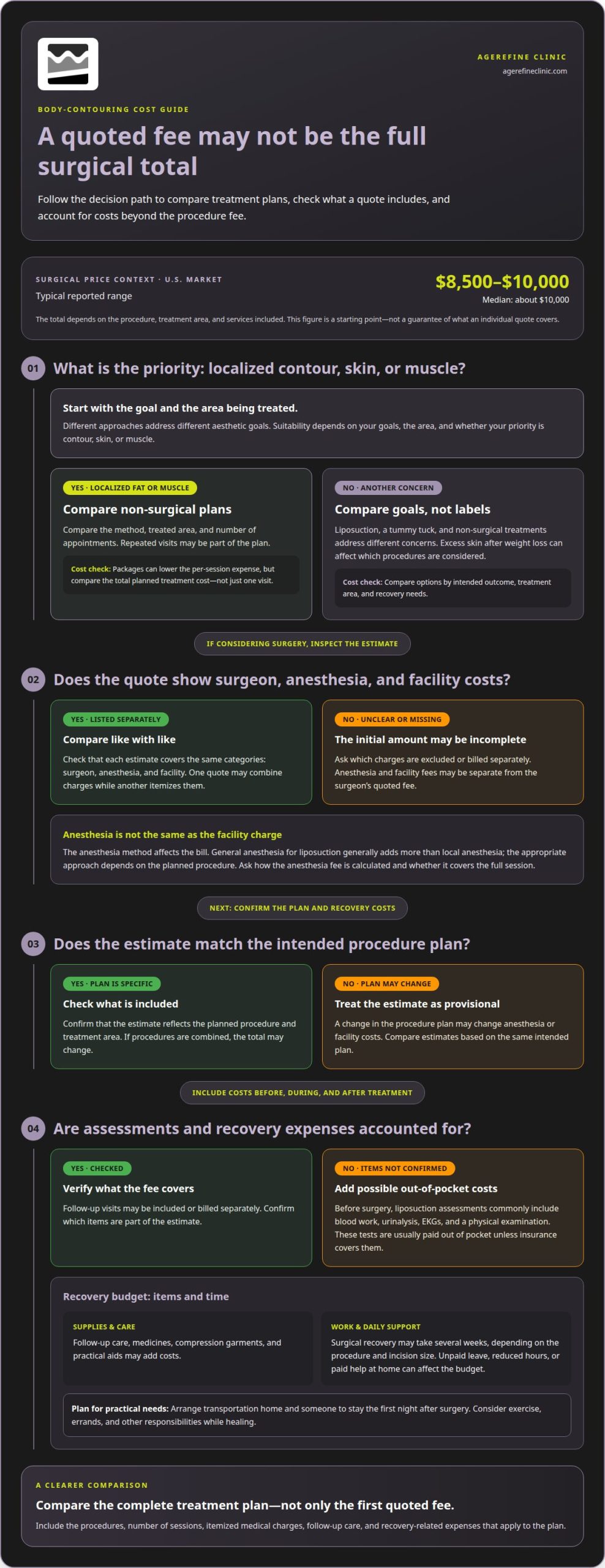
The sticker price is only one part of a body-contouring budget. On the U.S. market, surgical body contouring typically costs between $8,500 and $10,000, with a median of about $10,000. The hidden costs of body contouring can include repeat sessions, anesthesia, facility fees, and recovery-related expenses, depending on the treatment.
It’s reasonable to want a clear picture of the total before deciding what feels right for you. This article explains how treatment type and the number of sessions shape the hidden costs of body contouring, and why an initial quote may not include every expense.
You’ll also learn how anesthesia, facility charges, tests, aftercare, and time away from work can affect a surgical budget. The goal is to help you compare treatment paths and understand what to factor in before making a decision.
Key Takeaways
- Compare treatment approaches by what they address and how many appointments may be involved, not just by the first quoted fee.
- Build a fuller budget by accounting for potential consultation, anesthesia, facility, follow-up, and recovery expenses.
- Understand how treatment area, goals, location, and whether procedures are combined can influence the overall cost.
- Explore how non-surgical options such as Onda Pro and XERF may fit your aesthetic goals and treatment preferences.
How Much Does Body Contouring Cost?
Total surgical costs depend on the procedure, treatment area, and services included. Consultation, testing, aftercare, and time away from work can add expenses beyond the quoted fee.
Procedure and Pre-Operative Costs
Surgical procedure and pre-operative costs cover the operation and assessments completed before it. They matter because a procedure fee may not include every service. Before liposuction, tests commonly include blood work, urinalysis, EKGs, and a physical examination. These tests are usually paid out of pocket unless insurance covers them. Consultation, surgeon, anesthesia, and facility charges may also be itemized separately.
Recovery Supplies and Follow-Up Costs
Recovery costs can include follow-up care, medicines, compression garments, and practical aids. Expenses may continue after the procedure, so ask what the initial fee covers. Follow-up visits may be included or billed separately. Penn Medicine says patients wear compression bandages to support their contours during healing. Include these items in your estimate rather than assuming the procedure fee covers every recovery need.
Recovery Time and Lost Income
Recovery time and lost income cover work and household costs while healing limits normal activity. Surgical downtime can affect pay and the help needed at home. Surgical body contouring may require several weeks of recovery; the duration depends on the procedure and incision size. Unpaid leave, reduced hours, or paid help with daily tasks can add to the budget. Arrange transportation home and someone to stay the first night after surgery. Plan for exercise, errands, and other responsibilities while recovery progresses and incisions heal; if you plan to rest or work from home, practical community resources like the Electronic Recycling Association (ERA) can assist with affordable refurbished tech or clearing out old electronics before your downtime.
Non-surgical treatment prices and multiple sessions
Non-surgical treatment costs depend on the method, treated area, and number of appointments. Packages can lower the per-session expense, but the overall cost still depends on the complete treatment plan.
Surgical body-contouring options generally involve higher overall costs and greater recovery needs than nonsurgical approaches. Liposuction and other surgical procedures address different aesthetic goals from treatments focused on localized fat or muscle stimulation. Non-surgical plans can also involve repeated visits, so compare the full plan rather than one appointment’s fee. Suitability depends on your goals, the area being addressed, and whether your priority is contour, skin, or muscle; for patients exploring minimally invasive skin remodeling alternatives, practices like Emre Üregen M.D. offer radiofrequency microneedling technologies such as Morpheus 8 to improve tissue firmness with reduced downtime.
To compare quotes, look at the procedures included, the number of sessions, and whether follow-up care or other charges are itemized. For surgical care, experience and comfort matter alongside cost; patients are advised to choose a plastic surgeon skilled in body-contouring procedures. Board certification is also a consideration when weighing a surgeon’s experience and your confidence in their care.
Financing options may include promotional medical-financing periods of 6, 12, or 24 months with no interest, according to the offer’s terms. Review the repayment period and any balance that could remain before choosing a plan, so monthly payments fit your budget without obscuring the total expense.
Potential complications also warrant careful consideration. Penn Medicine notes that some pre-existing conditions can increase infection risk, while recovery discomfort may be managed with medication prescribed by the surgeon. A complication may require additional care, and insurance may not cover surgery-related complications. Discuss relevant health conditions and recovery needs during consultation.
If your aesthetic goal is localized contour rather than weight loss, compare treatment approaches and their full planned costs. This distinction helps keep your choice aligned with your priorities and budget.
Anesthesia and facility fees
Anesthesia and facility charges may be separate from a surgeon’s quoted fee, changing the realistic total for surgical body contouring. These are distinct cost categories and may not be part of the initial estimate. A quote that lists only the surgeon’s fee may leave important medical expenses out of view.
The anesthesia method affects the bill. General anesthesia for liposuction generally adds more than local anesthesia, and Penn Medicine says body contouring procedures typically take place under general anesthesia. The appropriate approach depends on the planned procedure. Ask how the anesthesia fee is calculated and whether it covers the full session, rather than assuming it matches the operating-room charge.
Facility fees cover the surgical setting and can differ from anesthesia charges, even when both appear in the same estimate. One estimate might show a combined figure, while another separates facility, anesthesia, and surgeon fees. Compare the same categories across estimates.
For a clearer view of body-contouring costs, organize each quote into surgeon, anesthesia, and facility amounts. Then identify any items described as excluded or billed separately. If the procedure plan changes, anesthesia or facility costs may change too, so the estimate should reflect the intended procedure. This breakdown helps distinguish the initial quoted amount from the full surgical expense and shows whether estimates cover the same services.
Factors that affect body contouring costs
The treatment plan is a major cost factor: the procedure, treated area, and patient’s goals shape the care involved. A tummy tuck and liposuction address different concerns, so their fees and recovery demands aren’t interchangeable. The extent of excess skin after weight loss can also affect which procedures are considered. Compare options by intended outcome, not just by the label “body contouring.”
Location matters, including the practice setting in Orange County. Surgeon experience and the procedures used also influence surgical costs. A realistic estimate should reflect the specific treatment plan and local setting rather than assuming a typical price applies everywhere. These details help explain why patients seeking similar changes may receive different estimates.
Combining procedures may change the total. For example, liposuction and a tummy tuck performed in one surgical session may cost less than scheduling them separately, because the patient may have one anesthesia and surgery-center expense instead of separate charges. Combining procedures also means one recovery period rather than multiple periods. Whether this approach fits depends on the patient’s needs and planned care.
Insurance is another factor, but cosmetic procedures generally aren’t covered by health insurance. Some post-weight-loss expenses may be eligible when excess skin causes medical issues. A cosmetic goal and a medical concern may be treated differently by a plan. Build a realistic budget around the treatment plan, setting, surgeon, and recovery needs rather than assuming insurance will reduce the expense.
For goals involving localized contour or skin concerns, discuss treatment options that fit your priorities and preferences.
AgeRefine Clinic
AgeRefine Clinic offers aesthetic and wellness services for people considering options that align with their personal goals. Its offerings include Wrinkle relaxer Xeomin, IV Therapy, and Peptide Therapy. These services address different concerns, so the right next step depends on what you want to explore, whether that is body contouring costs or other aesthetic and wellness priorities.
Use these cost factors to clarify which treatment category fits your goals and budget. If you’re interested in AgeRefine Clinic’s services in Orange County, contact the clinic to discuss your goals and arrange a personalized consultation.
Choose a Plan That Fits Your Goals
A thoughtful next step is to define what you want to change and what matters most in your care experience. That clarity can help you discuss suitable aesthetic options without letting the hidden costs of body contouring overshadow the outcome you’re seeking.
AgeRefine Clinic offers Onda Pro, XERF, and Wrinkle relaxer Xeomin. These treatments address different aesthetic concerns, so a personalized consultation can connect your priorities with the relevant treatment category. Focus on the result you hope to achieve, the approach that feels appropriate, and the details you want explained before deciding.
Take the time to explore your options at your own pace. Contact AgeRefine Clinic to discuss your aesthetic goals and possible next steps.
Frequently Asked Questions
Are There Hidden Costs to Budget For?
Yes. Budget for expenses beyond the treatment fee, including transportation, time away from work, recovery help, and supplies not itemized in an estimate. Traveling can add lodging, meals, and caretaker costs during early recovery. Some clinics charge cancellation fees for changes made within 48 hours, and purchased packages may be non-refundable. These potential hidden costs of body contouring can affect your budget before treatment starts.
How Many Sessions Will You Actually Need?
Non-surgical plans commonly involve one to three sessions per area, although the treatment approach and goals influence the plan. Appointments are typically spaced about a month apart, so addressing multiple areas can extend the timeline. For budgeting, consider the complete course for each area rather than focusing only on the first visit. Session count and the time needed to complete treatment are related, but they aren’t the same.
Should You Go Non-Surgical or Surgical?
Choose based on the concern you want to address, your preferences, and your tolerance for recovery. Surgical procedures can be part of a plan for excess skin after weight loss, while nonsurgical treatment plans involve appointments rather than an operation. Body contouring is intended to improve proportions, not serve as a weight-loss method. These approaches have different purposes, so start by defining the change you want.
What Factors Influence Your Body Sculpting Price?
Your estimate reflects the treatment method, number of areas, goals, and location. For surgical care, the surgeon’s experience and procedures used also affect cost. The plan’s scope matters: treating one area differs from combining procedures or planning separate treatments. Compare what each estimate includes and whether the amount covers the full planned course, rather than comparing headline prices alone.
Will Insurance Cover It?
Health insurance generally doesn’t cover cosmetic procedures. Post-weight-loss care can fall into a different category when excess skin causes medical issues, but coverage depends on the plan’s criteria. The key distinction is whether treatment is considered cosmetic or connected to a medical concern. Review your policy’s exclusions and coverage requirements before including potential insurance payment in your budget.
Are Follow-Up Appointments Included?
Follow-up appointments aren’t included in every practice’s initial fee. Some estimates include them, while others list follow-up care separately. Look for a written breakdown that distinguishes scheduled visits from additional care, and note whether it covers the full treatment plan. This helps you understand what the quoted amount accounts for and avoid treating an initial fee as the complete cost of care.