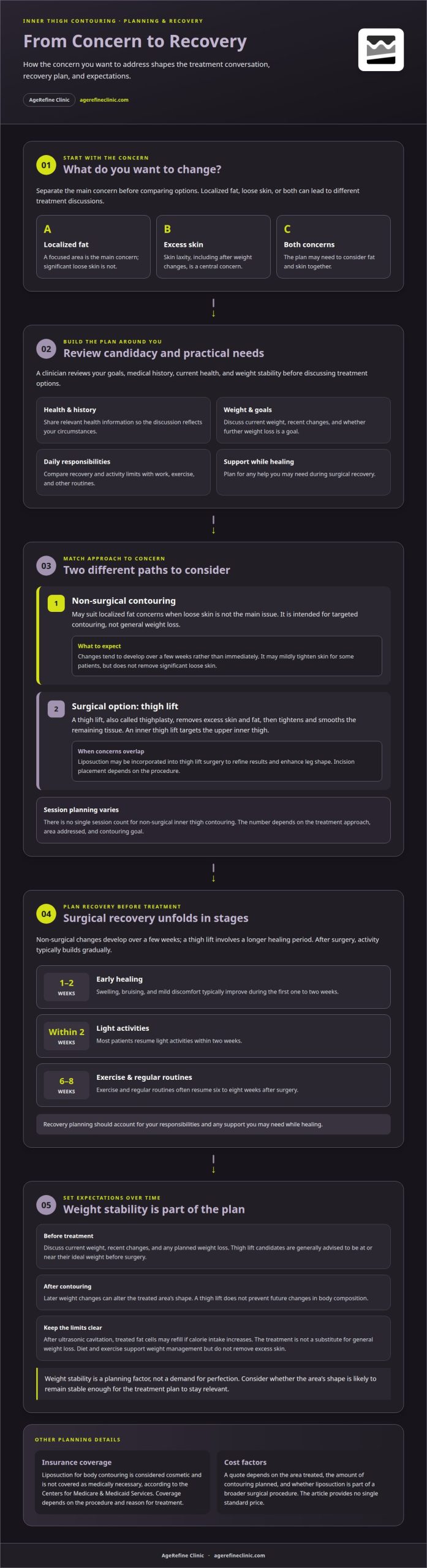
Recovery depends on the approach: changes from non-surgical contouring tend to develop over a few weeks, while a thigh lift involves a longer healing period. For inner thigh fat reduction in Irvine, swelling, bruising, and mild discomfort after surgery typically improve during the first one to two weeks. Light activities may resume within two weeks, while exercise and regular routines often take six to eight weeks.
It’s understandable to want a clearer picture of recovery before choosing a treatment. The right plan depends on whether your main concern is localized fat, loose skin, or both, as well as your health and goals.
This guide explains how treatment planning shapes recovery, how non-surgical contouring compares with surgical options, and which safety considerations matter. You’ll also learn why maintaining a stable weight can support lasting results, helping you make a decision with realistic expectations and a clearer sense of the next steps.
Key Takeaways
- Match the approach to the concern: localized fat and significant loose skin may call for different contouring options.
- Plan recovery around the treatment: non-surgical changes develop over a few weeks, while surgical recovery can take longer.
- Maintaining a stable weight can help support contouring results over time.
- Review health factors and potential risks before deciding, especially when considering surgery or ultrasonic cavitation.
Consultation and treatment planning
A useful consultation starts by identifying the concern: localized fat, excess skin, or both. A smoother contour without loose skin, for example, calls for a different discussion than skin laxity after weight changes. The clinician reviews your goals, medical history, current health, and weight stability before discussing a procedure. This information helps determine whether non-surgical contouring may suit your needs or whether to discuss surgical options such as a thigh lift.
Your plan should connect the treatment choice with practical recovery. After thigh lift surgery, swelling, bruising, and mild discomfort typically improve during the first one to two weeks. Most patients resume light activities within two weeks, while exercise and regular routines often resume six to eight weeks after surgery. Planning should account for these recovery stages, your responsibilities, and any support you may need while healing.
Are inner thigh fat reduction procedures covered by insurance? Liposuction for body contouring is considered cosmetic and is not covered as medically necessary, according to the Centers for Medicare & Medicaid Services. Coverage depends on the procedure and reason for treatment, so don’t assume cosmetic contouring qualifies for insurance payment.
How much does inner thigh liposuction cost in Irvine? The price depends on the treatment plan and is provided after a quote request. Factors include the area treated, the amount of contouring planned, and whether liposuction is part of a broader surgical procedure. These details determine the scope of care, rather than a single standard price.
- Clarify the concern: Distinguish localized fat from loose skin, since each affects the options discussed.
- Review recovery needs: Compare the expected activity limits with work, exercise, and daily responsibilities.
- Discuss candidacy: Share relevant health and weight information so the plan reflects your circumstances.
For inner thigh fat reduction in Irvine, a thoughtful consultation links your desired contour with the procedure, recovery, and cost factors. It also sets realistic expectations: surgery can address loose skin, while other approaches may suit localized fat concerns. A clear plan supports informed decisions and helps align the treatment with your goals and confidence.
Maintaining results with a stable weight
Contour results depend partly on keeping your weight stable after treatment. Thigh lift candidates are generally advised to be at or near their ideal weight before surgery. Later weight changes can alter the treated area’s shape. A thigh lift removes excess skin and fat, but it doesn’t prevent future changes in body composition. Planning treatment around a stable weight can help align expectations with the result the procedure is designed to achieve.
Non-surgical contouring also has limits. After ultrasonic cavitation, treated fat cells may refill if calorie intake increases. The treatment isn’t a substitute for general weight loss. For individuals seeking comprehensive medical guidance to reach their goal before contouring, clinics like Medi Slim offer physician-supervised options. This is why the purpose of treatment and ongoing habits belong in the same conversation. Someone seeking localized contouring while still experiencing substantial weight changes, for example, may want to consider timing before focusing on a specific area.
Diet and exercise can support a healthy weight, but they don’t guarantee that a particular contour will remain unchanged. A practical planning step is to discuss whether your weight has been stable and whether further weight loss is a goal; for those seeking structured support to reach their baseline, programs like Dr. Harris Medical Weight Loss can provide medically supervised guidance. If your weight is still changing, that may affect when treatment makes sense. After treatment, sustained habits support weight management; they don’t remove excess skin or replace a procedure intended to address it.
- Before treatment: Discuss your current weight, recent changes, and any planned weight loss.
- For surgery: Consider whether you’re near your ideal weight and able to maintain it.
- After contouring: Keep diet and exercise in view as part of longer-term weight management.
Weight stability is a planning factor, not a demand for perfection. If you’re weighing treatment timing against ongoing weight loss, an individualized contouring plan can help frame the options around your goals and current circumstances. The central consideration is whether the area’s shape is likely to remain stable enough for the treatment plan to stay relevant.
Surgical and non-surgical body contouring
The main difference is what each approach can address. A thigh lift, also called thighplasty, removes excess skin and fat, then tightens and smooths the remaining tissue. An inner thigh lift targets the upper inner thigh; other techniques address different areas. Liposuction may be incorporated into thigh lift surgery to refine results and enhance leg shape. These surgical options have recovery and incision considerations that differ from non-surgical contouring.
Non-surgical body contouring is intended for localized fat concerns, not general weight loss. It may mildly tighten skin for some patients, but it doesn’t remove significant loose skin. Changes tend to develop over a few weeks. If loose skin is your primary concern, a non-surgical approach may not achieve the same goal as surgery. Treatment should reflect the area, skin laxity, and contour you want.
How many sessions are needed for non-surgical inner thigh fat reduction? There’s no single session count that fits every plan. The number depends on the treatment approach, the area being addressed, and your contouring goal. Changes develop over a few weeks rather than immediately.
- Localized fat: Non-surgical contouring may suit a focused area when loose skin isn’t the main concern.
- Excess skin: A thigh lift removes skin and fat, with incision placement depending on the procedure.
- Combined concerns: Liposuction may be incorporated into surgery to refine the thigh’s shape.
For surgical body contouring, swelling may last several weeks, depending on the treated area. Thigh lift incisions are placed in natural creases, such as the groin or inner thigh, and typically fade over time. A vertical thigh lift uses an incision from the inner knee to the groin, leaving a scar visible when the inner thighs are exposed. These trade-offs matter alongside lifestyle, recovery, and your desired result. A focused discussion of your goals can help clarify which approach better fits your priorities.
Contraindications and safety
Safety starts with matching treatment to your health and the tissue concern. Ultrasonic cavitation is contraindicated during pregnancy. Metal implants, pacemakers, or other electronic devices in or near the treatment area are also contraindications. Active liver conditions or impaired lymphatic drainage can make a person unsuitable for cavitation. Discuss these factors before planning a non-surgical procedure.
Surgery has a different risk profile. Thigh reduction surgery may involve bleeding, infection, fluid collection, fat necrosis, blood clots, or a reaction to anesthesia. Long-term leg swelling, also called lymphedema, is another possible concern. Discuss these risks alongside the expected changes to skin, fat, and contour. Liposuction may be incorporated into a thigh lift, so the planned procedure also shapes which risks apply.
Recovery planning is part of safety. Swelling after surgical body contouring may last several weeks, depending on the area treated. Exercise and regular routines typically resume six to eight weeks after thigh lift surgery. This recovery period affects work, caregiving, and other responsibilities. Discussing those demands before surgery helps set realistic expectations and allows time for healing.
- For cavitation: Pregnancy, nearby electronic devices or metal implants, active liver conditions, and impaired lymphatic drainage are contraindications.
- For surgery: Review risks such as infection, blood clots, fluid collection, and anesthesia reaction.
- For recovery: Include swelling and the timing of exercise when planning daily responsibilities.
A safety-focused plan weighs the concern you want to enhance against treatment limits and recovery needs. If you’re considering non-surgical contouring, discuss treatment safety as part of planning your options.
AgeRefine Clinic
AgeRefine Clinic can help you discuss how your aesthetic goals and wellness priorities shape a treatment plan. If you’re considering inner thigh contouring, bring your main concern, such as localized fullness or loose skin, and your expectations for recovery. A focused conversation can clarify which goals are appropriate for non-surgical care and what questions to address before deciding.
AgeRefine Clinic’s broader aesthetic and wellness offerings include Xeomin wrinkle relaxer, IV Therapy, and Peptide Therapy. These services address different needs, so the discussion can stay focused on your concern rather than adding unrelated treatments. Contact AgeRefine Clinic to discuss your goals and next steps.
Choose a next step that fits your goals
Choosing inner thigh fat reduction in Irvine is a personal decision. Start by clarifying what you want treatment to address. Consider the result you hope to achieve, the recovery time you can accommodate, and whether a non-surgical approach aligns with your priorities. These details can guide a focused conversation about options without rushing you toward a decision.
AgeRefine Clinic offers Onda Pro for fat reduction, alongside XERF and wrinkle relaxer Xeomin for distinct aesthetic concerns. A personalized discussion can keep your questions centered on the thigh area and distinguish relevant options from services designed for other goals. The aim is a considered plan that reflects your preferences and supports informed decision-making.
Contact AgeRefine Clinic to discuss your options and take the next step at a pace that feels right for you.
Frequently Asked Questions
How long is recovery?
Recovery depends on whether treatment is non-surgical or involves surgery. AgeRefine Clinic notes that downtime varies by procedure, and many aesthetic treatments involve little to no downtime. If you’re arranging care around work or exercise, discuss the specific treatment and expected restrictions while planning. This helps you set a realistic schedule for daily activities without assuming every contouring option has the same recovery.
Who Is a Candidate?
A suitable candidate depends on the treatment goal, health history, and characteristics of the area. Someone focused on localized fullness may have different options from someone whose main concern is loose skin. Goals, health, and lifestyle help shape the plan during an assessment. Start by describing the change you want and any health factors that could affect treatment planning.
Are results permanent?
Results aren’t permanent or immune to future body changes. Weight fluctuations can affect the appearance of a treated area, and lifestyle is one factor in how results evolve. Someone whose weight changes substantially after contouring, for example, may notice a different shape over time. During planning, discuss maintenance expectations and how the chosen treatment fits your longer-term goals.
Do Saddle Bags Make Wearing Shorts Embarrassing?
Saddle bags don’t have to dictate what you wear or how comfortable you feel in shorts. If outer-thigh fullness affects your clothing choices, describe that concern during a contouring discussion. The treatment area and your preferred outcome matter: inner-thigh and outer-thigh concerns call for different planning considerations. Your comfort and goals, not a clothing trend, can guide whether exploring treatment feels right.
What Is Body Contouring?
Body contouring refers to treatments intended to change the shape or definition of a specific body area. It’s different from a general weight-loss plan. Approaches vary: some are non-surgical, while procedures such as a thigh lift involve surgery and address excess skin. The key is identifying the concern being treated, since localized fullness and loose tissue call for different discussions about possible outcomes.
What treatments reduce inner thigh fat in Irvine, California?
In Irvine and Orange County, non-surgical body contouring and surgical procedures are distinct options to discuss for inner-thigh concerns. AgeRefine Clinic offers Onda Pro for fat reduction. A personalized assessment considers your goals, health history, and lifestyle to guide the conversation about appropriate care. If loose skin is your central concern, that differs from localized fullness and may call for a separate discussion of surgical approaches.