A brighter complexion may be the goal, but glutathione IV is not a proven shortcut to lighter skin. The treatment delivers glutathione, an antioxidant made by the body, directly into the bloodstream. Glutathione IV benefits for skin are often linked to its proposed effect on melanin production, but evidence that an IV reliably lightens skin remains limited. The FDA has not approved IV glutathione for skin whitening.
It is reasonable to want clear answers before considering an aesthetic treatment. This guide explains what glutathione IV is, how it may affect skin tone, and which side effects and safety concerns to consider. It also puts claims about combining glutathione with vitamin C into context, helping distinguish a proposed approach from an established skin benefit and showing why a professional assessment matters before treatment.
Key Takeaways
- Separate proposed changes in pigmentation from established skin benefits, and consider how gradual or uneven results may affect expectations.
- Learn which reactions can occur, including temporary nausea or dizziness, and why asthma or unexpected pigment changes deserve clinical attention.
- Before treatment, discuss your skin concerns, medical history, and current treatments with a qualified professional.
- Understand why adding vitamin C should be considered as part of an individualized plan, not assumed to improve skin results.
What Are The Side Effects of Glutathione IV Therapy?
IV glutathione may cause temporary reactions, while its skin-lightening effects remain uncertain. Safety depends on the person, the product, and how it is administered.
The FDA has not approved IV glutathione for skin whitening. A typical U.S. cost depends on the treatment protocol, formulation, and clinical oversight; pricing is provided after a quote request.
Potential Adverse Effects
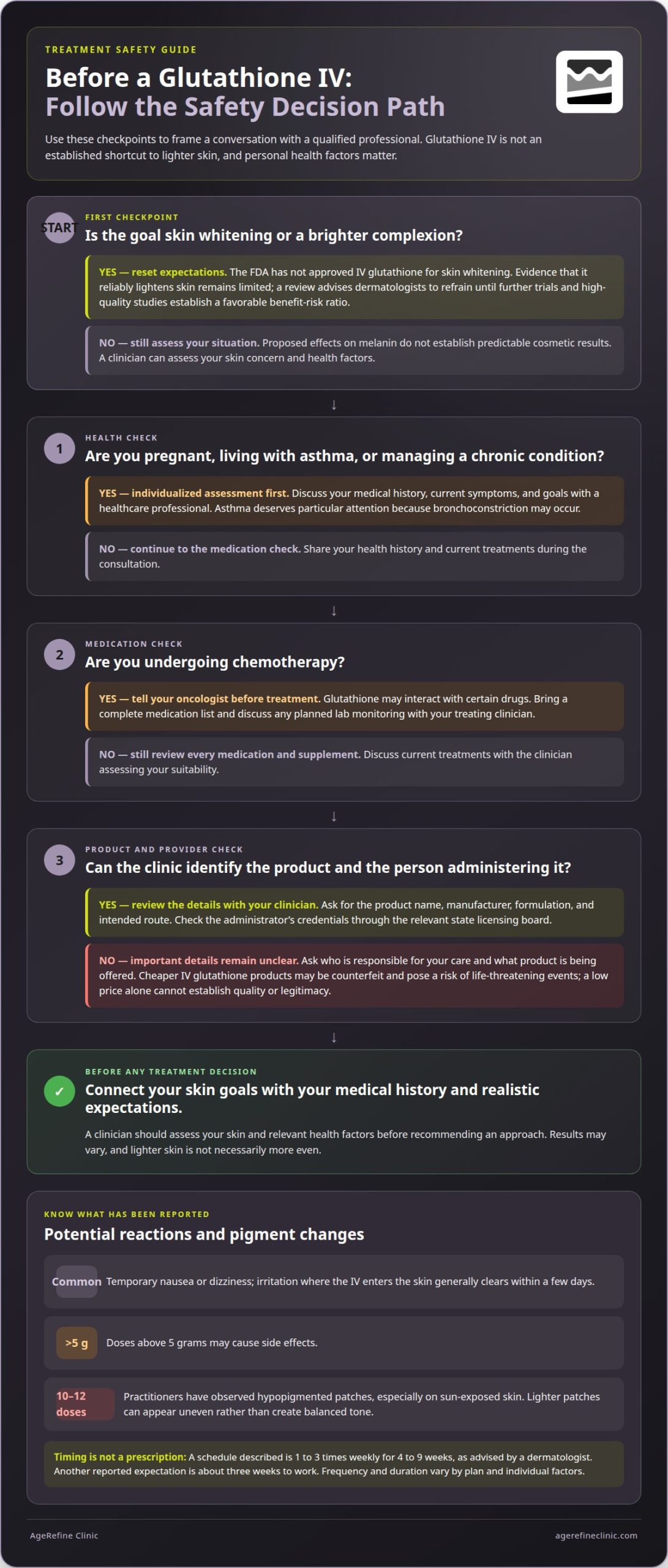
Potential adverse effects are unwanted reactions during or after an infusion, and they matter when weighing a cosmetic goal against personal risk. Reported effects include temporary nausea or dizziness and irritation where the IV enters the skin, which generally clears within a few days. Doses above 5 grams may cause side effects. People with asthma may wish to discuss the potential risks of an infusion with a healthcare professional beforehand.
Practitioners have observed hypopigmented patches, especially on sun-exposed skin, after 10-12 doses. These lighter areas can look uneven rather than create a balanced skin tone. Cheaper IV glutathione products may be counterfeit and pose a risk of life-threatening events, making product safety a serious consideration before administration.
Who May Need to Avoid Treatment
Pregnant people and those with asthma or chronic conditions need individualized medical assessment before considering an infusion. Asthma deserves particular attention because bronchoconstriction may occur. Pregnancy and chronic conditions are not addressed by a specific risk figure here, so a clinician should weigh health history, current symptoms, and treatment goals rather than assume the procedure is suitable.
People undergoing chemotherapy should tell their oncologist before receiving glutathione, since it may interact with certain drugs. Bring a complete medication list and discuss any planned lab monitoring with the treating clinician. This helps the care team consider the treatment alongside existing therapy and decide whether further assessment is appropriate.
Glutathione is an antioxidant that helps neutralize free radicals. Its proposed effect on skin is to inhibit melanin production, which may brighten skin or alter pigmentation. That proposed mechanism does not establish predictable cosmetic results. A review advises dermatologists to refrain from IV glutathione for skin lightening until further trials and high-quality studies establish a favorable benefit-risk ratio.
Consulting a professional before treatment
A consultation should connect your skin goals with your medical history, current treatments, and realistic expectations. IV glutathione is not FDA-approved for skin whitening, so discuss a cosmetic plan carefully rather than assuming it will help. A clinician should assess your skin and relevant health factors before recommending an approach.
Ask who will administer the infusion and what product will be used. Request the product name, manufacturer, formulation, and intended route, then review the administrator’s credentials through the relevant state licensing board. These checks clarify who is responsible for your care and whether the product is represented for intravenous use. A low price alone cannot establish product quality or legitimacy.
Frequency and duration vary by treatment plan. A schedule described for IV glutathione is 1 to 3 times weekly for 4 to 9 weeks, as advised by a dermatologist. Another reported expectation is that treatment may take about three weeks to work. These figures are not a personal prescription: skin type, medical history, treatment goals, and response all matter when considering timing.
Discuss every medication and supplement before treatment, especially if you’re undergoing chemotherapy. Your oncologist should know because glutathione may interact with certain drugs. Ask how planned lab tests could be interpreted during treatment rather than assuming results will be unaffected. Mention chronic conditions, pregnancy, and prior reactions so the clinician can evaluate the full picture before administration.
Maintenance also deserves a specific conversation. Monthly sessions have been recommended after an initial injection series, but ongoing treatment should be weighed against your response and overall health. Daily broad-spectrum sunscreen with SPF 30 or higher is advised to help maintain skin-brightening results. A clinician can explain how sun exposure, skin type, and consistent skincare factor into your goals, and whether continued treatment fits your wellness priorities. For those looking to coordinate their skin and longevity goals, medical centers like Houston Medical Wellness Clinic emphasize evaluating anti-aging treatments within a broader, comprehensive wellness framework.
Can Glutathione Injections Brighten or Even Out Skin Tone?
Glutathione injections are promoted for brighter skin because glutathione may influence melanin production. Melanin gives skin its pigment, while uneven distribution can contribute to dark spots. As an antioxidant, glutathione helps neutralize free radicals linked with oxidative stress. These mechanisms help explain interest in glutathione IV benefits for skin, but they do not establish a reliable cosmetic outcome.
A review found no published data supporting intravenous glutathione for skin lightening when it was written. Practitioners have reported gradual brightening after repeated injections, but responses and pigment changes can vary. Lighter skin is not necessarily more even: patchy hypopigmentation can create visible contrast, particularly on sun-exposed areas.
For hyperpigmentation or uneven tone, dermatologists can assess the type and likely cause of pigment changes, then discuss options suited to the individual’s skin and medical history. Daily broad-spectrum sunscreen with SPF 30 or higher can help maintain skin-brightening results and limit further sun-related darkening. This targeted assessment provides a clearer starting point than assuming an infusion suits every concern.
Glutathione’s antioxidant activity is relevant to cellular health, but it does not prove that IV treatment has an anti-aging effect. Claims about fewer spots, smoother skin, or a more youthful appearance should be distinguished from demonstrated outcomes. For individuals exploring the systemic drivers behind oxidative stress and cellular aging, clinical diagnostics like inflammation testing Malaysia provide insight into internal health markers. When evaluating glutathione IV benefits for skin, consider the specific goal, such as sun spots or general dullness, and what evidence supports that outcome.
Glutathione also supports liver function, but that role does not mean an injection treats liver disease or improves skin tone through liver support. The body naturally produces glutathione, and its antioxidant role is separate from evidence for cosmetic injections. Oral supplements and IV administration differ in delivery; the route alone does not establish skin benefits. Discuss persistent or changing pigmentation with a medical professional, who can explain options suited to your concern.
Combining glutathione with vitamin C IV therapy
Pairing glutathione with vitamin C is sometimes presented as a more potent wellness therapy. That description alone does not establish a skin benefit. Glutathione is an antioxidant, but a proposed effect from one ingredient cannot prove that adding another improves results. For concerns such as hyperpigmentation, ask whether the combination has evidence for the specific skin outcome being discussed.
Before considering combined IV therapy, clarify the purpose of each ingredient. Ask whether the goal is cosmetic, general wellness, or another medical concern, and how success would be assessed. A plan should distinguish skin tone from broader claims about cellular health or immune function. Without that distinction, marketing language can make a combination sound more established than its intended use supports.
Sessions also require a clear explanation of the formulation and administration plan. Discuss whether glutathione and vitamin C would be given together or separately, what each ingredient is intended to do, and which possible reactions need attention. Share medications, supplements, and relevant health history before treatment. These details help a clinician assess the proposed combination rather than assume that combining ingredients is automatically appropriate.
For skin concerns, connect the proposed therapy to the specific issue: a dark spot, uneven pigment, or general dullness. Different concerns may call for different medical assessments, and an IV plan should not replace evaluation of persistent or changing pigmentation. Ask how the approach accounts for your skin goals and what would prompt reassessment. A careful discussion should also distinguish antioxidant activity from proven cosmetic effects.
Choose a defined clinical rationale over the assumption that two ingredients must work better together. If you’re considering IV therapy, discuss your treatment goals with a qualified professional before deciding whether a combination fits your care.
AgeRefine Clinic
AgeRefine Clinic offers IV Therapy as part of its aesthetic and wellness care in Irvine, serving local clients across Orange County. If you’re considering glutathione for skin tone, the evidence and safety concerns above can help frame an informed discussion about your goals and options.
IV Therapy may be relevant if you’re exploring infusion-based wellness care, but it should not be treated as proof of a skin-lightening effect. Start by clarifying what you hope to address, such as uneven tone or another wellness goal, then discuss whether an approach offered at AgeRefine Clinic aligns with that concern.
If you’d like to discuss your questions and goals, contact AgeRefine Clinic.
Choose a Skin Plan That Fits Your Priorities
Your next step can be a focused conversation about the change you want, whether that means addressing uneven tone, texture, or another aesthetic concern. Weigh claims about glutathione IV benefits for skin against your goals and the limits of the available evidence. At AgeRefine Clinic in Irvine, a personalized consultation can help identify which approaches are relevant to your concerns.
AgeRefine Clinic offers options including Onda Pro treatment, XERF, and wrinkle relaxer Xeomin. These services address different aesthetic concerns, so the right direction depends on the outcome you’re seeking. A consultation can clarify the difference between wellness treatments and approaches designed for specific cosmetic goals, without assuming one treatment fits everyone.
If you’re ready to explore your options, contact AgeRefine Clinic to discuss your priorities. Take the next step at your own pace, with a plan centered on informed choices and your individual goals.
Frequently Asked Questions
What is Glutathione IV?
IV glutathione is glutathione delivered through a vein into the bloodstream. Glutathione is an antioxidant the body produces naturally, and it helps neutralize free radicals. In a cosmetic setting, the treatment is promoted for changes in pigmentation, but its purpose should be distinguished from treatment for a diagnosed medical condition. The route describes how it’s administered, not proof of a skin outcome.
How Many Sessions Are Needed to See Results?
Practitioners commonly recommend an initial series of 6 to 10 weekly glutathione injection sessions for visible skin-brightening results. This is a reported protocol, not a universal schedule. Before considering a series, define what change you’re tracking, such as a particular dark spot or overall tone, and have the same area assessed consistently. Session count alone can’t establish whether pigmentation has meaningfully changed.
How Are Glutathione Injections Different from Oral Supplements?
IV administration places glutathione directly into a vein and bloodstream, while oral supplements pass through the digestive system, where glutathione may break down. These routes differ in delivery, not necessarily in proven cosmetic effect. When comparing them, consider the intended use, medical history, and formulation rather than treating direct delivery as evidence that injections produce better skin results.
How Can You Maximize and Maintain Your Glutathione Injection Results?
Maintenance discussions can include habits beyond scheduling another injection. Fresh fruits, vegetables, and nuts are dietary sources associated with glutathione; examples include tomatoes, avocados, oranges, walnuts, and asparagus. Sleep also supports general wellness, with 7 to 9 hours described as a helpful habit. These steps support overall health, but shouldn’t replace assessment of persistent pigmentation or other skin concerns.
How Does Glutathione IV Drip Work for Skin Whitening?
A glutathione IV drip introduces the antioxidant into the bloodstream; its proposed skin-whitening action is a reduction in melanin production. Since melanin contributes to skin pigment, lower production is theorized to make skin look brighter. That explanation describes a proposed mechanism, not a measured result for everyone. A drip should not be equated with targeted treatment for a specific mark or diagnosed pigment condition.
Does IV glutathione lighten or brighten skin, and what evidence supports it?
Evidence that IV glutathione reliably lightens or brightens skin is limited. A review reported no published data supporting intravenous glutathione for skin lightening when it was written and advised against cosmetic use pending stronger trials and benefit-risk evidence. The FDA has not approved it for skin whitening. Potential skin benefits remain distinct from an established treatment effect, so discuss the evidence and options for your specific concern with a professional.