What if feeling confident without makeup didn’t depend on having flawless skin? Visible texture, redness, or blemishes can draw your attention, especially when makeup has become part of feeling ready for work, plans, or a quick trip outside. It’s understandable to want that reassurance. Makeup can be a pleasure and a form of expression, not a requirement for feeling comfortable in your own face.
Building ease bare-faced isn’t about forcing yourself to love every feature or following an elaborate skincare routine. It’s about finding small, realistic ways to feel more at home in your natural appearance, at a pace that feels right for you. That might mean adjusting a familiar routine, easing into makeup-free moments, or noticing how self-criticism affects the way you see your skin.
This guide offers practical habits for everyday comfort, along with gentle ways to approach social and professional situations without makeup. It also explains when a skin concern may call for professional guidance, and why a conversation with a clinician can help you understand your options without committing to treatment. Confidence is personal, and your skin doesn’t have to meet a standard to deserve it.
Key Takeaways
- Define confidence on your own terms: comfort with your choices matters more than flawless skin or constant positivity.
- Choose a simple, sustainable skincare routine that supports comfort without making clear or perfect skin a requirement.
- Explore self-guided practice, supportive conversations, or professional guidance based on what feels useful to you. There’s no required path to feel confident without makeup.
- Take a flexible approach to makeup-free days. Wearing makeup, choosing a lighter routine, or making no change are all valid options.
- If you discuss skin concerns with a clinician, ask about their credentials, potential risks, alternatives, and realistic outcomes before considering any treatment.
What It Really Means to Feel Confident Without Makeup
Feeling comfortable bare-faced can change with the setting, the day, and the stage of life you’re in. You might feel at ease at home but more self-conscious at work, or find that a skin concern seems more noticeable before a social event. That variation doesn’t mean you’re failing at confidence. It means your comfort is shaped by context, and it deserves understanding rather than judgment.
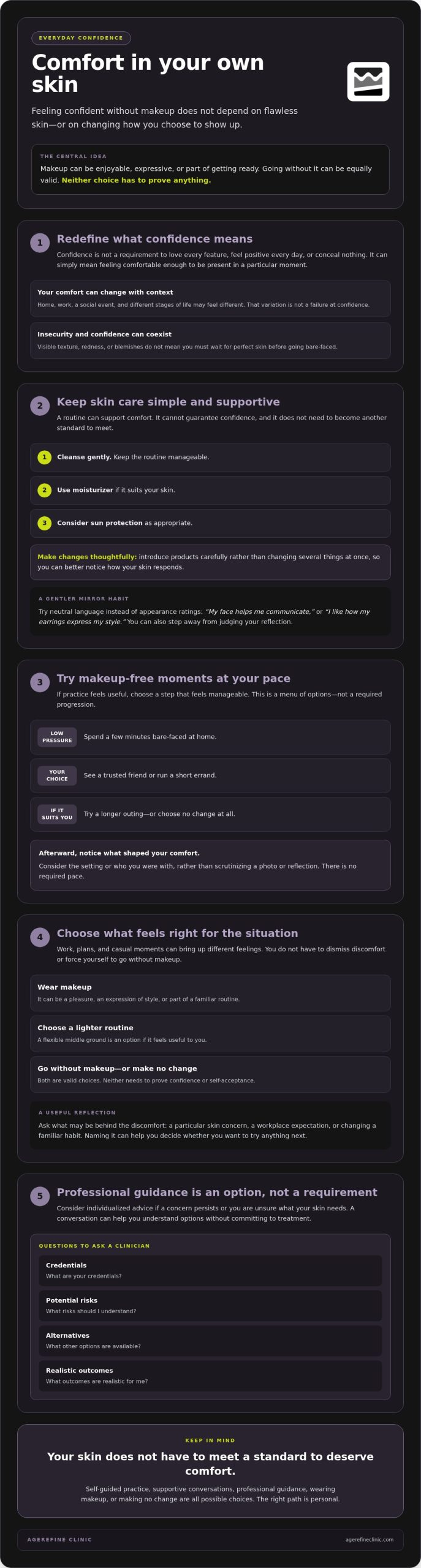
To feel confident without makeup doesn’t require flawless skin or a positive opinion of every feature. Confidence can mean feeling sufficiently at ease to make a choice without believing you have to conceal your face. Makeup can be enjoyable, expressive, or part of how you prepare. Going without it can be equally valid. Neither choice needs to prove anything.
Self-acceptance isn’t a demand to change your appearance or feel cheerful about it every day. It means giving yourself room to make choices with respect for your own needs. For a foundational perspective on self-esteem and self-worth, see What It Really Means to Feel Confident. The practical question isn’t whether you love every feature, but whether you can move through a particular moment with enough comfort to be present.
Does confidence without makeup mean loving every feature?
No. Confidence can coexist with insecurity, blemishes, redness, or mixed feelings about your skin. You don’t have to love every feature before leaving the house without makeup. A gentler goal might be feeling comfortable enough for one situation, such as a familiar coffee shop or a relaxed visit with someone you trust. Small, self-chosen steps count.
Why can going bare-faced feel emotionally difficult?
Makeup can become part of a learned routine: putting it on may signal that you’re ready to be seen. Social expectations can add another layer, especially if you worry that colleagues, friends, or strangers will notice a change. How you feel may differ between a work meeting and a casual day out, and may shift at different stages of life.
Rather than comparing your comfort with someone else’s, get curious about your own response. Is the discomfort about a particular skin concern, a workplace expectation, or changing a familiar habit? You don’t need to dismiss the feeling or force yourself to go without makeup. Naming what’s behind it can help you decide what, if anything, you want to try next.
Build Everyday Comfort With Your Natural Skin and Appearance
A steady routine can make caring for your skin feel simpler, but it can’t guarantee confidence, and it doesn’t need to. Skin naturally has texture and may look different from one day to the next. Pores, fine lines, redness, and blemishes aren’t evidence that you’ve failed to care for yourself. A basic routine should support comfort, not perfection.
Keep care manageable: cleanse gently, use moisturizer if it suits your skin, and consider sun protection as appropriate. Introduce products thoughtfully rather than changing several things at once, so you can better tell how your skin responds. If a concern persists or you’re unsure what your skin needs, seek individualized clinical advice instead of relying on a generic routine. The Office on Women’s Health discusses the relationship between body image and well-being in its guide to Build Everyday Comfort With Your Natural Skin.
Try neutral mirror language that describes function or personal expression, not appearance ratings. For example: “My face helps me communicate,” or “I like how my earrings express my style.” You don’t have to replace a negative thought with praise. You can simply step away from judging your reflection.
What simple skin-care habits can support comfort?
Let your routine serve your skin, not become another standard you have to meet. Gentle cleansing, moisturizer, and sun protection as appropriate are broad starting points, but individual needs vary. Add products carefully, and ask a qualified clinician about persistent concerns or questions about what may suit you. A routine can support daily comfort without becoming a measure of your worth.
How can you practise seeing yourself without makeup?
Begin somewhere low-pressure, such as spending a few minutes bare-faced at home. If that feels manageable, choose your own next step: seeing a trusted friend, running a short errand, or trying a longer outing. There’s no required pace. Afterward, notice what affected your comfort, such as the setting or who you were with, rather than scrutinizing a photo or reflection. Gradual practice can help you learn what feels right as you work to feel confident without makeup.
If you have questions about a skin concern, an aesthetic consultation can be an optional opportunity to discuss your concerns and personal goals, not a commitment to treatment. You can learn more about aesthetic consultations at AgeRefine Clinic as one possible source of guidance.
Compare Practical Ways to Feel More at Ease Bare-Faced
There isn’t one correct route to feeling more comfortable without makeup. You might experiment privately, talk with someone you trust, ask a skin professional about a specific concern, or decide none of these options feels useful right now. Each approach serves a different purpose. Makeup can also remain part of your routine by choice, not obligation.
Research exploring the psychology of makeup and self-esteem considers how makeup use relates to aspects of self-esteem and body image. That relationship is personal, not a simple rule about what makeup means for any one person. Use the comparison below to consider what may fit your needs and what each approach can’t promise.
| Approach | Who it may suit | What it offers | Limits |
|---|---|---|---|
| Self-guided practice | Someone curious about trying a makeup-free moment at their own pace | Choice over the setting and a chance to notice personal comfort | May feel uncomfortable; it isn’t a test to pass |
| Supportive conversation | Someone who wants understanding from a trusted friend or family member | A space to express concerns and feel less alone | Others may not know exactly what support you need |
| Professional skin consultation | Someone with a specific skin concern or questions about possible options | Individualized information to help inform decisions | Doesn’t require treatment or guarantee emotional confidence |
When is gradual practice a useful first step?
Self-guided practice may suit you if you want to explore your comfort without making a major change. Choose a low-stakes moment, perhaps time at home or a brief outing where you feel at ease. The purpose is to learn what feels comfortable, not to prove anything to other people. If the experience feels distressing rather than useful, pause, adjust, or choose makeup that day.
When might a skin professional add useful perspective?
A consultation may help if a specific concern leaves you with questions about appropriate options. Ask about your candidacy, potential risks, alternatives, expected limits, and aftercare. Professional aesthetic services are optional, and no service can guarantee emotional confidence. A consultation should help you make an informed choice, including the choice to do nothing. You can combine approaches, try them in any order, or choose none. There’s no required sequence for learning to feel confident without makeup.
Make a Gentle Plan for Makeup-Free Days
A makeup-free day doesn’t need to be a test of courage. A flexible plan can help you focus on what you want to do, rather than on whether anyone notices your skin. Keep the steps small and adjust them to fit the day.
- Choose a manageable setting. Pick a place, duration, and company that feel comfortable, such as a brief walk alone or a casual visit with someone you trust.
- Set a personal intention. Keep it within your control: “I want to enjoy this conversation,” or “I’ll focus on getting some fresh air.”
- Plan a grounding activity. Listen to a favorite playlist on the way, notice your surroundings, or focus on what you’re doing instead of checking other people’s reactions.
- Check in afterward. Ask yourself what felt manageable and what you might change next time. Success isn’t measured by how you looked or whether you felt completely confident.
How can you try a first makeup-free outing?
Make the experiment yours. You might choose a short errand at a quiet time, go with a supportive friend, or decide to stay out only as long as feels comfortable. Clothing, grooming, or an accessory you enjoy can be self-expression, not camouflage. If the outing feels overwhelming, you can leave, try another setting later, or wear makeup next time. You don’t have to prove anything.
What if confidence changes from one day to another?
It can. Skin, energy, plans, and preferences vary, so a makeup-free day isn’t a permanent commitment. One morning you might prefer bare skin; on another, you may choose a lighter routine or your usual makeup. Each choice is valid. If persistent worry about your appearance significantly disrupts daily life or keeps you from ordinary activities, consider talking with a mental-health professional or someone you trust.
Keep a few options available rather than setting a strict rule: no makeup, a little makeup, or your familiar routine. You can also skip the experiment on a day when it doesn’t feel right. The aim is choice, not achieving a particular look or proving you can feel confident without makeup.
If you have questions about a specific skin concern, you can explore an aesthetic consultation as an optional way to discuss your concerns and goals. A conversation doesn’t obligate you to pursue treatment.
Consider Professional Skin Guidance Without Making It a Requirement
Professional guidance can help you understand a specific skin concern and consider whether any options fit your needs. It isn’t a prerequisite for feeling comfortable bare-faced, and choosing not to pursue treatment is a valid outcome of a consultation. Skin-care decisions should reflect your individual concerns and informed preferences, not pressure to meet an ideal of flawless skin.
For Orange County readers, AgeRefine Clinic in Irvine is one local option for an aesthetic consultation. The clinic is founded and led by Helen Liu, a Board Certified Nurse Practitioner specializing in aesthetic medicine. A discussion can be a chance to ask questions and clarify personal goals, rather than a commitment to a service.
What should you ask during an aesthetic consultation?
Go in with your concern and questions, not an obligation to say yes. You might ask:
- Which options, if any, may be appropriate for my concern, and what alternatives are available?
- What might happen if I choose not to pursue treatment?
- What qualifications and experience does the clinician have with the option being discussed?
- What are the potential risks, limitations, recovery considerations, and aftercare?
- How will my individual circumstances be assessed, and what outcomes are realistic?
A thoughtful discussion should leave room for uncertainty and follow-up questions. Take time to consider what you’ve learned, seek another qualified opinion if you wish, and decline any proposed service that doesn’t feel right.
How can skin treatments fit into a confidence journey?
A treatment may be worth discussing for a particular concern, but it can’t guarantee emotional confidence or universal self-acceptance. You can value your appearance and still explore care, or feel at ease without pursuing treatment. The choice is personal. AgeRefine Clinic offers skin rejuvenation services, including laser skin rejuvenation and RF microneedling, that a clinician can discuss with you individually. Whether an option is suitable depends on an assessment of your needs.
If you’d like to understand the clinic’s perspective on skin care, its article “Bio-Revitalization Treatment: The Science of Restoring Skin Integrity” may offer additional context. Learning about an approach doesn’t mean you need to choose it. Your appearance doesn’t have to change for you to feel confident without makeup.
If an optional conversation about your skin concerns and goals would be useful, Explore AgeRefine Clinic.
Choose the Confidence Path That Feels Right for You
Feeling comfortable bare-faced isn’t about achieving flawless skin or feeling positive every day. It can start with a small, low-pressure choice, a routine that supports your skin without demanding perfection, or simply giving yourself permission to wear makeup when you want to. The goal is to make your choices feel more like yours, not to meet someone else’s standard.
If a specific skin concern raises questions, professional guidance can help you understand your options, but treatment is never a condition of confidence. AgeRefine Clinic in Irvine offers aesthetic consultations and skin rejuvenation services. Founded and led by Helen Liu, a Board Certified Nurse Practitioner specializing in aesthetic medicine, the clinic can be one optional place to discuss your concerns and goals without assuming you need to pursue treatment.
Explore AgeRefine Clinic if you’d like to learn more about a consultation. Whether you choose makeup, go without it, or change your mind from day to day, you’re allowed to define what helps you feel confident without makeup. Start where you are, and give yourself room to choose again tomorrow.
Frequently Asked Questions
Is it normal to feel self-conscious without makeup?
Yes, it’s normal to feel self-conscious without makeup, and those feelings can vary by setting or day. Learned routines, social expectations, and concerns about redness, texture, or blemishes may shape your comfort. You don’t have to love every feature or give up makeup to build confidence. Try a brief bare-faced moment at home or with someone you trust. If appearance-related worry persistently interferes with daily life, consider support from a mental-health professional.
How can I feel confident without makeup at work?
Start with a manageable workday, perhaps one with familiar tasks or a trusted colleague. Keep your usual grooming choices, and focus on feeling prepared for your responsibilities rather than predicting how coworkers might react. You could begin with a shorter day or a meeting where you feel at ease. Makeup remains a valid choice on any day. Adjust your approach to fit both workplace expectations and your own preferences.
Can skincare help me feel more confident without makeup?
A simple skincare routine may help you feel comfortable caring for your skin, but it can’t guarantee confidence or flawless skin. General basics include gentle cleansing, moisturizer, and sun protection as appropriate for your needs. Skin naturally has texture and can vary from day to day. If a concern persists or changes, ask a qualified clinician for individualized advice rather than self-diagnosing or making aggressive product changes.
What should I do if I feel anxious leaving home without makeup?
Respond with compassion rather than forcing yourself into a situation that feels overwhelming. You might start at home or in another familiar setting, then choose a short outing if that feels manageable. Reflect afterward on how the experience felt, without treating it as a test. Wear makeup whenever you prefer. If anxiety is intense, persistent, or restricting ordinary activities, consider speaking with a licensed mental-health professional for individualized support.
Do I need aesthetic treatments to feel confident without makeup?
No, aesthetic treatment isn’t necessary for confidence. If a specific skin concern raises questions, you may choose to discuss options with a qualified clinician, or decide you’d rather not pursue treatment. Ask about potential risks, alternatives, realistic outcomes, and whether doing nothing is reasonable. You’re free to decline a recommendation and take time to decide. Your comfort and confidence don’t have to depend on changing your appearance.
How do I choose a trustworthy aesthetic clinic in Orange County?
Check the clinician’s credentials and ask who will perform and supervise any care. Discuss whether an option suits your concern, along with its risks, alternatives, and limitations. A useful consultation should leave room for questions without pressuring you to book treatment. AgeRefine Clinic in Irvine is one local option to research. Contact the clinic directly to verify its current services and consultation details before making plans.
What if my confidence without makeup changes from day to day?
Changing comfort is ordinary and doesn’t mean you’ve failed or lost progress. Your preferences may shift with your mood, setting, skin, or plans. Keep flexible options, including makeup, a lighter routine, or going bare-faced, without treating any choice as a measure of success. If appearance worries begin to dominate daily life or limit ordinary activities, consider seeking appropriate support from a mental-health professional.