What if sensitive skin doesn’t automatically point to a “gentler” wrinkle relaxer? If you’re searching for the best wrinkle relaxer for sensitive skin, it’s understandable to wonder whether an injectable could trigger irritation or another unwanted reaction. But reacting to topical products doesn’t, by itself, determine which injectable may be suitable for you.
Your concerns still matter. A thoughtful consultation considers your skin and medical history, treatment goals, and the specific product being discussed, rather than relying on broad claims that one option is best for everyone. Wrinkle relaxers temporarily affect muscle activity. Redness, swelling, bruising, or discomfort around an injection site can occur, so discuss individual risks with a qualified clinician.
This guide explains what sensitivity can and can’t tell you, how product choice fits into an individualized assessment, and which questions to bring to an appointment. If you’re exploring care in Irvine or Orange County, AgeRefine Clinic offers Xeomin wrinkle-relaxer treatment. A useful next step is a conversation about your history, goals, and suitability, not a one-size-fits-all answer.
Key Takeaways
- The best wrinkle relaxer for sensitive skin isn’t determined by skin reactivity alone. Suitability depends on your history and a clinical assessment.
- Sensitivity to topical products and a confirmed allergy to an ingredient are different concerns to discuss with a clinician.
- Compare wrinkle relaxers by relevant factors such as approved indications, product labeling, and the injector’s familiarity, not claims that one option is universally gentler.
- Prepare for a more informed consultation by bringing your medication and allergy history, details of past reactions, your goals, and questions about risks and follow-up.
- AgeRefine Clinic in Irvine offers Xeomin wrinkle-relaxer treatment. An individualized assessment can help determine whether it aligns with your goals and history.
Best wrinkle relaxer for sensitive skin: what should ‘best’ mean?
“Wrinkle relaxer” is a common term for injectable neuromodulators, including botulinum toxin type A products. They temporarily reduce activity in selected muscles to soften certain expression lines. For a foundational overview of botulinum toxin, see its medical and cosmetic uses, then discuss treatment questions with a qualified clinician.
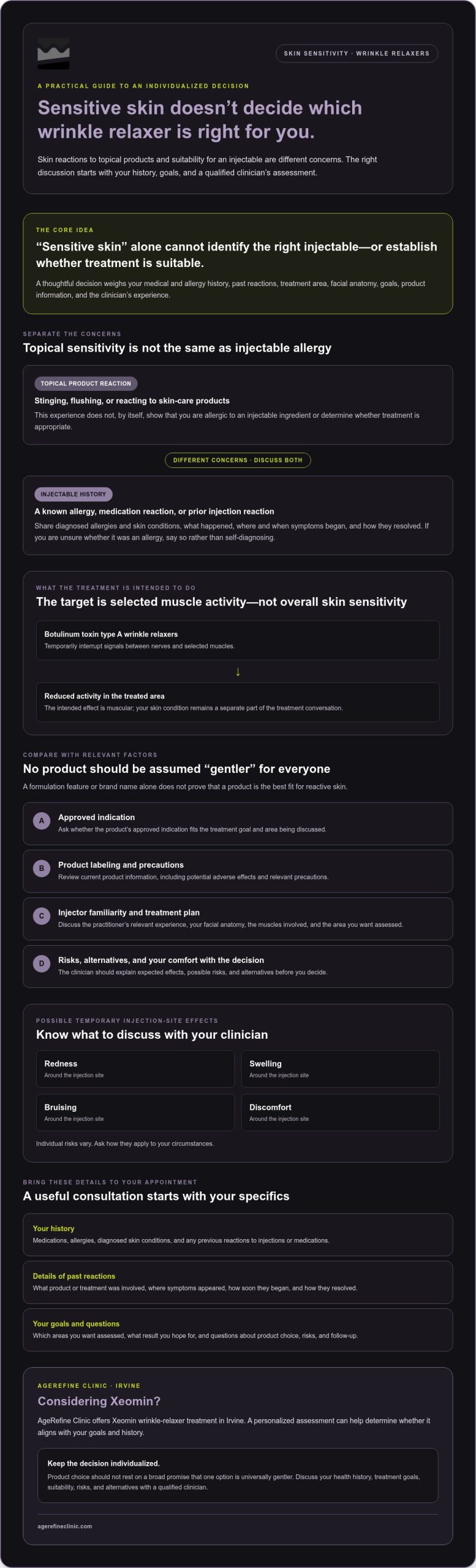
Sensitive skin alone cannot identify the right injectable. Skin that stings, flushes, or reacts to topical products doesn’t automatically indicate an allergy to an injectable ingredient or establish that treatment is suitable. “Best” should mean an option a qualified practitioner considers appropriate for your health history, treatment area, facial anatomy, and goals, with risks and alternatives explained before you decide.
Does sensitive skin automatically rule out wrinkle relaxers?
No. Reacting to a cleanser, cosmetic, or active skin-care ingredient is different from having an allergic reaction to an injectable or one of its ingredients. Redness or tenderness after an injection may also have a different cause from topical irritation, so don’t assume the experiences are equivalent. Tell your clinician about diagnosed skin conditions, allergies, and any previous reactions to injections or medications.
Describe what happened as specifically as you can: what product or treatment was involved, where symptoms appeared, how soon they began, and how they resolved. If you’re unsure whether a past reaction was an allergy, say so rather than trying to diagnose it yourself. These details help the clinician assess suitability and decide whether further evaluation or another plan should be considered.
What does ‘best’ mean in an individualized treatment decision?
A sound choice depends on more than a brand name or a promise of gentleness. Consider whether the product and treatment plan fit your needs, the practitioner’s relevant experience, whether possible risks are explained, and whether you feel informed before agreeing. No brand should be described as universally safest or gentlest for sensitive skin without strong evidence for that specific claim.
Planning also depends on the area being treated and the movement of the muscles beneath it. Your goals for the forehead, frown lines, or lines around the eyes may differ, and facial anatomy shapes how a clinician approaches each area. Ask why a particular product is being considered, whether its approved indication fits your goal, and what its current product information says about precautions and potential adverse effects.
“Best” is a clinical judgment made with you, not a ranking that skin sensitivity alone can settle. A practical first step is a conversation about your medical history, expectations, and concerns.
How wrinkle relaxers work, and where skin sensitivity fits
Botulinum toxin type A wrinkle relaxers work beneath the skin’s surface. They temporarily interrupt signals between nerves and selected muscles, reducing muscle activity in the treated area. The intended effect is muscular, not a change to the skin’s overall sensitivity. The intended muscle effect and an individual’s skin condition are separate considerations, although both belong in the treatment discussion.
Formulations can differ, but a formulation feature doesn’t by itself show that a product is more appropriate for reactive skin. For example, the Cleveland Clinic’s comparison of Xeomin and Botox describes Xeomin as a purified form of botulinum toxin. This may help you ask about product ingredients, but it doesn’t prove that Xeomin is gentler or the right choice for someone with sensitive skin.
What happens during a wrinkle-relaxer treatment?
A clinician should first discuss your goals, health history, and the areas you’d like assessed. They can evaluate the relevant facial muscles and anatomy, then consider whether treatment is appropriate and which product and plan may fit. The injection approach targets selected areas. Before you decide, ask the clinician to explain the expected effects, risks, and alternatives.
Temporary effects can occur around injection sites. Cleveland Clinic’s overview discusses potential side effects of these treatments, which may include localized redness, swelling, bruising, or discomfort. Ask the treating clinician how these risks apply to your circumstances and which symptoms should prompt follow-up. Individual responses vary, so don’t rely on a promised timeline or outcome when considering treatment.
Can reactive skin change the consultation?
Yes. Skin reactivity can inform the conversation, though a skin condition doesn’t automatically make treatment suitable or unsuitable. Tell the clinician about rosacea, dermatitis, current irritation, recent skin changes, and any reactions after previous procedures or injections. If an area is actively irritated, ask whether it should be assessed before proceeding rather than assuming the cause or deciding on treatment yourself.
Share details that can help clarify the history: when the reaction started, where it appeared, what products or treatments preceded it, and how it changed over time. Mention diagnosed allergies and medications, too. This information can help the clinician distinguish a topical reaction from a possible injectable-related concern and decide whether more evaluation is needed.
If you’re considering treatment in Irvine, you can review Xeomin wrinkle-relaxer care at AgeRefine Clinic and discuss your skin history, goals, and suitability as part of an individualized assessment.
Comparing wrinkle relaxers for sensitive skin without assuming one is gentler
Product comparisons are most useful when they focus on clinical fit, not a promise that one brand is automatically gentler. Wrinkle relaxers may share a general purpose, but their approved indications and current prescribing information can differ. A clinician should consider the treatment area, your medical and reaction history, and their familiarity with the product being discussed.
Xeomin, offered at AgeRefine Clinic, is the brand name for incobotulinumtoxinA. That fact alone doesn’t show whether it’s more suitable for someone with reactive skin. The best wrinkle relaxer for sensitive skin should be considered through an individualized review, not ingredient marketing or broad claims about tolerability.
How should patients compare Xeomin and other options?
Use the current official product labeling as a reference point for each option. Labels describe product-specific indications, warnings, and contraindications. Your clinician can explain whether the proposed product is indicated for your treatment goal and how your history affects the decision. Don’t assume a formulation difference proves a lower allergy or side-effect risk.
| Comparison point | What to discuss with your clinician |
|---|---|
| Product and active ingredient | Which product is being considered, and what does its current prescribing information say? |
| Approved indication | Does the labeled use apply to the area and goal being discussed? |
| Personal history | How do your allergies, medications, health history, and prior reactions affect the assessment? |
| Practitioner familiarity | What experience does the injector have with this product and treatment area? |
Which comparison questions matter more than brand claims?
Bring practical questions to the appointment. They can help you understand the reasoning behind a recommendation and make an informed choice:
- How will you evaluate my previous skin or injection reactions?
- Which product and labeled indication are you considering, and why?
- What effects, risks, and alternatives should I understand before consenting?
- How will my treatment area, facial anatomy, and goals shape the plan?
Marketing terms such as “purified” or “clean” may describe a product feature, but they don’t prove it will cause fewer reactions for you. Ask what the term means, whether it appears in authoritative product information, and how it relates to your individual assessment. A careful explanation should make room for uncertainty and your questions, so you can decide without feeling rushed.
Questions to ask before wrinkle-relaxer injections with sensitive skin
A useful consultation is a two-way conversation, not simply a choice of product. Sharing clear information about your skin and health can help the clinician assess your circumstances, explain the options, and decide whether treatment should proceed, be deferred, or reconsidered. Use this checklist to prepare, especially if you’re trying to determine the best wrinkle relaxer for sensitive skin.
What information should you share with the injector?
Describe your history as precisely as you can. You don’t need to know whether a past reaction was an allergy. Report what happened and let the clinician assess it. If you have them, bring product names, photos, or medical records that may help clarify the cause or timing.
- Previous wrinkle-relaxer injections or other injectable treatments, including when they occurred and any reaction you noticed.
- Current symptoms such as irritation, redness, or discomfort, along with diagnosed skin conditions and recent changes.
- Known allergies or suspected reactions to medications, products, or treatment ingredients.
- Prescription and nonprescription medications, supplements, and relevant health conditions.
Don’t stop or change a prescribed medication on your own. Tell the clinician what you take and ask whether it matters to the assessment.
What should a careful consultation explain?
Before agreeing to treatment, ask for a clear explanation of the proposed product, its intended effects, material risks, and alternatives. Confirm that the product’s current labeling and intended use have been considered for your treatment goal. Consent should leave room for questions. You shouldn’t feel pressured to decide before your concerns are addressed.
- What are your qualifications and experience with this product and treatment area?
- How do my skin history, medications, and past reactions affect the recommendation?
- What effects and risks should I understand, and what alternatives could I consider?
- Who will perform the injections, and whom should I contact if I have concerns afterward?
- Could any current skin symptoms or other health factors be a reason to wait or reconsider?
A responsible recommendation may be to pause while an active concern is assessed or to discuss another approach. That isn’t a failure of the consultation; it’s part of individualized care. If you’re considering Xeomin wrinkle-relaxer treatment in Irvine, discuss your skin history and treatment goals with AgeRefine Clinic as part of an assessment.
Considering Xeomin in Irvine? Start with a personalized assessment
A product name can start a conversation, but it can’t determine whether treatment is appropriate for you. AgeRefine Clinic in Irvine offers Xeomin wrinkle-relaxer treatment. If you’re considering it, discuss your goals, skin history, and relevant health information in an individualized assessment. Don’t assume a particular brand is automatically the right choice for sensitive skin.
What to expect when discussing Xeomin at AgeRefine Clinic
A treatment discussion is an opportunity to describe the areas you’d like assessed, what you hope to address, and any skin symptoms or past reactions that concern you. Share relevant medical history, allergies, and medications, and ask how those details inform the recommendation. You can also ask which product and treatment area are being considered, what the current product information says, and which risks or alternatives you should understand.
A clinician determines suitability after considering your individual circumstances. Sensitive or reactive skin alone can’t establish whether Xeomin or another wrinkle relaxer is appropriate. The assessment may lead to a recommendation to proceed, consider another option, or wait while a concern is evaluated. You should have space to ask questions and make an informed decision without feeling rushed.
For broader context on aesthetic care in the area, explore this aesthetic medicine guide for Irvine. It provides local context, while a direct discussion is still needed to assess your personal treatment considerations.
How to take the next step in Orange County
Before reaching out, jot down your goals, diagnosed skin conditions, current or recent symptoms, medications, allergies, and any previous injectable treatments or reactions. If you’re unsure what caused a past reaction, note what happened and when; you don’t need to label it yourself. Preparing these details can make the conversation more focused and help you remember your questions.
Ask who would assess and perform treatment, what experience they have with the product, how risks and alternatives will be reviewed, and whom to contact if you have concerns afterward. You can also confirm the clinician’s current credentials and role before deciding whether to proceed.
If you’re in Irvine or elsewhere in Orange County and would like to discuss your goals and skin history, contact AgeRefine Clinic to ask about an assessment. You don’t need to arrive with a decision already made. Contact AgeRefine Clinic to discuss your aesthetic goals.
Make your next step an informed conversation
Sensitive skin alone can’t tell you which injectable is appropriate. The best wrinkle relaxer for sensitive skin depends on an individual assessment of your health and skin history, treatment goals, and the product’s current labeling. A reaction to a topical product also isn’t the same as a confirmed allergy to an injectable ingredient, so describe what happened and let a qualified clinician assess it.
AgeRefine Clinic in Irvine offers Xeomin wrinkle-relaxer treatment, but that doesn’t mean it’s automatically the right option for every person with reactive skin. Use a consultation to ask about product choice, expected effects, risks, alternatives, and who will provide care. AgeRefine Clinic is led by Helen Liu, a board-certified nurse practitioner specializing in aesthetic medicine. Confirm her current role and involvement in treatment when you contact the clinic.
If you’re in Irvine or Orange County and would like to discuss your goals, skin history, or questions, contact AgeRefine Clinic to discuss your goals and questions. A thoughtful conversation can help you decide on a next step with clarity.
Frequently Asked Questions
Is Xeomin the best wrinkle relaxer for sensitive skin?
No wrinkle relaxer can be identified as best for everyone with sensitive skin. Xeomin is an option offered by AgeRefine Clinic in Irvine, but sensitivity alone doesn’t establish whether it’s suitable or gentler for you. A clinician should consider your health and skin history, treatment goals, the area being treated, and current product information before discussing a recommendation. Ask what supports the choice and which risks and alternatives apply to your circumstances.
Can you get wrinkle relaxers if you have rosacea or sensitive skin?
Possibly, but rosacea or reactive skin doesn’t automatically make treatment suitable or unsuitable. Tell the clinician about your diagnosis, current symptoms, areas of irritation, and any previous treatment reactions. They can assess whether your skin or health history raises concerns and whether to proceed, seek further evaluation, or defer treatment. If you’re considering care in Orange County, bring this history to the consultation rather than relying on a general rule.
Can you be allergic to a wrinkle relaxer?
An allergic reaction to a wrinkle-relaxer product or one of its ingredients is possible, though sensitivity to topical products doesn’t prove that you have an injectable allergy. Share known allergies and any suspected reactions to medications or previous injections, including what happened and when. A clinician can review the relevant product information and assess your history. Don’t try to confirm an allergy through self-testing or by interpreting symptoms without medical guidance.
What should I tell my injector if I have sensitive skin?
Describe diagnosed skin conditions, current irritation or other symptoms, known allergies, medications and supplements, and any previous injectable treatments. Explain what reactions occurred, where they appeared, and when they began. If you’re unsure which product caused a reaction, bring its name, a photo, or relevant records if available. Don’t stop prescribed medication on your own. Tell the clinician what you take and ask whether it affects the assessment.
Does Xeomin contain ingredients that make it gentler on sensitive skin?
Xeomin has a distinct formulation, but that fact alone doesn’t show that it’s gentler or causes fewer reactions for people with sensitive skin. Review product ingredients and labeling using current authoritative information, and discuss any formulation difference in context. Ask your clinician what the specific ingredients mean for your history and treatment goal. Don’t treat words such as “purified” as proof of lower allergy or side-effect risk.
How long do side effects from wrinkle relaxers last?
Common effects near injection sites can include temporary redness, swelling, bruising, or discomfort, but their duration can vary. Your clinician should explain which effects are expected, what may need follow-up, and whom to contact if you’re concerned. Don’t assume every symptom is a routine reaction, especially if it feels severe or is worsening. Ask for product-specific safety information before treatment, and follow the treating clinician’s guidance afterward.
Should I postpone wrinkle-relaxer injections if my skin is irritated?
Ask the treating clinician to assess active irritation before proceeding. Whether to defer depends on the location and nature of the symptoms, your health history, and the planned treatment. Irritation doesn’t lead to the same decision for everyone. Describe when it started, what products or treatments preceded it, and whether it has changed. A clinician may recommend waiting or further assessment. Don’t self-diagnose or try to mask symptoms before your appointment.