
What if the most important part of IV therapy happens after the infusion ends? Knowing what to do after IV therapy can make the hours that follow easier to navigate, especially if you’re unsure about drinking water, eating, exercising, or caring for the IV site. Aftercare isn’t one-size-fits-all: the infusion you received and your individual health needs matter.
It’s understandable to wonder whether tenderness or a change in energy is expected, or whether a symptom deserves attention. This guide covers practical steps after treatment, what to monitor, and when to contact your treating clinic or seek urgent medical care.
You’ll find guidance on hydration, food, activity, and IV-site care, along with ways to distinguish mild, temporary discomfort from signs that need clinical attention. Your treating clinician’s instructions take priority over general advice because recommendations can vary with the infusion and the person receiving it. At AgeRefine Clinic in Irvine, individualized guidance is part of the IV therapy experience.
Key Takeaways
- For what to do after IV therapy, begin with your treating clinician’s instructions, then follow practical guidance for your IV site, fluids, and how you’re feeling.
- Pay attention to changes. Mild site discomfort may differ from symptoms that worsen or feel unusual, which may call for clinical guidance.
- General aftercare can be a helpful starting point, but your treatment plan, health history, and clinician’s assessment shape what’s right for you.
- Use a flexible first-day checklist to keep track of hydration as advised, rest, and any clinic-specific directions.
- AgeRefine Clinic offers IV therapy in Irvine, with individualized guidance to support an informed post-treatment experience.
What to Do Immediately After IV Therapy
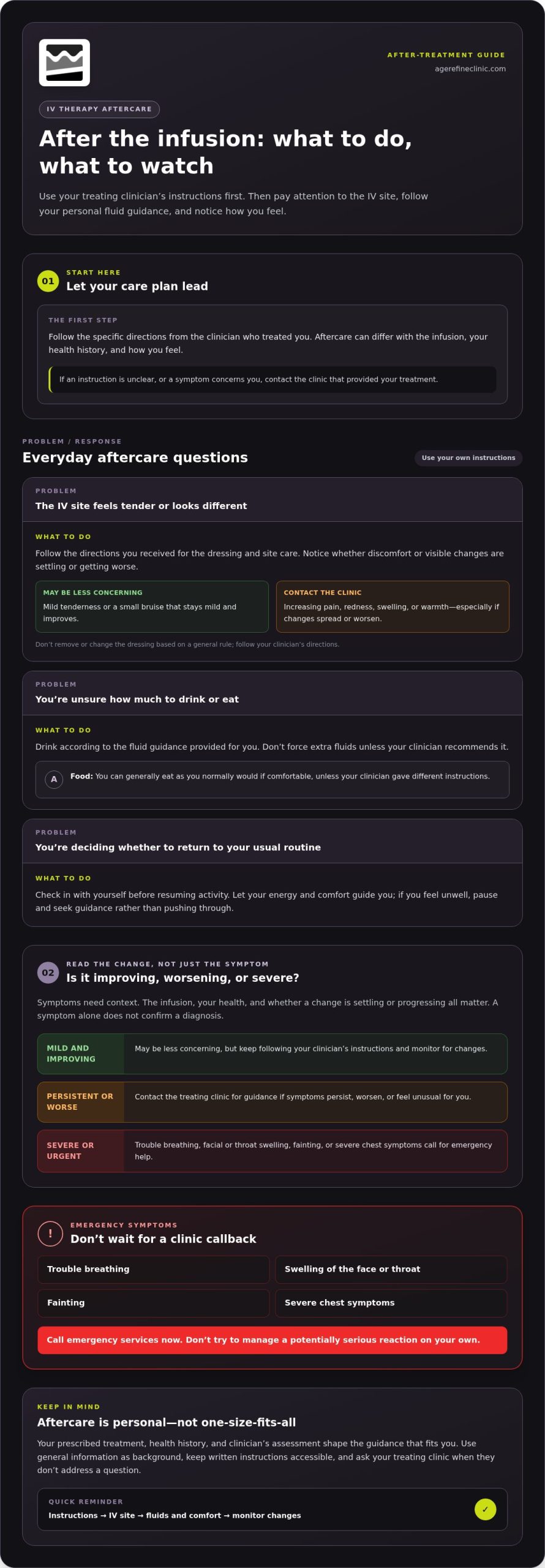
Follow your treating clinician’s instructions first. They’re the most relevant guide because aftercare can depend on your infusion, health history, and how you feel. For a general overview of the procedure, Intravenous therapy describes how fluids or other substances are delivered into a vein. After your appointment, focus on three things: care for the IV site as directed, follow your personal fluid guidance, and notice any changes in how you feel.
The safest general first step after an infusion is to follow your treating clinician’s specific instructions, then monitor the IV site and your overall comfort. If a direction is unclear or a symptom concerns you, contact the clinic that provided your treatment.
- Check the IV site: Follow the directions you received for the bandage and site care. Notice whether discomfort or visible changes are settling or getting worse.
- Follow your fluid guidance: Drink according to the advice provided for you. Don’t force extra fluids unless your clinician recommends it.
- Check in with yourself: Notice how you feel before returning to your usual routine. Adjust activity to your comfort, and seek clinical guidance if you feel unwell.
How to care for the IV site after treatment
Use the site-care directions from your treating clinician, including any instructions about the dressing. Don’t remove or change it based on a general rule, since individual directions may differ. Watch for increasing pain, swelling, redness, or warmth around the area. If these changes appear or worsen, contact the treating clinic for advice rather than trying a site-care approach you weren’t instructed to use.
Hydration, food, and taking it easy
Hydration advice isn’t identical for everyone. Follow the fluid guidance you were given instead of assuming more water is always better. You can generally eat as you normally would if you feel comfortable, unless your clinician gave different instructions. Let your energy and comfort guide your activity. If you feel unwell, pause and seek guidance rather than pushing through. These steps help answer what to do after IV therapy without treating general information as a substitute for your care plan.
After IV Therapy: Which Symptoms Are Expected and Which Need Attention?
Symptoms after an infusion need context. A little tenderness or a small bruise near the IV site may be less concerning if it stays mild and improves, but no single symptom should be judged in isolation. The type of infusion, your health, and whether symptoms are changing all matter. Follow the guidance your treating clinician gave you, and don’t dismiss a change simply because it seems minor at first.
A mild concern that is improving is a routine question for your treating clinic. Trouble breathing, facial or throat swelling, fainting, or severe chest symptoms call for emergency help.
What to monitor at the infusion site
Keep an eye on the area where the needle was placed. Notice whether pain, redness, swelling, or warmth is increasing, spreading, or becoming more uncomfortable rather than settling. These changes can have different causes and don’t confirm a diagnosis on their own. Still, worsening symptoms or anything that concerns you deserves prompt clinical guidance. Information about IV infiltration and extravasation explains why changes around an IV site should be taken seriously.
Contact the clinic that administered your infusion about persistent or worsening site symptoms, or if you’re unsure how to interpret what you’re seeing. If possible, note when the change began and whether it’s progressing. That information can help the clinician guide you on an appropriate next step.
When symptoms call for urgent help
Some symptoms should not wait for routine follow-up. Trouble breathing, swelling of the face or throat, fainting, or severe chest symptoms may indicate a serious reaction. If you experience any of these, or symptoms are severe or rapidly worsening, call emergency services now. Don’t wait for a clinic callback or try to manage a potentially serious reaction on your own.
For symptoms that aren’t immediately severe but persist, worsen, or feel unusual for you, contact your treating clinic for guidance. This is central to what to do after IV therapy: monitor changes calmly, seek clinical advice when something is concerning, and treat possible emergency symptoms as urgent. AgeRefine Clinic offers IV therapy in Irvine with individualized, clinician-guided care to support an informed experience from treatment through aftercare. Learn more about AgeRefine Clinic’s IV therapy.
Does Aftercare Differ by IV Therapy or Personal Health Needs?
Aftercare isn’t a universal checklist. The guidance that fits you depends on the prescribed treatment, your health history, and the clinician’s assessment. Two people receiving IV therapy may leave with different instructions, even if their appointments seem similar. Avoid assuming that a particular infusion name or ingredient means you should follow a specific online protocol.
Use general information as background, not as a replacement for instructions from the clinician overseeing your care. Keep any written guidance where you can refer to it after your visit. If it doesn’t address a question that comes up, contact the treating clinic rather than filling in the gaps with advice intended for someone else.
| Type of guidance | How to use it |
|---|---|
| General guidance | Use it as a starting point for basic awareness, not as a personalized treatment plan. |
| Individualized instructions | Follow directions tailored to your infusion and health context. They take priority over general online advice. |
| Urgent symptoms | For severe or rapidly worsening symptoms, seek emergency help rather than waiting for routine follow-up. |
Why your infusion plan can change the advice
Your treatment plan and personal health context help shape the guidance you receive. That’s why the answer to what to do after IV therapy may differ from person to person. Before treatment, share relevant health information and ask about anything you’re unsure of. Afterward, keep the written directions and refer to them if questions arise. General resources, including these IV site care instructions, can offer useful context, but they can’t account for every individual treatment plan.
How to handle medication, supplements, and existing conditions
Don’t stop, start, or change a prescribed medication based on general aftercare advice. If you have questions about medicines or supplements, discuss them with the clinician managing your care, who can consider your full health picture. Share relevant conditions, allergies, medications, and supplements before treatment so the clinical assessment can take them into account. Clear information supports guidance suited to you rather than assumptions based on a generic infusion description.
A Practical First-Day Checklist After IV Therapy
A simple plan can make the hours after an infusion easier to manage. Keep your clinic’s written instructions nearby, follow them over generic online advice, and use your comfort and symptoms to guide your next steps. This checklist is a flexible reminder, not a substitute for guidance tailored to your treatment and health needs.
For the rest of the day
- Review your instructions. Keep them accessible so you can refer to directions about your infusion or IV site.
- Follow your fluid guidance. Drink as advised for you rather than forcing extra fluids.
- Notice how you feel. If a new or worsening symptom appears, note what you’re experiencing and when it began.
- Choose activity based on comfort. Don’t push through feeling unwell. If you feel weak or dizzy, postpone activities that could be unsafe, such as driving, until you feel well enough.
Overnight
Before settling in, make sure you know how to follow any site-care directions and how to reach the clinic with a non-emergency question about your treatment. If you wake with a concerning or worsening symptom, use the clinic’s recommended contact route for guidance. Severe or rapidly worsening symptoms need emergency attention, not routine follow-up.
Don’t start, stop, or adjust prescribed medication because of general aftercare information. Direct medication or supplement questions to the clinician managing your care.
The next day
Return to your usual routine according to how you feel and any clinician instructions. There isn’t one activity rule that applies to every person or infusion, so follow your personalized directions rather than assuming exercise, alcohol, or other activities have the same restrictions for everyone. If you still feel unwell, pause and seek clinical guidance before resuming anything that feels difficult or unsafe.
Follow-up principle: Keep your instructions close, track changes in how you feel, and use your clinic’s guidance for questions specific to your infusion.
AgeRefine Clinic provides IV therapy in Irvine with individualized guidance. Learn more about IV therapy at AgeRefine Clinic.
Personalized IV Therapy Guidance in Irvine and Orange County
Good aftercare is easier to follow when it reflects the person, not just the procedure. Your infusion plan, health history, and response to treatment all inform the guidance you receive. For people in Irvine and Orange County, AgeRefine Clinic offers IV therapy with individualized, clinician-guided care. The aim is to make your instructions clear, not to promise a particular result or apply one universal protocol.
AgeRefine Clinic was founded and is led by Helen Liu, a Board Certified Nurse Practitioner specializing in aesthetic medicine. Readers interested in the clinic’s broader approach can explore this aesthetic medicine guide for Irvine.
What to bring up during an IV therapy follow-up
A follow-up conversation can clarify questions specific to your treatment. Share what you noticed, when it began, and whether it improved, stayed the same, or worsened. Mention relevant health changes and any instructions that felt unclear. If helpful, keep a brief note on your phone so you can describe events accurately rather than relying on memory.
Follow-up is part of collaborative care, but it isn’t a substitute for urgent evaluation. If symptoms are severe or rapidly worsening, seek emergency help rather than waiting to speak with the clinic. For non-emergency concerns, use the clinic’s designated contact route and explain what you’re experiencing.
How to continue your wellness care thoughtfully
Consider your treatment experience useful information for future discussions with your clinical team. Ask questions about your care plan and share what felt comfortable or concerning. If you’re exploring other wellness approaches, keep them distinct from IV therapy rather than assuming they share the same purpose, instructions, or aftercare. For example, AgeRefine Clinic’s peptide injections for wellness guide covers a separate topic, while longevity and recovery centers such as myhealth360wellness.com demonstrate how post-treatment protocols integrate into comprehensive wellness programs.
Knowing what to do after IV therapy starts with guidance tailored to your circumstances. If you’re considering IV therapy in Irvine or Orange County, AgeRefine Clinic offers IV therapy with individualized, clinician-guided care.
Make Your Aftercare Personal and Reassuring
Knowing what to do after IV therapy starts with a simple principle: follow your treating clinician’s instructions, since aftercare can vary with your treatment plan and personal health needs. Pay attention to how you feel and whether symptoms change. If something is worsening or concerning, seek clinical guidance. Severe or rapidly worsening symptoms call for emergency help.
A flexible checklist can help you stay organized, but it shouldn’t replace your personalized directions. Keep those instructions accessible, follow the fluid guidance given to you, and return to activities according to your comfort and your clinician’s advice.
AgeRefine Clinic offers IV therapy in Irvine and serves people seeking aesthetic and wellness care in Orange County. To discuss IV therapy, explore IV therapy at AgeRefine Clinic.
Frequently Asked Questions
What should I do immediately after IV therapy?
Follow your treating clinician’s instructions first. Check the IV site as directed, follow your personal fluid guidance, and notice how you feel before returning to your routine. Keep written aftercare directions nearby. If a symptom is concerning or worsening, contact the clinic that provided your infusion. Severe or rapidly worsening symptoms need emergency attention. These steps are a general starting point, not a replacement for individualized care.
Can I eat and drink normally after IV therapy?
Usually, eat as you normally would if you feel comfortable, unless your clinician gave you different directions. For fluids, follow the guidance provided for your health and treatment rather than assuming you need to drink extra water. Don’t force fluids. If you have a medical condition that affects what or how much you should drink, or you’re unsure what applies after your infusion, ask the clinician managing your treatment.
Is it normal to feel tired after IV therapy?
Feeling tired shouldn’t automatically be labeled normal for everyone after IV therapy. Your response can depend on your treatment and individual health circumstances. If you feel tired, adjust your activity and pay attention to whether it improves, persists, or worsens. Contact your treating clinic about persistent or concerning symptoms. If tiredness occurs with fainting, trouble breathing, severe chest symptoms, or another rapidly worsening reaction, seek emergency help.
Can I exercise after IV therapy?
Resume exercise according to how you feel and the instructions from your treating clinician. There isn’t one activity timeline that applies to every infusion and every person. If you feel weak, dizzy, or unwell, postpone exercise and other activities that could be unsafe until you feel better, and seek clinical guidance if symptoms concern you. Don’t push through discomfort to meet a workout plan.
How long should I keep the IV site covered?
Keep the site covered for the duration specified in your clinician’s instructions. There isn’t a universal dressing-removal time that should replace the directions you received for your treatment. Follow any guidance about changing or removing the dressing, and monitor the area for increasing redness, swelling, warmth, or pain. If you’re unsure what to do with the dressing or the site is getting worse, contact the treating clinic.
What symptoms after IV therapy need urgent medical attention?
Trouble breathing, swelling of the face or throat, fainting, and severe chest symptoms require emergency attention. Call emergency services if these occur, or if symptoms are severe or rapidly worsening. For a worsening IV site, increasing pain, redness, warmth, or swelling, contact the clinic promptly for advice. Don’t wait for routine follow-up when a reaction may be serious. If you’re receiving IV therapy in Orange County, follow the emergency guidance provided for your care.
Should I take my usual medications after IV therapy?
Don’t stop, start, or change prescribed medicines based on general aftercare advice. Follow the directions from the clinician managing your medication, as well as any specific instructions given for your infusion. If you’re uncertain about a medication or supplement, ask the clinician who oversees your care rather than guessing. Sharing your medications, supplements, and relevant health changes with the clinical team helps them give guidance suited to your circumstances.