Before choosing a skin whitening treatment for dark spots, consider what may have caused the discoloration. UV exposure, hormonal changes, and skin inflammation can all contribute to uneven pigmentation. Spots may look similar, but their causes and appropriate care can differ.
If you’re unsure what you’re seeing or concerned that a treatment could irritate your skin, it’s reasonable to start with an assessment. This guide covers common causes of dark spots, how over-the-counter products differ from professional options, and why results vary. It also explains what to discuss during a personalized skin assessment, including your concerns, goals, and medical history. At AgeRefine Clinic in Irvine, skin whitening and laser skin rejuvenation are offered as part of personalized care. A consultation helps inform a plan suited to your needs, with clear expectations along the way.
Key Takeaways
- Dark spots can have different causes, so understanding what may be behind the discoloration helps guide care.
- A skin whitening treatment for dark spots addresses the appearance of uneven pigmentation, not your natural skin tone.
- Topical skincare and professional procedures differ in how they’re used and assessed. Options for age spots may not suit every type of discoloration.
- Prepare for an assessment by noting when spots appeared, possible triggers, the products you use, and relevant skin or medical history.
- At AgeRefine Clinic in Irvine, a consultation and personalized skin assessment inform a customized plan that may include skin whitening or laser skin rejuvenation.
What does skin whitening treatment for dark spots actually address?
Hyperpigmentation is the clinical term for areas of skin that appear darker than the surrounding skin. Localized hyperpigmentation describes darkening in one area associated with excess melanin, the pigment that gives skin its color. This describes what you can see, not why it happened. Inflammation, sun exposure, hormonal changes, and other factors may contribute, so similar-looking spots can have different explanations.
That distinction matters before considering a skin whitening treatment for dark spots. Spot-focused care aims to improve the appearance of uneven pigmentation in specific areas. It isn’t intended to change your natural complexion. Understanding the concern first helps set a measured goal and avoids treating every mark as though it has the same cause. For a broader overview, see Hyperpigmentation (Dark Spots).
What is the difference between dark spots and age spots?
“Dark spots” is a general description. Age spots are one possible type of pigmentation concern, often associated with accumulated sun exposure and aging. Other marks may appear after acne, irritation, or an injury has healed. These marks can look similar, but the circumstances around their appearance may differ. A spot’s color or shape alone can’t confirm its cause, so seek an assessment if you’re uncertain or notice a change.
What does “skin whitening” mean in a dark-spot treatment context?
In this context, the goal is to address localized uneven tone, not lighten your overall skin color. A thoughtful plan starts with what you want to improve, the areas involved, and relevant skin history. A realistic goal may be a more even-looking appearance, not flawless skin. Expectations should be individualized because the cause of discoloration and response to care can vary.
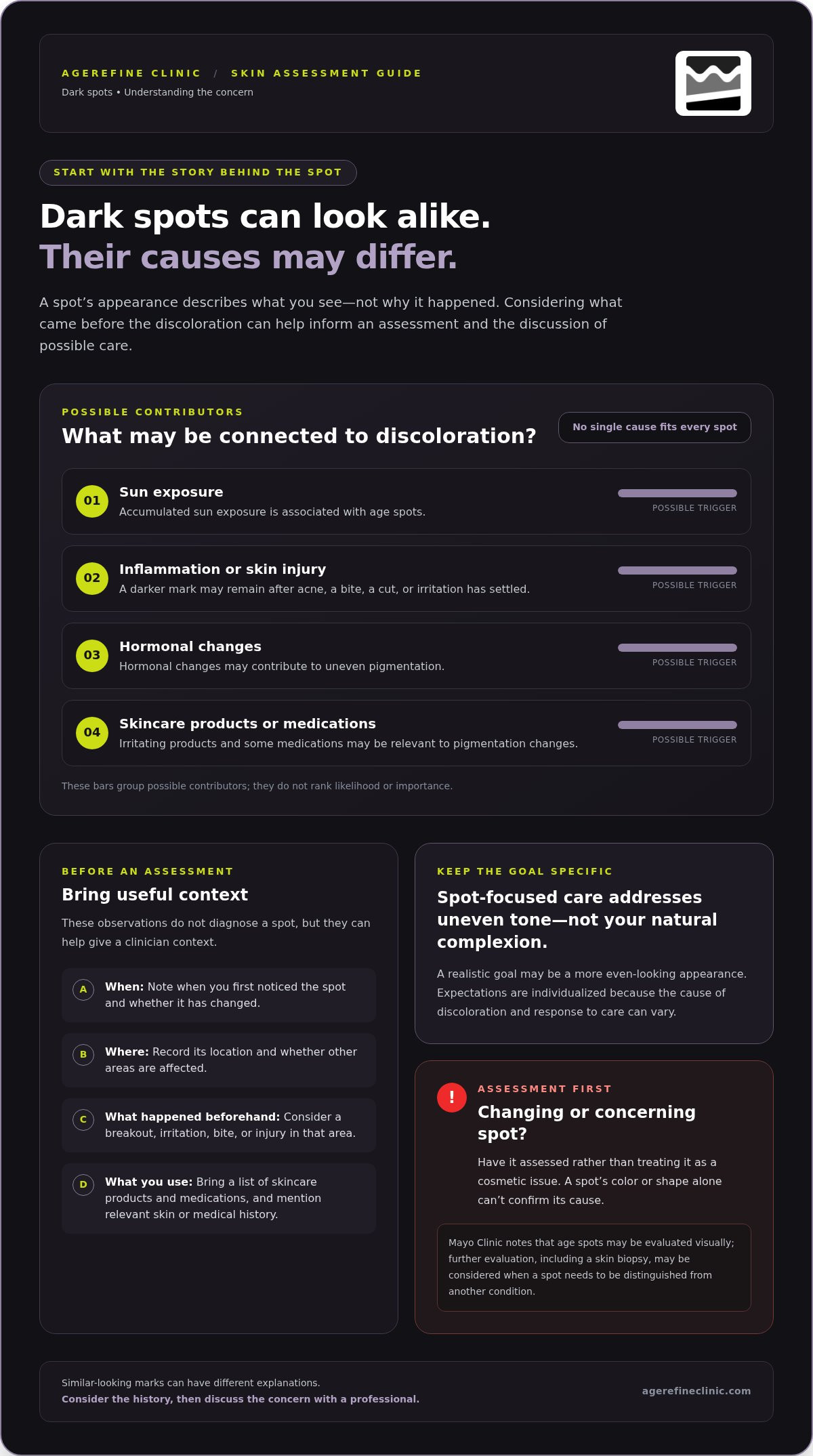
Before an assessment, note where a spot is, when you first noticed it, and whether it followed a breakout, irritation, or injury. Include whether other areas are affected and what has changed over time. These observations don’t provide a diagnosis, but they give a clinician useful context to discuss the concern and possible next steps.
A practical sequence is to notice the change, consider what preceded it, and have the concern assessed before choosing an approach. That’s more useful than assuming every mark is an age spot or choosing a product based only on its label. A personalized discussion can clarify whether spot-focused care aligns with your goals while keeping your natural skin tone and overall skin health in view.
What causes dark spots, and why does identifying the cause matter?
Dark spots can develop after different triggers, and that history can help guide what to do next. Inflammation, skin injury, irritating skincare products, some medications, and hormonal changes may all contribute to pigmentation changes. A mark that appears after a breakout, for example, may call for a different discussion than discoloration that develops alongside hormonal changes.
Pigmentation care depends partly on what triggered the color change. If a trigger is ongoing, focusing only on the visible mark may leave the underlying issue unaddressed or allow new discoloration to appear. You don’t need to identify the cause yourself. Details such as when the spot appeared, what was happening beforehand, and whether it’s changing can help inform an assessment and a suitable plan.
Can acne, irritation, or a healed injury leave a dark mark?
Yes. Post-inflammatory hyperpigmentation is darkening that can remain after inflammation or injury settles. It may follow acne, an insect bite, a cut, or irritation from a skincare product. The original concern can fade while a darker mark remains. Its appearance and course vary, so a mark’s presence alone doesn’t establish what caused it or how it will change.
Pay attention to the sequence of events. Did the discoloration appear where a blemish or bite had been? Did it follow a new product that left your skin irritated? Are you taking medication that could be relevant? These observations provide useful context during a consultation. If irritation is continuing, don’t assume that a product labeled for dark spots is the right response. The skin may need a different approach while the trigger is considered.
When should a dark spot be assessed rather than treated cosmetically?
Not every dark spot is an age spot or a simple pigmentation concern. A spot that is changing or otherwise concerning should be assessed promptly rather than treated as a cosmetic issue. Mayo Clinic explains that age spots may be evaluated visually, while further evaluation, including a skin biopsy, may be considered when a spot needs to be distinguished from another condition. This guidance is specific to age spots, not a diagnosis for every mark.
Before choosing a cosmetic approach, note where the spot is, when you first noticed it, and whether its appearance has changed. Bring a list of skincare products and medications to your assessment, and mention recent irritation, breakouts, or injury in the area. These details help connect the visible concern with possible triggers. A professional can discuss whether cosmetic care is appropriate or whether the spot should receive medical evaluation first.
Once the concern has been assessed, a plan can take both the visible discoloration and its possible cause into account. If you’re considering a skin whitening treatment for dark spots, a personalized consultation can help clarify your goals and discuss an appropriate next step. At AgeRefine Clinic in Irvine, a personalized skin assessment considers your skin concerns and medical history as part of a tailored plan.
Which dark-spot treatment approaches may fit different concerns?
There isn’t one approach for every mark. At-home products and clinician-guided procedures differ in purpose, level of oversight, and how suitability is determined. The discussion should start with the type of pigmentation concern, your skin characteristics, medical history, and goals. A treatment considered for age spots, for example, shouldn’t automatically be assumed appropriate for discoloration with another cause.
| Approach | General role | Key consideration |
|---|---|---|
| Over-the-counter topical skincare | Part of a home routine intended to address the appearance of uneven tone. | Ingredients and directions vary. Irritation can be a concern and may affect pigmentation, so introduce products thoughtfully. |
| Clinician-guided topical care | May include prescription options selected for a specific concern. | Requires assessment of the spot, skin, medical history, and potential side effects. |
| In-clinic procedures | May be discussed when a procedure is appropriate for the concern and treatment goals. | Suitability, intensity, and expected skin response should be individualized. |
| Age-spot treatments | Mayo Clinic describes options such as prescription creams, laser or intense pulsed light, freezing, dermabrasion, and chemical peels for age spots. | These options address age spots specifically; they are not a universal menu for every dark mark. |
How do topical products differ from in-clinic treatments?
Topical products are applied at home and vary in ingredients, strength, and directions. A product’s dark-spot label doesn’t establish that it fits your concern. Clinician-guided care begins with an assessment and a discussion of suitability, including possible irritation. If a product causes persistent discomfort or redness, don’t assume the label guarantees it is safe for you. Seek guidance before continuing.
Mayo Clinic notes that age-spot treatments can cause temporary irritation or other skin reactions, and that the choice depends on the individual. This is useful context, not a recommendation for every type of pigmentation. At AgeRefine Clinic, skin whitening and laser skin rejuvenation are offered within a personalized approach, rather than as a one-size-fits-all protocol.
What should darker skin tones consider when treating pigmentation?
The American Academy of Dermatology notes that darker skin tones can develop dark spots after common triggers such as acne, injury, or irritation. Skin response is therefore an important part of the treatment conversation: irritation or inflammation may contribute to further discoloration. This doesn’t mean that one treatment is always unsuitable or that one procedure is right for everyone. The approach and intensity should be considered in light of your skin, history, and goals.
A useful consultation considers these factors before a plan is chosen. Share what preceded the spots, products or medications relevant to your history, and any previous reactions to skin treatments. This helps frame a measured discussion of options, including whether skin whitening treatment for dark spots or laser skin rejuvenation aligns with your concern. The aim is a considered plan, not a promise of flawless or identical results.
How can you prepare for dark-spot treatment and protect your skin?
A little preparation can make a skin assessment more useful. Rather than trying to diagnose a spot yourself, gather details that connect its appearance with your skin history and goals. Then follow the care plan agreed upon during your consultation.
- Note the concern. Record where the spots are, when you first noticed them, and whether their appearance has changed.
- Review possible triggers. Think about breakouts, irritation, injury, hormonal changes, or other events that occurred before the discoloration appeared.
- List your products. Include skincare products and any recent changes, especially if you experienced redness, stinging, or other irritation.
- Attend a personalized assessment. Share relevant skin and medical history, along with what you hope to address.
- Follow the agreed care. Use products and follow treatment guidance as discussed, and raise concerns if your skin reacts unexpectedly.
What information should you bring to a skin assessment?
Bring notes on when each spot appeared and whether it has changed. A list of current skincare products, recent irritation, relevant medical history, and previous reactions to skin treatments can also help shape the discussion. Describe your goals in your own words, such as wanting a more even-looking appearance. You don’t need to label the spots or arrive with a diagnosis.
At AgeRefine Clinic in Irvine, the consultation and personalized assessment consider your skin concerns, goals, and medical history to inform a customized plan. Use the conversation to discuss the skin whitening treatment for dark spots you’re considering, understand the proposed approach, and set expectations that reflect your circumstances. Be open about both your hopes and concerns, including sensitivity or worry about irritation.
How can daily habits support an even-looking complexion?
Consistent sun protection is an important part of pigmentation care. Broad-spectrum sunscreen with a high SPF can help protect skin and reduce the risk of new spots, including during and after treatment. Follow the specific sun-protection guidance provided for your plan. Protection supports care, but it doesn’t guarantee that pigmentation won’t appear.
Keep your routine gentle and pay attention to how your skin responds. If a product or routine visibly irritates your skin, don’t push through discomfort in pursuit of faster results. Discuss the reaction and how to adjust your routine during your assessment. Maintenance needs and visible changes vary according to the treatment, individual factors, and lifestyle, so avoid comparing your progress with someone else’s.
Preparing for your assessment with notes on your routine, skin history, and goals can make the conversation more focused. AgeRefine Clinic offers personalized consultations to discuss these concerns and inform a plan.
Personalized skin whitening treatment for dark spots in Irvine
Care for uneven pigmentation is most useful when it starts with the person, not a preset protocol. At AgeRefine Clinic in Irvine, skin whitening and laser skin rejuvenation are offered in the context of your skin concerns and individual goals. The process moves from consultation to personalized skin assessment, then to a customized plan and treatment session.
Helen Liu, a Women’s Health and Aesthetic Nurse Practitioner, leads the clinic’s patient-first approach. The aim is to discuss your priorities, understand relevant aspects of your skin and medical history, and set clear expectations. Treatment is tailored to the individual, without a promise of a particular result.
What happens during an AgeRefine Clinic consultation?
The initial conversation is a chance to describe what concerns you, what you hope to address, and what outcomes feel realistic. The personalized assessment considers your skin, health, goals, and relevant lifestyle factors. Share previous skin reactions or concerns about treatment as well. This information helps shape a customized plan rather than a standard approach applied to everyone.
After discussing the assessment and plan, the next step is a treatment session aligned with the agreed approach. Details depend on the treatment selected and your individual needs. Read more about bio-revitalization and skin integrity and aesthetic medicine in Irvine for additional context on individualized aesthetic care.
How does personalized planning set realistic expectations?
Suitability and the expected course can vary with the concern, the person, and the specific procedure. During planning, discuss what the treatment involves, what your experience may be like, and what care may be needed afterward. Comfort, downtime, maintenance, and visible results depend on the individual and treatment. A careful conversation helps set expectations without suggesting that results will be identical, permanent, or guaranteed.
Bring your questions and be candid about what matters most to you. You might want to focus on a particular area, understand how a plan fits your routine, or talk through concerns about irritation and recovery. Your goals and relevant history inform the plan, while clear communication helps you understand the proposed care before proceeding.
If you’re considering a skin whitening treatment for dark spots, a personalized assessment can help you explore whether skin whitening or laser skin rejuvenation fits your concern and goals. Book a personalized consultation in Irvine to begin that conversation with AgeRefine Clinic.
Take the next step with a plan tailored to you
You don’t have to arrive with a treatment decision already made. A focused conversation can help turn a concern about uneven tone into a clearer next step. If you’re exploring a skin whitening treatment for dark spots, the goal is to discuss what matters to you and consider which approach may suit your circumstances, without expecting a guaranteed or identical result.
At AgeRefine Clinic, the personalized assessment considers your skin, health, lifestyle, goals, and medical history. Care is led by Helen Liu, a Women’s Health and Aesthetic Nurse Practitioner. Sharing what you hope to address, along with any questions or concerns, helps make the conversation more useful and the plan more personal.
Move forward at a pace that feels comfortable. Schedule a personalized consultation with AgeRefine Clinic to discuss your goals and explore a thoughtful path toward a more even-looking complexion.
Frequently Asked Questions
Is skin whitening treatment for dark spots the same as lightening my natural skin tone?
No. The goal is to improve the appearance of localized uneven pigmentation, not change your overall complexion. For example, you might want to address a few marks while keeping your natural skin tone unchanged. Since spots can have different causes, treatment discussions should begin with understanding your skin and concern. At AgeRefine Clinic, a personalized consultation and assessment help shape a conversation about your goals and possible approaches.
Can dark-spot treatments make pigmentation worse?
They can cause irritation, and skin may respond differently from person to person. The American Academy of Dermatology cautions that some products marketed for dark spots can do more harm than good. If a new product causes redness, stinging, or discomfort, don’t add more spot-fading products to your routine to compensate. Note the reaction and share the product and your skin history during an assessment.
How long does it take for dark spots to fade?
There isn’t one timeline that applies to everyone. How long a mark takes to change can depend on its cause, the approach used, individual skin factors, and lifestyle. Keep track of changes under similar lighting rather than judging progress from daily mirror checks. During a personalized assessment, discuss what to expect from the proposed care and whether ongoing maintenance may be relevant to your longer-term goals.
What happens if a dark spot changes in appearance?
Arrange an appropriate medical assessment before treating a changing spot as a cosmetic concern. Mayo Clinic notes that an apparent age spot may need to be distinguished from other skin conditions, and visual assessment or further evaluation may be considered. If you notice a change that concerns you, don’t rely on photographs or an article to identify it. A qualified medical professional can assess the spot and advise on appropriate next steps.
Are all dark spots age spots?
No. Age spots are one type of dark spot, but marks may also appear after acne, irritation, injury, medication use, or hormonal changes. For instance, discoloration where a blemish healed may have a different context from a spot associated with accumulated sun exposure. Avoid labeling a mark by appearance alone. Its timing, history, and any changes can help a clinician understand the concern and discuss appropriate next steps.
Can skincare products cause dark spots?
Some products can irritate skin, and irritation may contribute to discoloration in some people. The American Academy of Dermatology warns that certain products marketed to fade dark spots may do more harm than good. If a product causes a reaction, note when it began and which products you applied. Share those details and your routine during an appropriate medical assessment instead of treating the reaction as ordinary pigmentation.
Is laser skin rejuvenation appropriate for every dark spot?
No. Whether laser skin rejuvenation is appropriate depends on the concern, skin characteristics, health history, and your goals. AgeRefine Clinic offers laser skin rejuvenation, with a consultation and personalized assessment informing a customized plan. The clinic is in Irvine and serves the local Orange County community. Treatment experience, recovery, and results vary by procedure and individual, so discuss these expectations as part of planning rather than assuming one approach fits every spot or skin tone.