Is RF microneedling painful? It can be uncomfortable, but the sensation varies by treatment area, settings, and personal sensitivity. You may feel tingling or scratching, while deeper treatments can feel more intense. Topical numbing cream can help reduce discomfort, though it may not make treatment completely painless.
It’s understandable to wonder whether radiofrequency energy makes the experience more uncomfortable than traditional microneedling. RF microneedling combines tiny needles with energy delivered into the skin, so both the needling and the warmth can shape what you feel.
Here, you’ll learn what RF microneedling may feel like, how numbing cream can help, and how it compares with traditional microneedling. We’ll also cover common temporary effects, including redness, warmth, and sensitivity, so you can make a more informed decision about what to expect.
Key Takeaways
- Understand how numbing cream can ease treatment discomfort and why it may not remove every sensation.
- Know which short-term skin changes can follow treatment and what worsening symptoms may signal.
- Compare RF microneedling with regular microneedling to see how the added energy changes the treatment experience.
- Explore how AgeRefine Clinic’s skin-rejuvenation offering may fit when you’re considering options for skin texture.
Does Numbing Cream Make It Painless?
Topical numbing can make an RF microneedling session more tolerable, but it doesn’t necessarily eliminate discomfort. How it helps, how long it sits, and its limits all matter when setting expectations.
How Numbing Cream Affects Discomfort
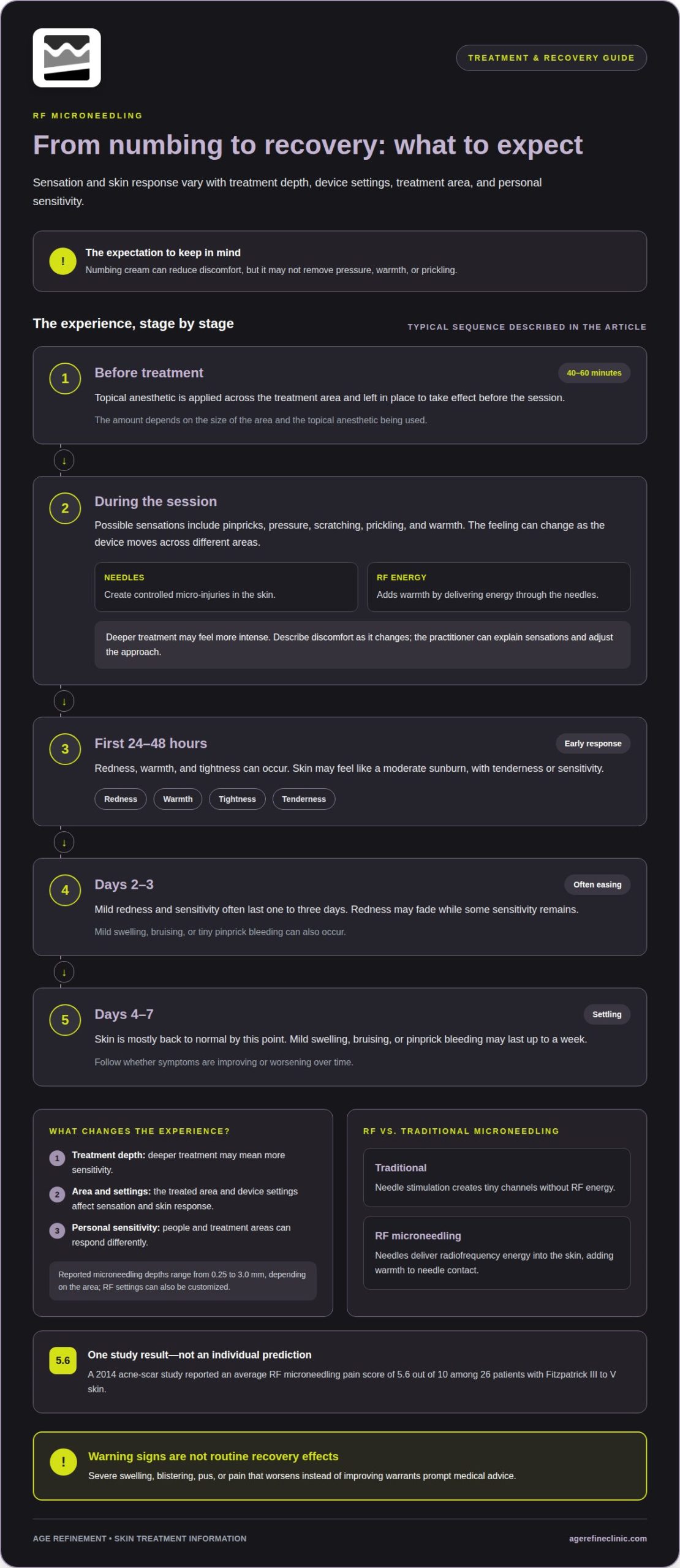
Topical numbing cream reduces sensation at the skin’s surface before the device begins treatment. This can make the needle contact feel less sharp and help ease procedural discomfort. Before RF microneedling, anesthetic is applied and left in place for about 40 to 60 minutes. That waiting period allows the topical numbing to take effect before the session starts.
Even with numbing, you may notice pressure, warmth, or prickling as the device moves across the treatment area. The experience can vary with treatment depth, the area being treated, and your sensitivity. Knowing that numbing is meant to reduce discomfort, not erase every sensation, can help you understand what to expect.
Numbing Cream Use and Limitations
How much numbing cream is used before RF microneedling? The amount depends on the size of the treatment area and the topical anesthetic being used; it is applied across the area being treated. The cream is put on before the procedure and left in place for about 40 to 60 minutes.
Numbing cream can reduce discomfort, but it doesn’t guarantee a painless session. It may lessen surface sensation, while pressure or warmth can remain as the needles and radiofrequency energy work. The cheeks and forehead, for example, may feel different during the same treatment because the device passes over distinct areas. Your practitioner can explain the expected sensations and adjust the approach during the session. Speak up if you feel uncomfortable rather than assuming you need to tolerate it silently.
Post-treatment redness, warmth, swelling, and bruising
After RF microneedling, the treatment area may look and feel temporarily irritated. How long this lasts and how intense it feels can vary with needle depth, settings, and skin sensitivity.
Greater personal sensitivity or a more responsive treatment area may mean more discomfort. Treatment depth and device settings can also affect the sensation.
Expected Redness and Skin Sensitivity
Redness and sensitivity are common short-term responses as skin recovers from the needles and radiofrequency energy. For the first 24 to 48 hours, the area may feel like a moderate sunburn, with warmth, tightness, or tenderness.
Mild redness and sensitivity often last one to three days. Your face may feel tender when cleansing, for example, even as visible redness begins to fade. Noting whether symptoms ease or worsen can help you follow your recovery.
Warmth, Swelling, and Bruising
Warmth, mild swelling, bruising, or tiny pinprick bleeding can occur after treatment. Mild swelling, bruising, or pinprick bleeding may last up to a week, so the skin can take longer to look settled than it takes for the initial heat to fade.
During the first 24 hours, redness, warmth, and tightness can be expected. Severe swelling or blistering are warning signs, not routine recovery effects. On days two to three, redness may fade while mild sensitivity remains. Pus or worsening pain may signal infection.
Needle depth and intensity influence how the treatment area responds. Reported microneedling depths range from 0.25 to 3.0 mm, depending on the area; radiofrequency settings can also be customized. Deeper treatment may produce more sensitivity, so the device’s settings and the area being treated both matter.
During the session, describe how discomfort changes, especially if one area feels more intense than another. Afterward, watch how symptoms progress. By days four to seven, skin is mostly back to normal, while pain that worsens instead of improving is a warning sign. Severe swelling, blistering, pus, or worsening pain warrants prompt medical advice.
For a considered discussion of individualized treatment planning, keep your skin sensitivity and recovery priorities central.
The Big Question: Does RF Microneedling Hurt?
Many readers ask, “Is RF microneedling painful?” The sensation varies with treatment depth, settings, treatment area, and personal sensitivity. In the United States, cost depends on the case and is given after a quote request; factors include the area treated and the treatment plan.
Sensations During Treatment
During a session, sensations can range from brief prickling to more noticeable discomfort as the device moves across the skin. Radiofrequency energy adds warmth to needle contact, and deeper treatment may feel more intense than a shallow pass. The treatment area matters too, as the same RF energy applied to a smaller area can feel stronger.
A 2014 acne-scar study reported an average RF microneedling pain score of 5.6 out of 10 among 26 patients with Fitzpatrick III to V skin, according to the Authors of the 2014 acne-scar study. That study result offers context, not an individual prediction.
Typical Treatment Sensations
Common sensations include pinpricks, pressure, scratching, and warmth. The feeling can change as treatment moves across the face: one pass may feel sharper, while another registers mainly as heat. Tell your provider if a sensation becomes difficult to tolerate. Clear feedback can help guide the appointment.
So, is RF microneedling painful for every patient? There is no universal experience. Shallow settings may feel like mild tingling or scratching, while deeper treatment may bring greater sensitivity. The settings, size of the treatment area, and your individual response all shape what you feel.
Differences between RF and regular microneedling
Both procedures use fine needles to create controlled micro-injuries in the skin. The key difference is that RF microneedling also delivers radiofrequency energy through the needles. This adds heat below the surface, while traditional microneedling relies on needle stimulation alone.
Traditional microneedling, for example, creates tiny channels without delivering RF energy. With RF microneedling, needles enter the skin and transmit energy at a selected depth. The added warmth can change the sensation, so you may notice more than needle contact alone. That doesn’t mean every RF session feels more painful: depth, settings, treatment area, and personal sensitivity all influence the experience.
The procedures also differ in how they stimulate the skin. Needle punctures prompt the skin’s repair response, while RF adds heat intended to stimulate collagen remodeling. If you’re seeking to improve skin texture, either approach may be considered, depending on the concern and treatment plan. The term “microneedling” alone doesn’t tell you whether radiofrequency is included.
Redness and sensitivity can occur after either procedure because the skin has been treated with needles. RF microneedling may also leave a warm feeling from the delivered energy. Recovery varies from person to person, and treatment intensity affects the response. A deeper pass or a more sensitive area, for instance, can feel different from a lighter pass elsewhere on the face.
The useful distinction is simple: regular microneedling uses needles; RF microneedling combines needles with radiofrequency heat. That difference helps explain why the sensation and treatment approach may vary, rather than establishing one procedure as universally more comfortable. If you’re considering treatment for skin texture, explore RF microneedling options and discuss how the energy and needle approach relate to your goals.
AgeRefine Clinic: Onda Pro
If you’re weighing aesthetic options, AgeRefine Clinic in Irvine can help you consider your skin texture goals alongside comfort concerns. A discussion about RF microneedling can cover what the procedure involves, how treatment sensations may affect your decision, and what recovery could mean for your routine. The aim is to help you make an informed choice, with comfort treated as an important consideration.
AgeRefine Clinic also offers Xeomin wrinkle relaxer and IV Therapy for different aesthetic and wellness goals. These services are not substitutes for RF microneedling, but may be relevant if you’re considering broader priorities alongside skin texture.
For a personal conversation about your aesthetic goals in Orange County, contact AgeRefine Clinic or visit agerefineclinic.com.
Make Your Next Step a Considered One
Your comfort threshold matters in the treatment decision, alongside the skin concern you want to address. If you’re still weighing whether RF microneedling will feel painful for you, focus your next conversation on what you hope to change and which sensations or recovery considerations matter most. Being clear about your priorities can make the choice feel more personal and deliberate.
AgeRefine Clinic offers RF microneedling for skin texture, as well as Onda Pro, XERF, and wrinkle relaxer Xeomin. These are distinct treatments, not interchangeable options. Start the discussion with your goal rather than choosing a procedure by name alone.
Share your questions and aesthetic priorities with AgeRefine Clinic to explore the options relevant to you. Contact AgeRefine Clinic to take the next step at your own pace.
Frequently Asked Questions
Is RF Microneedling More Painful Than Regular Microneedling?
RF microneedling can feel more intense because it adds heat from radiofrequency energy to needle contact, but the comparison depends on treatment settings and personal sensitivity. A shallow RF pass may feel manageable, while a deeper pass or more sensitive area may produce more sensation. The practical difference is the added energy, not a guarantee that one method will hurt more for everyone.
What Does RF Microneedling Actually Feel Like?
People often describe brief prickling, scratching, pressure, and warmth rather than one constant sensation. The feeling can change as the device moves across the face. You may notice a sharper sensation during one pass and mostly warmth during another. Describing these changes during the appointment gives your practitioner useful feedback.
How long does soreness last after RF microneedling?
Tenderness or lingering sensitivity may continue for 24 to 48 hours, while mild redness and sensitivity can last one to three days. Swelling or bruising may take longer to settle. A useful way to track recovery is to note whether soreness is easing each day. Pain that worsens rather than improves deserves prompt medical attention.
What Does the Treatment Actually Feel Like?
The experience may feel like repeated, brief needle touches with warmth as radiofrequency energy is delivered. Sensation can shift with the device settings and treatment area, so it may not feel uniform across the face. If you’re concerned about a particular area, mention it before treatment and speak up if the sensation changes during the session.
Can I Take Tylenol or Pain Medication Before RF Microneedling?
Don’t take Tylenol or another pain medication specifically for treatment unless a clinician has told you it’s appropriate. Medication choices can depend on your health history, allergies, prescriptions, and other medicines. Share those details before the procedure, and don’t stop or change prescribed medication on your own. This helps keep pain management consistent with your individual medical needs.
Can severe pain mean something is wrong?
Yes. Severe or worsening pain, rather than pain that gradually eases, should not be treated as routine recovery. Worsening pain can signal infection, especially if accompanied by pus. Severe swelling or blistering are also warning signs. Contact the treating clinic promptly for guidance, and seek urgent medical care if symptoms worsen rapidly or you feel seriously unwell.