It isn’t automatically too late to address neck aging. The best treatment for sagging neck skin depends on what’s causing the change and how pronounced it is. Non-surgical options are generally suited to mild or moderate laxity, while more advanced sagging may call for a different medical approach. No single option fits every neck.
If you’ve noticed loose skin, vertical bands, fine necklace lines, or fullness beneath your chin, it’s understandable to wonder whether treatment can help or whether you’ve waited too long. Neck changes can involve different tissues, so a useful first step is understanding which concerns may respond to which approaches.
This guide covers non-surgical approaches to skin laxity, neck bands, lines, and under-chin fullness, including what they can and can’t address. You’ll also learn who may benefit, why results vary, and how a medical assessment can help clarify which options fit your concerns.
Key Takeaways
- Non-surgical tightening is generally best suited to mild or moderate laxity; pronounced sagging may call for a different approach.
- Ultrasound and other energy-based treatments work beneath the skin, but the right option depends on the concern being treated.
- Neck bands, fine lines, and under-chin fullness involve different tissues, so they may call for different treatment strategies.
- A medical assessment can help clarify which options fit your anatomy and goals, and when a treatment such as XERF or Xeomin is relevant.
Who can benefit most from non-surgical neck treatment options?
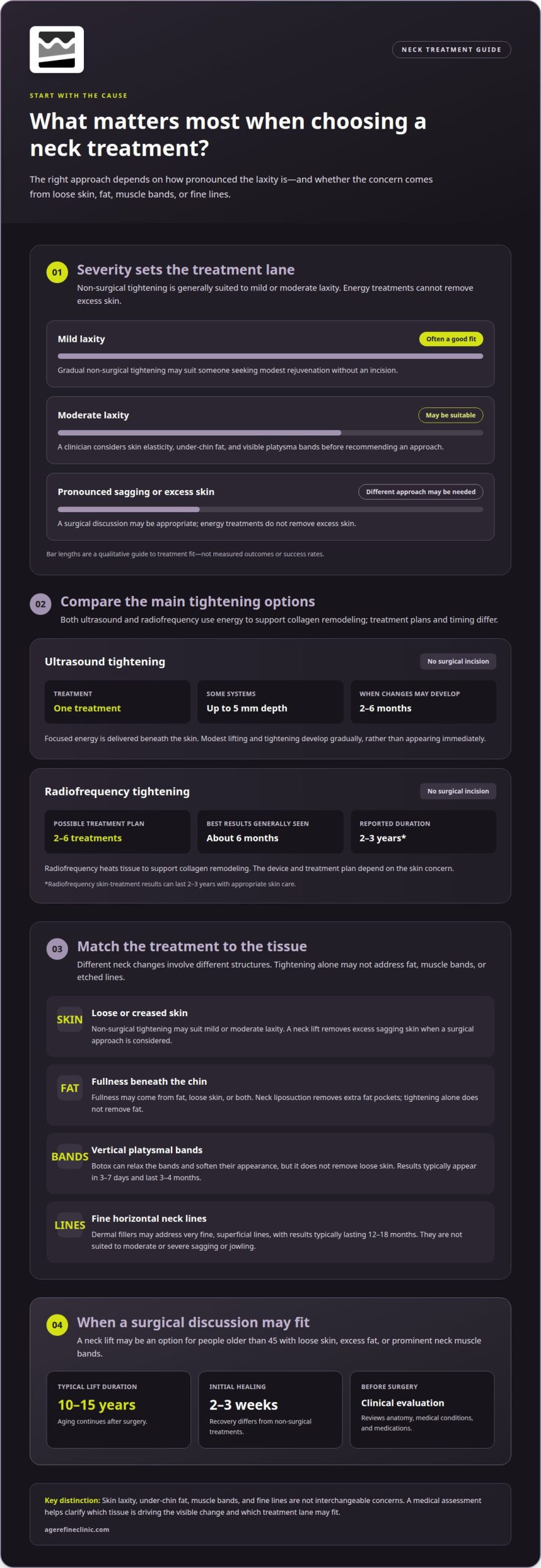
Non-surgical tightening is generally suited to mild or moderate skin laxity, not pronounced jowling or extensively stretched skin. Someone in their early 50s with slight looseness may be a candidate; a clinical assessment considers skin elasticity, under-chin fat, and visible platysma bands. More advanced sagging may need a surgical discussion because energy treatments cannot remove excess skin.
Ultrasound skin tightening delivers focused energy beneath the surface to stimulate collagen remodeling. Some systems heat tissue at depths up to 5 mm. After one treatment, modest lifting and tightening may develop over 2 to 6 months, rather than appearing immediately. This option is most relevant when laxity is mild or moderate and the goal is gradual rejuvenation without surgery.
Radiofrequency also heats tissue to support collagen remodeling, while treatment plans can differ by device and skin concern. A series of 2 to 6 radiofrequency treatments may be recommended for optimal results, with the best results generally appearing about 6 months after treatment. Ultrasound and radiofrequency are both performed without surgical incisions; the energy type, treatment depth, and degree of laxity guide selection.
For nonsurgical tightening, pricing depends on the case and is provided after a quote request. Factors include the treatment type, area treated, extent of laxity, and whether a series is recommended. Results also vary by modality: radiofrequency skin-treatment results can last 2 to 3 years with appropriate skin care, while nonsurgical tightening results may last up to 1 year.
A surgical neck lift may be an option for people older than 45 with loose skin, excess fat, or prominent neck muscle bands. A lift typically lasts 10 to 15 years, though aging continues. Initial healing takes 2 to 3 weeks. Nonsurgical procedures typically involve little to no downtime, but risks differ by treatment. Before surgery, a clinical evaluation reviews anatomy, medical conditions, and medications to assess eligibility and procedure-specific risks.
Why consider non-surgical skin tightening?
Neck aging can become noticeable around age 40, as collagen and elastin loss contributes to thinner skin and reduced firmness. Sun exposure can also affect the neck’s texture over time. As support changes, loose skin may become more visible beneath the jaw, while jowls reflect changes in the lower face as well as the neck. These concerns involve related areas, but they aren’t identical.
Non-surgical rejuvenation may suit someone seeking a modest change in mild or moderate laxity without an incision. Laser skin tightening typically involves little to no downtime, though the expected benefit depends on the concern and treatment. Improving skin texture is different from lifting loose skin. RF microneedling for skin texture may help with texture concerns, but it shouldn’t be presented as a substitute for surgery when excess skin is pronounced.
For more advanced laxity, procedures address different structures. A neck lift removes excess sagging skin, while neck liposuction removes extra fat pockets beneath the chin and along the neck. A lower face lift is often combined with a neck lift because the lower face and neck share muscle and skin structures. Liposuction targets fat, not significant loose skin. The right approach depends on which tissue is driving the visible change.
For a cosmetic plan focused on texture, RF microneedling for skin texture may be worth discussing as one distinct treatment goal. Separating texture, skin laxity, and under-chin fullness helps clarify whether a non-surgical option fits or whether surgical assessment is more appropriate.
Neck bands, necklace lines, and under-chin fullness
Neck changes may involve loose skin, fat beneath the chin, or visible muscle bands. These concerns can overlap, so identifying the main tissue involved helps guide treatment choices.
Distinguishing Loose Skin, Fat, and Muscle Bands
Loose skin appears as creasing or folds, while under-chin fullness may reflect fat beneath the jaw. Vertical cords that stand out when the neck muscles contract can indicate platysmal bands. These features can coexist, so a clinical assessment considers skin, fat, and muscle rather than treating every change as the same concern. The distinction matters because a tightening procedure may not address fullness caused by fat.
Neck Bands and Horizontal Lines
Platysmal bands are vertical muscle cords; horizontal lines are creases across the neck. Botox can relax platysmal bands and soften their appearance, but it doesn’t remove loose skin. Results for neck treatment typically appear in 3-7 days and last 3 to 4 months. A board-certified dermatologist can assess whether bands, etched lines, or both shape the visible concern.
For fine horizontal lines, treatment depends on their depth and the surrounding skin. Dermal fillers may address very fine, superficial neck lines, with results typically lasting 12-18 months. They aren’t appropriate for moderate to severe sagging or jowling. Matching the procedure to the line type helps keep expectations aligned with what it can change.
Under-Chin Fullness and Necklace Lines
Under-chin fullness can reflect localized fat, loose skin, or both. Some doctors reduce under-chin fat without surgery alongside tightening treatments; a radiofrequency device may be considered separately for tightening. The approach depends on which tissue contributes most to the profile, since tightening alone doesn’t remove fat.
Necklace lines are horizontal creases, not vertical muscle bands. Very fine lines may respond to carefully selected filler, while deeper creasing or laxity calls for a different assessment. Because facial and neck concerns can affect appearance together, examining the area at rest and during movement helps distinguish them before choosing a procedure.
Medical advice for neck skin concerns
A medical assessment can distinguish skin laxity from under-chin fat and visible platysma muscle. These tissues respond differently, so a treatment aimed at one may leave another concern unchanged.
Neck skin contains less collagen and elastin than skin in many other areas, which can limit the results of non-surgical tightening. A clinical examination considers elasticity, fat beneath the chin, and muscle visibility. This helps determine whether a non-invasive approach may offer modest improvement or whether a neck lift is more relevant for substantial loose skin.
Retinoids such as tretinoin or adapalene can encourage collagen and elastin production and thicken skin beneath its outer layer. A physician can assess whether prescription retinoids suit your skin. Moisturizers may offer limited benefit and require daily use. Neck creams, facial exercises, and sculpting devices aren’t expected to create much visible, lasting improvement in sagging.
Sunscreen helps limit ongoing sun damage, while retinoids address skin changes through a different mechanism. Neither removes excess tissue or tightens prominent muscle bands. Peels and light laser treatments can address sun damage, but they don’t provide the same tightening as surgery. Fractionated CO2 laser can improve sun damage, stimulate collagen, and smooth skin over time, but its tightening results don’t match a surgical lift.
A neck lift removes excess skin and may be combined with a lower face lift because these areas share muscle and skin structures. Initial healing takes 2 to 3 weeks, while full results take 2 to 3 months. Surgical recovery and procedure-specific risks differ from non-surgical treatment; a medical assessment should cover the tissues treated, likely recovery, and potential complications before a decision.
For a personalized discussion of aesthetic approaches to skin concerns, explore your skin treatment options.
AgeRefine Clinic
AgeRefine Clinic can help you consider aesthetic options based on the concern you want to address, whether it’s skin texture, visible lines, or muscle-related bands. Wrinkle relaxer Xeomin is an option to discuss for concerns involving muscle movement; it isn’t a treatment for significant loose skin or excess tissue. Knowing the difference helps keep treatment goals realistic and focused.
If you’re unsure whether your neck concern relates to skin, muscle, or fullness beneath the chin, contact AgeRefine Clinic to discuss your goals and possible next steps. A personalized consultation can help you understand which aesthetic options may be relevant.
Choose a Next Step That Fits Your Goals
The best treatment for sagging neck skin addresses the tissue behind your concern and matches the degree of change you want. Before choosing an approach, clarify your priority: softening the appearance of muscle bands, improving skin quality, or reducing under-chin fullness. This focus makes a conversation about aesthetic options more useful and grounded in your goals.
AgeRefine Clinic offers Wrinkle relaxer Xeomin, XERF, and Onda Pro among its aesthetic services. These treatments address different concerns, so they aren’t interchangeable or substitutes for a neck lift when loose skin is pronounced. A useful next step is to discuss what you’re noticing and which outcome matters most to you.
Contact AgeRefine Clinic to discuss your neck treatment goals and take the next step with clarity and confidence.
Frequently Asked Questions
Is It Too Late to Treat Neck Aging?
No. Age alone doesn’t determine whether neck treatment is suitable. The main considerations are the tissues involved, the degree of change, and your goals. People may seek advice about loose skin, visible bands, or under-chin fullness at different ages. An assessment helps distinguish concerns that may respond to non-surgical treatment from changes that call for a surgical discussion.
How do I know which neck treatment is right for my specific concern?
Start by identifying the change you most want to address, then have your skin, muscle, and under-chin fullness assessed together. For people in Orang County, a personalized consultation can consider your goals, concerns, medical history, skin, and lifestyle. For example, a texture concern differs from prominent loose skin, so treatment planning should focus on the target tissue rather than age alone.
What are the main concerns patients seek to address regarding an aging neck?
Common concerns include loose or crepey skin, vertical platysmal bands, horizontal necklace lines, sun-related texture changes, and fullness beneath the chin. These may appear separately or together. For example, someone may notice lines across the neck while speaking and fullness beneath the jaw at rest. Describing when and where each change appears helps clarify the treatment goal.
What causes common signs of an aging neck?
Reduced collagen and elastin contribute to thinner, less firm neck skin, while cumulative sun exposure can affect its surface and texture. Changes in skin support may make folds more visible; muscle bands and under-chin fat create different contours. These causes can overlap, so a softer jawline may reflect more than one tissue change.
Why does the neck look older?
The neck can show visible changes because its skin has less collagen and elastin than skin in many other body areas. Sun exposure also affects this often-exposed area, while horizontal creases and vertical bands create distinct shadows and contours. You may notice these details even when your facial skin looks different, making the neck’s texture and shape a separate aesthetic concern.
What is the most effective treatment for sagging neck skin by severity and age?
The best treatment for sagging neck skin depends more on the type and extent of change than on age alone. Mild to moderate laxity may suit non-surgical tightening. Pronounced loose skin, jowling, or substantial muscle banding calls for medical evaluation of surgical options, since non-surgical treatments don’t match surgery’s long-term tightening results. The goal is to match treatment to your anatomy and desired durability.