Red stretch marks can become less noticeable, but treatment doesn’t erase them completely. RF microneedling for stretch marks in Irvine may help soften their appearance and blend them more closely with surrounding skin; a typical plan involves 3-4 sessions spaced about a month apart, with the number shaped by the marks’ severity.
If you’re considering RF microneedling for stretch marks in Irvine, you likely want to know what treatment can realistically change. Stretch marks are common and harmless, and their color and texture can change over time.
This article explains how RF microneedling works, why marks may respond differently, and what side effects to consider. You’ll also learn what treatment may offer for body stretch marks, so you can approach the decision with practical expectations and greater confidence.
Key Takeaways
- Understand how radiofrequency energy and microneedling work together to support collagen remodeling and improve the appearance of stretch marks.
- Learn which temporary skin reactions may follow treatment and what possible side effects to keep in mind.
- Explore how treatment may address body stretch marks, including older or more prominent marks.
- See how AgeRefine Clinic’s RF microneedling for skin texture may fit into a personalized approach to skin concerns.
What Can I do to Get Rid of Red Stretch Marks?
Red or purple stretch marks may gradually fade toward white. Treatment may help smooth their texture and reduce the contrast with surrounding skin.
Treatment Options in the Area
For people exploring treatment in Irvine or Orange County, options may include radiofrequency microneedling, laser resurfacing, and medical-grade chemical peels. Each addresses different concerns: microneedling and lasers target collagen remodeling and skin texture, while peels may help with discoloration and skin renewal. A consultation can consider the mark’s color, texture, location, and your skin type. RF microneedling may be considered for skin types I to VI.
Sessions Based on Stretch Mark Severity
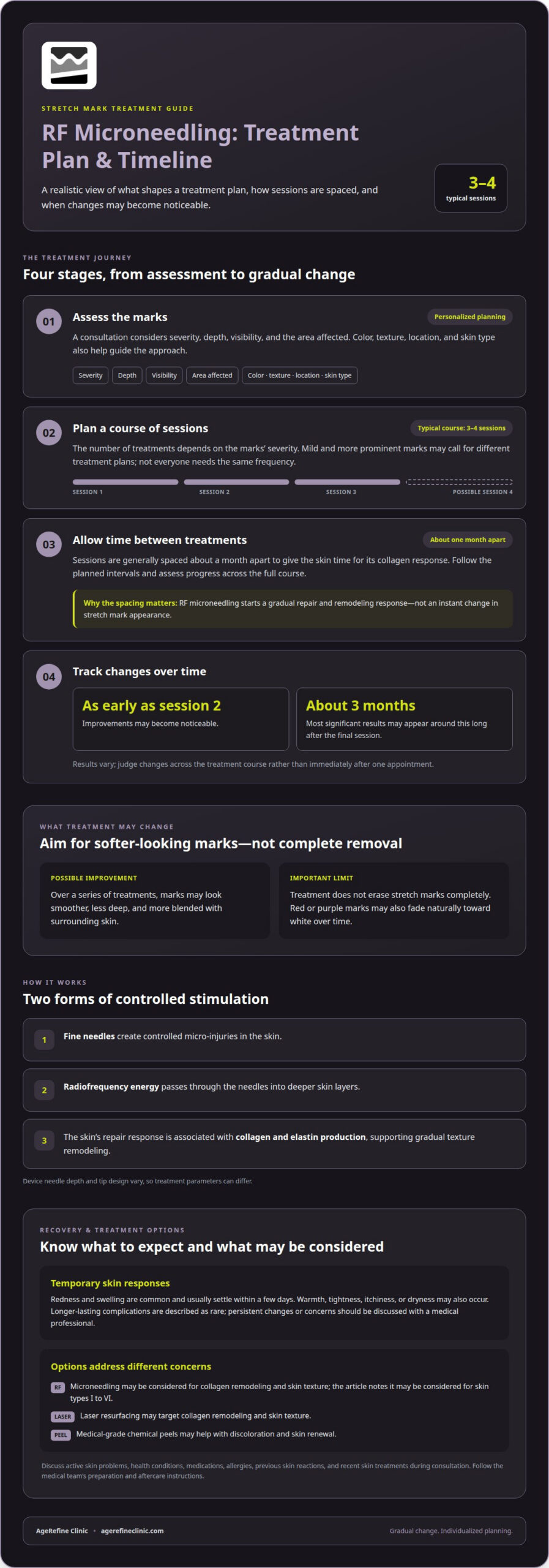
The number of treatments depends on the stretch marks’ severity. Their depth, visibility, and the area affected help shape the plan, so a consultation should assess the marks directly rather than assume every person needs the same frequency. A typical course is 3-4 RF microneedling sessions. Mild marks and more prominent marks may need different approaches or treatment plans. Stretch marks and acne scars also differ in cause and pattern, so the target concern matters.
Treatment Frequency and Intervals
Treatment sessions are generally spaced about a month apart to allow time for the skin’s collagen response. Improvements may become noticeable as early as the second treatment, while the most significant RF microneedling results may appear approximately three months after the final session. Follow the planned intervals and assess changes across the full course, rather than judging results immediately after one appointment.
Expected Improvement and Limitations
RF microneedling may help stretch marks blend with surrounding skin and look less deep over a series of treatments. The goal is a smoother appearance, not a promise that marks will disappear completely. Red or purple marks can fade naturally toward white, and their color may affect which concern stands out most. Severity also influences visible change, so treatment planning should account for texture, color, and realistic improvement.
How Does RF Microneedling Work?
RF microneedling combines fine needles with radiofrequency energy to target deeper skin layers. The needles create controlled micro-injuries, while radiofrequency current passes through them into the tissue. Together, these actions prompt a repair response associated with collagen and elastin production, supporting gradual changes in skin texture.
The channels created by the needles are deliberate and controlled, rather than broad surface injuries. As the skin responds, collagen production helps remodel the treated area. This process is gradual: treatment initiates a biological response, not an instant change in a stretch mark’s appearance. The treated texture may evolve as the skin heals and remodels.
Device design affects how energy is delivered. Needle depth and tip design vary between devices, so treatment parameters can differ. The treatment area and the skin’s appearance help guide how the device is used. This precision matters on the body, where stretch marks can vary in width, depth, and location.
After treatment, temporary redness, warmth, or swelling can occur as the skin responds to controlled stimulation. These effects usually settle within a few days, although the experience varies. Plan for recovery time while collagen remodeling continues. The goal is gradual texture improvement, not immediate removal of marks.
For a focused conversation about skin texture and treatment goals, explore a skin treatment consultation.
RF microneedling delivers radiofrequency current through needles, and devices differ mainly in needle depth and tip design. Pen microneedling creates controlled micro-injuries to stimulate collagen and elastin production.
Are there any side effects?
After RF microneedling, temporary redness and swelling are common responses and usually settle within a few days. The treated skin may also feel warm, tight, itchy, or dry as it recovers. These effects can briefly affect the treatment area’s appearance, so plan for visible redness after an appointment. Radiofrequency energy and microneedles stimulate collagen in deeper skin layers, and the skin needs time to respond.
Longer-lasting complications are described as rare, but may include persistent redness, warmth, itchiness, tightness, dry skin, or discoloration. A change in appearance that continues beyond the expected short recovery period deserves medical attention. Treatment creates controlled stimulation, but individual skin responses differ. In Orange County, patients should understand both the usual short-term reactions and the less common concerns before deciding whether treatment fits their goals.
If you have an active skin problem in the treatment area, or a health condition or medication that may affect healing, discuss suitability and medical clearance before treatment. Share relevant health history and previous skin reactions during the consultation so they can inform the treatment plan.
Before your appointment, follow the medical team’s preparation instructions and disclose relevant medications, allergies, and recent skin treatments. Afterward, follow the aftercare guidance provided for your skin, and avoid introducing unapproved products or procedures while the area recovers. Because treatment stimulates collagen rather than creating an immediate change, monitor healing over the following days and report concerns to the treating medical professional.
RF microneedling for body stretch marks
Body stretch marks vary in width, color, depth, and location, so treatment planning starts by identifying the main concern. Marks across the abdomen, for example, may have a different pattern from marks on the hips or thighs. The priority may be uneven texture, visible depth, or contrast with nearby skin. Defining that priority helps shape a focused approach.
RF microneedling may be useful for older or more prominent stretch marks. Its controlled stimulation supports collagen remodeling, which may help marks look smoother and blend more with surrounding skin. The aim is to improve their appearance, not remove them completely. Mark color also matters: a pigment concern differs from a texture concern, and each may call for different treatment considerations.
A treatment plan should account for the area, skin type, and appearance of the marks. The provider assesses the skin and determines how to target the area with the needles. Body areas differ in shape and mark distribution, making a consistent assessment important. Photographs or observations during treatment can help track changes in texture and visibility.
Other approaches may address related concerns. CO₂ laser resurfacing and CoolPeel can remodel collagen and improve treated skin’s texture, firmness, and quality. Medical-grade chemical peels may help reduce stretch-mark discoloration and support skin renewal. These approaches have different aims: resurfacing focuses on texture and skin quality, while peels may address pigment. Match the treatment to the main concern rather than treating every body mark alike.
Use a consultation to define the target area and whether texture, depth, or pigment matters most. This discussion can help shape a practical plan for body rejuvenation and identify the changes to track across treatment sessions.
AgeRefine Clinic: RF microneedling for skin texture
AgeRefine Clinic offers RF microneedling for skin texture to address concerns such as unevenness and visible stretch marks. A consultation can clarify whether your priority is texture, depth, or discoloration, and what improvement is realistic for your skin. Treatment is tailored to the area and concern, with attention to your goals and your skin’s response.
RF microneedling does not erase stretch marks completely. It may support smoother-looking skin over a course of treatments, with changes developing as collagen remodels. To discuss whether this approach aligns with your goals, contact AgeRefine Clinic to arrange a personalized consultation.
Choose a Next Step That Fits Your Skin Goals
A useful first step is to identify which change matters most to you. You may be focused on how a stretch mark feels, how visible it looks, or how it differs from nearby skin. Naming your priority can make the treatment discussion more personal and keep expectations grounded in what you want to improve.
For those considering RF microneedling for stretch marks in Irvine, a conversation with AgeRefine Clinic can help connect your goals with a thoughtful approach to skin texture. Bring up the areas that concern you and the results you hope to see. The discussion can focus on whether this treatment aligns with those priorities, without pressure to pursue a particular option.
Contact AgeRefine Clinic to discuss your stretch mark concerns and next steps. A considered plan can be a meaningful start toward feeling more comfortable in your skin.
Frequently Asked Questions
How Many Sessions Are Needed and How Often?
A common treatment plan includes 3-4 sessions, spaced about a month apart. For patients considering RF microneedling for stretch marks in Irvine, this schedule allows time between appointments for the skin’s response to develop. Some improvement may appear by the second session, while the most significant results may emerge approximately three months after the final treatment. Planning around this gradual timeline can help set realistic expectations for follow-up.
Which Skin Types Can Be Treated with RF Microneedling?
RF microneedling may be used across skin types I to VI. Skin type is one consideration in planning, alongside the stretch marks’ appearance, location, and texture. For example, someone focused on visible discoloration may have different priorities from someone focused on uneven texture. A skin assessment helps determine how to approach the specific concern and treatment area.
How Many Treatments Are Needed?
The number of treatments depends on the stretch marks’ severity and how much texture or visibility you want to address. A typical course is 3-4 sessions, but more pronounced marks can call for a different plan. The treated area and the marks’ depth also inform the approach. Progress is assessed over the course rather than judged from a single appointment.
How Does RF Microneedling Compare with Lasers?
RF microneedling delivers radiofrequency energy through needles, while laser resurfacing uses light-based energy to treat the skin. CO₂ laser resurfacing and CoolPeel can support collagen remodeling and improve texture, firmness, and skin quality. Medical-grade chemical peels may better suit concerns involving discoloration and skin renewal. Compare options by the primary goal: texture, firmness, or pigment.
How Much Does It Cost?
The cost depends on the case and is provided after a quote request. Factors include the size and location of the treatment area, stretch-mark severity, and the number of sessions in the planned course. A consultation can connect those details with a tailored treatment plan before costs are discussed. No single figure applies to every plan.
How Effective Is RF Microneedling for Stretch Marks?
RF microneedling for stretch marks in Irvine may soften the appearance and depth of marks, helping them blend more closely with surrounding skin. Older or more prominent body marks may respond particularly well. Treatment does not remove stretch marks completely, so the practical goal is smoother-looking skin and reduced visibility. The amount of improvement depends in part on the marks’ severity.