
A trial’s duration isn’t the same as a recommended course of treatment. Tesofensine peptide for weight loss has no FDA-approved treatment duration in the United States: as of November 2026, tesofensine isn’t FDA-approved for any use. Studies investigated it over 24 weeks, with a 48-week extension, but those study periods don’t establish how long someone should take it in routine care.
It’s understandable to want a clear timeline before considering a medication, especially when appetite, energy use, and lasting results matter. This article explains what research suggests about tesofensine, what trial durations can and can’t tell us, and how the evidence compares with prescription weight-loss options. It also covers tesofensine’s investigational status and practical questions to consider when weighing a supervised approach to weight management.
Key Takeaways
- Understand what research suggests about tesofensine’s effects on appetite and energy expenditure, and where those findings have limitations.
- Learn why study periods don’t establish a recommended treatment duration, and what to consider when comparing prescription weight-loss options.
- Explore the weight-loss outcomes reported in tesofensine trials alongside its investigational status in the United States.
- Recognize the reported heart-rate and blood-pressure effects so you can better understand the safety considerations discussed in the article.
Effects on appetite and energy expenditure
Tesofensine can influence appetite through its effects on norepinephrine, dopamine, and serotonin transporters. Its reported inhibitory concentrations are 1.7 nM, 65 nM, and 11 nM, respectively. In animal studies, daily food intake fell by approximately 49% during the initial treatment period. That finding describes animals, not an expected result for people.
A two-week trial examined satiety and energy expenditure in 32 men with overweight or moderate obesity. Its short duration and specific participant group limit what it can establish about longer-term weight change. Appetite, food intake, and energy expenditure are related but distinct outcomes: feeling fuller does not, by itself, show how much weight a person will lose.
Clinical-trial effects also included measurable cardiovascular changes. In a 24-week Phase 2 trial, the 0.5 mg daily dose was associated with a heart-rate increase of 7.4 beats per minute versus placebo. The obesity trial reported a blood-pressure increase at the 1 mg dose. These findings matter when assessing a medicine that can affect central nervous system signaling.
Nausea is a relevant concern, but the available trial facts here don’t establish its frequency or identify a proven nausea treatment. Tesofensine has an approximate half-life of 9 days, while its active metabolite M1 has a half-life of 16 days. Because the compound and metabolite remain in the body for extended periods, side-effect management should not rely on changing a dose independently. A clinician can review symptoms and current medications before considering any response.
People taking antidepressants or living with heart conditions should avoid self-starting tesofensine and have those factors assessed by a clinician. The reported heart-rate and blood-pressure findings make cardiovascular history relevant, while concurrent medicines need individual review. Tesofensine is not FDA-approved for any use in the United States as of November 2026, so trial findings do not establish a routine treatment plan.
Prescription weight-loss medications
Medication comparisons are clearest when approval status, evidence, and access are considered separately. A calorie-reduced eating plan may accompany treatment, but it does not make investigational and approved medicines interchangeable.
Comparison With Approved Weight-Loss Medications
Tesofensine peptide for weight loss remains investigational, unlike FDA-approved options such as semaglutide and tirzepatide. That distinction matters more than comparing headline claims: approval reflects a different regulatory status. When assessing options, weigh the evidence, known risks, treatment demands, and fit with your health circumstances. A calorie-reduced diet may be one part of weight management, but it does not mean these medicines work alike.
Prescription and U.S. Availability
As of November 2026, tesofensine isn’t FDA-approved for any use in the United States, so it isn’t available as an FDA-approved prescription weight-loss medication. This doesn’t mean every question about possession or sale has the same answer. An online listing, claimed dose, or seller’s description doesn’t establish lawful access, product quality, or medical oversight. Working directly with a comprehensive healthcare provider like Stay Medical Clinic ensures that any health or weight-management approach is guided by proper clinical oversight and personalized care.
Cost and Insurance Coverage
Because tesofensine is not an FDA-approved U.S. prescription weight-loss medicine, there is no approved prescription price to compare, and insurance coverage should not be assumed. Coverage for approved medications depends on your plan and the specific medicine prescribed. For semaglutide or tirzepatide, review your plan’s formulary and coverage criteria rather than relying on a general estimate.
If you’re considering tesofensine peptide for weight loss, separate three questions: Is it FDA-approved for the intended use? What evidence supports it? What does your plan cover? A reduced-calorie eating pattern may be part of a weight-management plan, but it does not resolve questions about medication approval, safety, or insurance coverage. For individuals seeking broader, holistic support alongside lifestyle modifications, naturopathic clinics like Feel Your Best Self focus on personalized wellness strategies to help navigate long-term vitality safely.
Tesofensine’s investigation as an anti-obesity drug
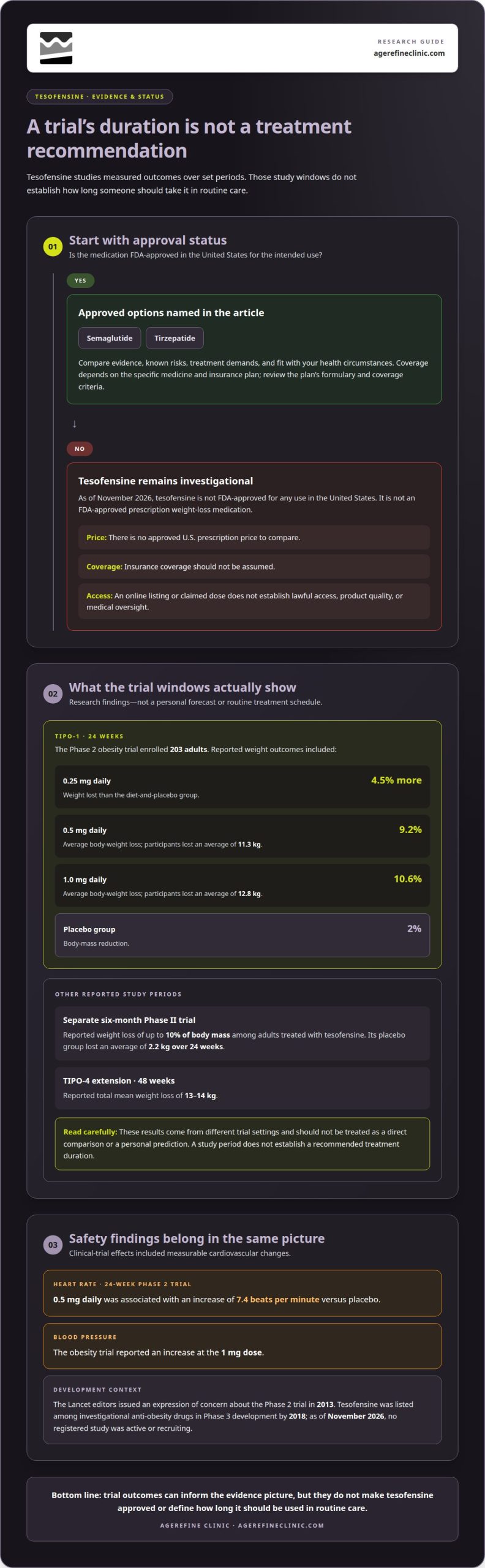
Tesofensine has been investigated as an obesity treatment, but trial results do not make it an approved medication. The Phase 2 obesity trial enrolled 203 adults and evaluated weight change over 24 weeks. Those results offer a research signal, not a routine treatment program or a recommended duration.
In the TIPO-1 trial, participants taking 0.25 mg daily lost 4.5% more weight than the diet-and-placebo group over 24 weeks. At 0.5 mg daily, average body-weight loss was 9.2%; at 1.0 mg, it was 10.6%. The placebo group had a 2% body-mass reduction. Participants receiving 0.5 mg lost an average of 11.3 kg, while those receiving 1.0 mg lost 12.8 kg over the same period.
A separate six-month Phase II trial reported weight loss of up to 10% of body mass among adults treated with tesofensine. Its placebo group lost an average of 2.2 kg over 24 weeks. A 48-week TIPO-4 extension reported total mean weight loss of 13-14 kg. These outcomes come from different trial settings, so they shouldn’t be treated as a direct comparison or a personal forecast.
The development record also calls for context. The Lancet editors issued an expression of concern about the Phase 2 trial in 2013. Tesofensine was listed among investigational anti-obesity drugs in Phase 3 development by 2018, yet no registered study was active or recruiting as of November 2026. It isn’t FDA-approved for any use in the United States as of November 2026.
Online tesofensine products can’t be assumed reliable based on a listing or claimed dose alone. Look for a clear product identity, ingredient and dose information, and credible quality documentation. Even then, these details do not establish FDA approval or clinical safety. A seller’s claims are not a substitute for evidence from a supervised clinical program.
What are the common side effects and serious risks of tesofensine?
The available trial findings highlight cardiovascular changes rather than a complete list of common side effects. In a 24-week Phase 2 trial, tesofensine at 0.5 mg per day was associated with a heart-rate increase of 7.4 beats per minute versus placebo. The obesity trial also reported a blood-pressure increase at the 1 mg dose. These findings make heart rate and blood pressure important safety considerations.
The two results came from different dose conditions. The 7.4-beat increase was reported with 0.5 mg per day, while the blood-pressure increase occurred at 1 mg. They shouldn’t be collapsed into one dose-response conclusion. Instead, they show why dose, cardiovascular history, and other medicines matter when evaluating tesofensine’s risks.
These trial findings do not establish that everyone experiences the same effects, provide a complete profile of common side effects, or define an appropriate monitoring schedule. If you’re considering an investigational compound, discuss your health history and current medicines with a qualified clinician before using it. Don’t change or combine medicines on your own to manage a suspected reaction.
Tesofensine has an approximate half-life of 9 days, and its active metabolite M1 has a half-life of 16 days. Those durations describe how long the compounds remain in the body, not how long side effects last for an individual. They underscore why taking more, stopping, or adding another medicine without clinical guidance can’t be treated as a simple adjustment.
For a measured discussion of peptide-based wellness and your health goals, schedule a conversation about your care options. Bring a list of current medicines and relevant cardiovascular history; those details help frame a safer, more informed discussion.
AgeRefine Clinic: Peptide Therapy
AgeRefine Clinic offers Peptide Therapy for people exploring peptide-based wellness as part of their broader health goals. A personalized consultation can cover what you hope to address, your relevant health history, and any medicines you take. This discussion can help clarify whether peptide therapy is appropriate to explore and what expectations are realistic.
Tesofensine’s investigational status and trial findings do not mean it is part of AgeRefine Clinic’s Peptide Therapy offering. If your primary goal is weight management, keep that distinction clear and discuss suitable options with a qualified healthcare professional. For concerns about skin or facial appearance, AgeRefine Clinic also offers XERF and wrinkle relaxer Xeomin, which address different goals.
If you’d like to discuss peptide therapy and your wellness goals, contact AgeRefine Clinic.
Choose a thoughtful next step for your goals
Weight-management decisions are best approached with clarity about your goal, the evidence, and the kind of support you’re seeking. If you’re considering tesofensine peptide for weight loss, keep questions about an investigational drug separate from choices about aesthetic treatments. A focused conversation can help you identify the concerns you want to address and the kind of care that aligns with them.
AgeRefine Clinic offers Onda Pro for body contouring, XERF for skin revitalization, and wrinkle relaxer Xeomin for facial lines. These services address different aesthetic goals and are not substitutes for prescription obesity treatment. Being clear about your priorities helps keep the next step relevant to you.
To discuss your goals and explore the care options that fit them, contact AgeRefine Clinic. A considered plan starts with an honest conversation, and you can move forward at a pace that feels right.
Frequently Asked Questions
How long do I need to stay on medication?
There’s no established routine treatment duration for tesofensine. Obesity studies examined treatment over 24 weeks, and a TIPO-4 extension reported outcomes over 48 weeks, but research periods aren’t instructions for ongoing use. Since tesofensine isn’t FDA-approved in the United States, those studies don’t provide a standard prescription schedule. Discuss medication duration in the context of an approved treatment plan and your health needs.
What if I experience nausea?
If nausea occurs while you’re taking a weight-loss medication, contact the clinician managing that treatment before changing your dose or adding another medicine. Note when it began, how it relates to meals or medication timing, and whether other symptoms appear. This information can help guide an appropriate response. Don’t assume advice for nausea caused by another medication applies to tesofensine.
What is tesofensine?
Tesofensine is an investigational compound studied for obesity, not an FDA-approved weight-loss medication in the United States. Research describes its activity on norepinephrine, dopamine, and serotonin transporters, which are involved in signaling within the nervous system. This mechanism helps explain why researchers examined appetite and weight outcomes, but it does not establish a personal benefit or make tesofensine an approved treatment.
What is tesofensine, and is it actually a peptide?
A product description using the word “peptide” does not by itself establish what the product contains or how it is classified. A product description using the word “peptide” does not change the compound’s classification or establish its ingredients, quality, or regulatory status. Research concerns tesofensine as a centrally acting investigational drug candidate. For any product marketed under this name, the label alone cannot establish that it matches the compound studied in clinical trials.
How does tesofensine work for weight loss?
Tesofensine inhibits transporters involved in norepinephrine, dopamine, and serotonin signaling. Researchers have examined whether these effects influence appetite, food intake, and energy expenditure. These are related but separate processes: a change in appetite doesn’t by itself establish increased energy use or predict a particular person’s weight change. The proposed mechanism is not the same as evidence of an approved or suitable treatment.
What clinical trials studied tesofensine for obesity, and how much weight did participants lose?
The TIPO-1 trial studied daily tesofensine over 24 weeks. Reported average body-weight loss was 9.2% with 0.5 mg and 10.6% with 1.0 mg; the 0.25 mg group lost 4.5% more than the diet-and-placebo group. A separate six-month Phase II trial reported losses of up to 10% of body mass. These findings don’t establish an approved regimen or predict an individual result.