Persistent facial redness isn’t always ordinary sensitivity. Rosacea can cause flushing, visible blood vessels, and ongoing redness, and the right treatment depends on the symptoms and your skin’s needs. For people seeking treatment to reduce facial redness in Orange County, options may include laser or light therapies for visible vessels and persistent redness, prescription topicals to address inflammation, and daily skin care and sun protection to help manage triggers.
It’s understandable to want a clear path to calmer-looking skin. Rosacea is a chronic condition that can often be managed, but other skin concerns can look similar, so an accurate diagnosis matters before choosing a treatment. Gentle, fragrance-free products, broad-spectrum sunscreen, and awareness of personal triggers can support care. A qualified professional can assess whether a procedure or prescription treatment may be appropriate.
This guide explains how laser and light therapies, prescription topicals, lifestyle adjustments, and sun protection fit into a thoughtful redness-management plan. You’ll also learn why treatment is tailored to the pattern of redness and how consistent skin care can support longer-term comfort.
Key Takeaways
- Track patterns around heat, sun, stress, spicy foods, alcohol, and skin-care products to identify possible rosacea triggers.
- Laser and light therapies can target persistent redness and visible blood vessels; the approach depends on your skin and symptoms.
- Prescription topical treatments may help address rosacea-related redness and inflammation as part of a tailored care plan.
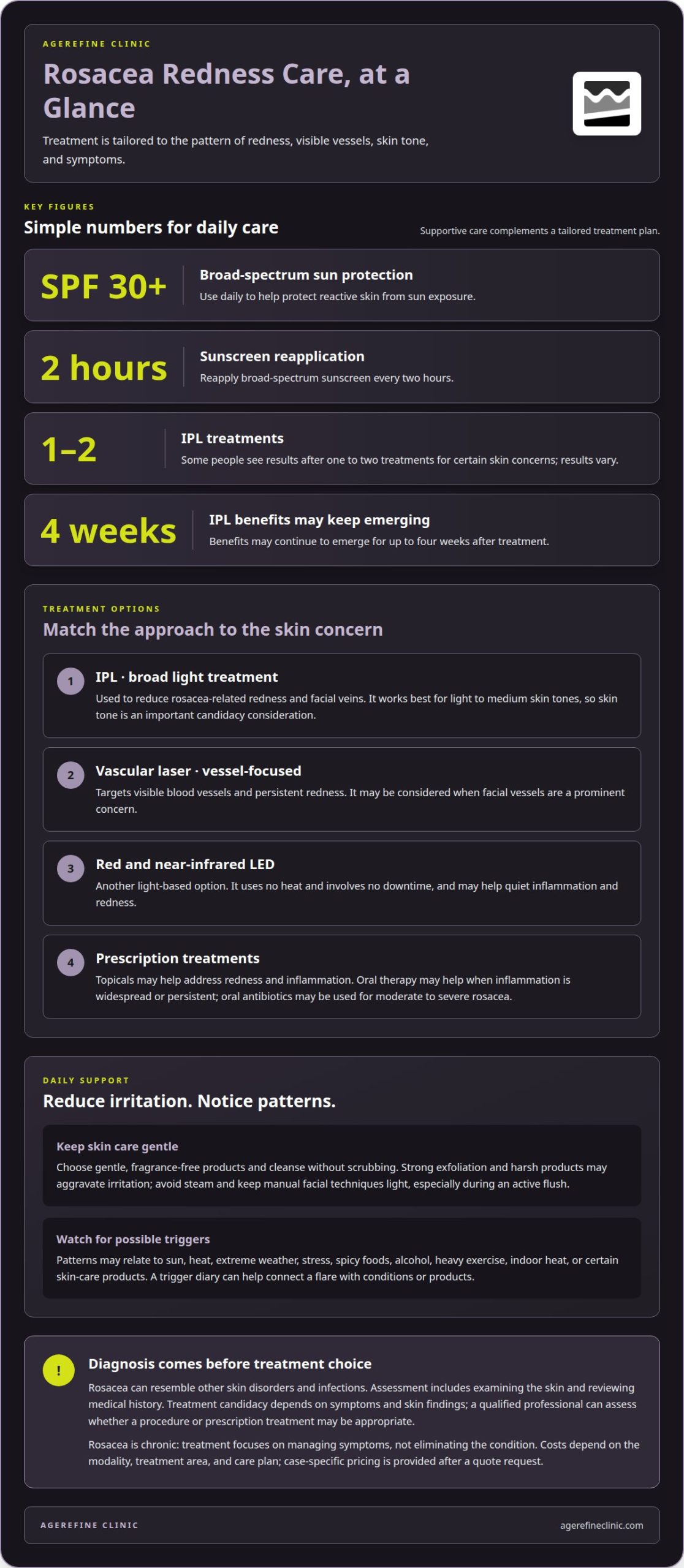
- Support sensitive skin with gentle care and broad-spectrum SPF 30 or higher daily, reapplying every two hours.
Are laser treatments safe for rosacea?
Laser and light therapies may target persistent redness and visible blood vessels, but suitability depends on the skin concern. Rosacea care also includes trigger awareness, gentle barrier support, and an accurate medical diagnosis.
Common triggers include sun exposure, heat, extreme weather, stress, spicy foods, alcohol, heavy exercise, and indoor heat. Certain skin-care products can also worsen irritation. Notice patterns around specific environmental conditions or products, then discuss them during rosacea care. A trigger diary can help connect a flare with a sunny afternoon, a hot room, or a particular product.
For barrier-focused facial care, choose gentle, fragrance-free products and cleanse without scrubbing. Avoid steam and keep manual facial techniques light, especially during an active flush. Broad-spectrum sunscreen helps protect reactive skin from sun exposure. Strong exfoliation or harsh products may aggravate irritation, so a simple routine is often easier to assess.
Flare-Up Prevention and Prognosis
Rosacea is chronic, so treatment focuses on managing symptoms rather than eliminating the condition. Redness and flushing may become more persistent without care, while consistent trigger management can help limit flare-ups. Protect your skin from sun and heat, use gentle products, and note whether stress, alcohol, or spicy foods precede symptoms. These observations can help shape ongoing prevention.
Diagnosis and Treatment Candidacy
Rosacea can resemble other skin disorders and infections, making an accurate diagnosis important before treatment. Assessment includes examining the skin and reviewing medical history. Persistent redness, visible vessels, bumps, or burning can inform the evaluation. Treatment candidacy depends on the symptoms and skin findings. Laser or light procedures target visible vessels and redness, while inflammation may call for other medical care.
Health insurance coverage for rosacea diagnosis and treatment depends on the plan and the care involved. Review your benefits to understand how your plan handles evaluation and treatment.
Facial redness treatment costs in Orange County depend on the modality, treatment area, and care plan. Case-specific pricing is provided after a quote request.
In Orange County, dermatologists who evaluate rosacea and provide vascular laser or light treatments address both diagnosis and visible redness. The appropriate approach depends on symptoms, skin findings, and treatment goals.
Laser and light-based therapies
Light-based options can address persistent redness and visible blood vessels associated with rosacea. Treatment choice depends on skin tone, visible symptoms, and the pattern of flushing.
Intense Pulsed Light Therapy
Intense pulsed light, or IPL, is used to reduce rosacea-related redness and facial veins. It works best for light to medium skin tones, so skin tone matters when considering candidacy. Some people see results after one to two treatments for certain skin concerns, while benefits may continue emerging for up to four weeks after treatment. IPL is not a cure for this chronic skin condition; ongoing trigger management remains relevant.
Vascular Laser Treatment
Vascular lasers target visible blood vessels and persistent redness. They may be considered when facial vessels are a prominent concern, while IPL can address redness and facial veins. Appropriate assessment matters because treatment choice should reflect skin findings and tone. Specialized dermatology practices like Quttainah Medical Center emphasize matching the right laser technology to each patient’s specific vascular pattern and skin type. Both laser and light therapies are used for redness, but the best fit depends on the individual pattern rather than the label alone.
Comparing IPL and Vascular Lasers
Both approaches can reduce visible redness and blood vessels, but they use different light-based methods. IPL is a broad light treatment, while vascular lasers are directed toward blood-vessel concerns. A practitioner weighs the distribution of redness, visible vessels, skin tone, and symptoms such as flushing. IPL’s suitability for light to medium skin tones is a key consideration. The treatment plan should also account for chronic sensitivity and barrier care.
Red and near-infrared LED therapy offers another light-based option. It uses no heat and involves no downtime, and may help quiet inflammation and redness. Light lymphatic facial massage is different: gentle manual pressure may support a calming facial routine, but avoid massage during an active flush. Keep pressure light on reactive skin, and avoid steam that may aggravate redness.
For a closer look at laser skin rejuvenation, consider how your skin concerns and treatment goals shape the conversation about light-based care.
Prescription topical treatments
Prescription topicals can help reduce rosacea-related redness and inflammation, especially when cheeks remain persistently flushed. The choice depends on the symptoms being treated and how sensitive the skin feels. A treatment plan may focus on visible redness, inflammatory bumps, or irritation, rather than treating every sign in the same way. Because rosacea is a chronic skin condition, topical medication is used to manage symptoms, not cure the condition.
Topical and oral medications serve different roles. A clinician may recommend a topical medication when facial symptoms are concentrated on areas such as the cheeks. If inflammation is widespread or persistent, oral therapy may help control it. Oral antibiotics may be used for moderate to severe rosacea. These options aren’t interchangeable: the extent of symptoms and the type of inflammation help shape the approach.
Follow the prescribing clinician’s directions for applying a topical treatment, and introduce it within a skincare routine designed for sensitive skin. Avoid adding multiple new products at once, since that can make irritation harder to trace. For example, if redness increases after starting a topical medication, note the change and discuss it with the prescriber. Keep cleansing gentle and avoid products that already provoke stinging or flushing.
Topical treatment may be combined with other rosacea care when symptoms include both persistent redness and inflammatory bumps. A clinician considers the location and persistence of symptoms, and whether oral treatment is appropriate. The plan can then address inflammation while maintaining a calming, barrier-conscious skincare routine. Medication supports symptom control, but doesn’t remove the need to identify personal triggers.
Track changes in your cheeks, flushing, bumps, and irritation as treatment proceeds. Those details help distinguish improvement from a reaction and give the prescriber useful context for adjusting care. For sensitive skin, steady use as directed is more informative than changing several skincare products alongside a prescription. Report new or worsening irritation so the treatment plan can be reviewed.
Lifestyle changes and sun protection
Daily habits can influence flushing and support skin comfort alongside medical therapy. Sun exposure and heat may aggravate rosacea symptoms, so build protection into ordinary routines, not only outdoor plans. A brimmed hat, shade, and cooler indoor settings can limit direct exposure during errands or exercise. These habits can complement treatment to reduce facial redness in Orange County.
Use broad-spectrum sunscreen with SPF 30 or higher every day. Reapply every two hours, especially after swimming or sweating. For example, apply sunscreen before a daytime walk, then reapply after exercise if perspiration has removed it. Consistent protection helps limit sun-related aggravation of persistent redness and visible blood vessels. For Orange County residents, daily sun protection can be a practical part of facial redness care.
Keep skincare gentle to support a sensitive skin barrier. Choose fragrance-free products and mild cleansing, then avoid items that cause stinging or irritation. A simple routine makes it easier to notice whether a product affects redness. Skip steam and intense heat when they provoke flushing, and use a cool compress for 10 to 15 minutes when facial redness needs soothing.
Make trigger awareness practical. Record the setting and activity around a flare, such as a hot room, outdoor exposure, or strenuous exercise. Patterns can help identify which environmental conditions affect your symptoms. Adjust one routine at a time so you can tell whether a change improves comfort, rather than changing several products or habits together. This can help shape a plan to reduce facial redness with treatment and daily care in OC.
Sun protection and lifestyle adjustments complement dermatology care; they don’t replace treatment for persistent symptoms. Keep following prescribed therapy and maintain a gentle routine between appointments. If redness continues, a clinician can consider your symptoms, skin sensitivity, and visible vessels when reviewing care options.
For a conversation about your skin goals and potential care options, connect with the clinic.
AgeRefine Clinic
AgeRefine Clinic offers aesthetic and wellness services for people considering broader skin and wellness goals alongside rosacea care. Its offerings include XERF and wrinkle relaxer Xeomin, while rosacea diagnosis, prescription treatment, and decisions about vascular laser or light therapy are separate medical considerations. This distinction keeps care focused: persistent redness and suspected rosacea call for an accurate medical assessment, while aesthetic services address other goals within their scope.
If you’re exploring aesthetic care alongside a plan for managing redness, AgeRefine Clinic can discuss its offerings and how they relate to your goals. Contact AgeRefine Clinic to arrange a personalized consultation about your aesthetic and wellness interests.
Choose a thoughtful next step for your skin
Progress begins with clarity about what you want to address and which kind of care fits that goal. If facial redness is persistent, keep medical evaluation at the center of your plan; cosmetic services aren’t a substitute for diagnosing or treating rosacea. For those considering treatment to reduce facial redness in Orange County, the next step is to distinguish redness management from broader aesthetic goals and pursue each through an appropriate care pathway.
AgeRefine Clinic can discuss its aesthetic and wellness offerings in relation to your personal goals. A focused conversation can help you understand where those services fit, without confusing them with rosacea-specific medical care. Take time to consider what matters most, whether that’s understanding persistent redness or exploring a separate aesthetic concern.
Contact AgeRefine Clinic to discuss your aesthetic and wellness goals. A considered plan is a meaningful step toward feeling more informed and comfortable in your skin.
Frequently Asked Questions
What Is Rosacea?
Rosacea is a chronic inflammatory skin condition that can cause facial redness, flushing, visible blood vessels, sensitivity, and acne-like bumps. Symptoms often appear across the cheeks and nose, though they can extend beyond the central face. The condition isn’t contagious. Its exact cause is unknown, and symptoms may differ from person to person, making an individualized assessment useful.
What Could be Causing Your Facial Redness?
Rosacea is one possible cause, but facial redness can also come from other skin disorders or infections that look similar. With rosacea, symptoms may flare after sun exposure, heat, stress, spicy foods, alcohol, exercise, or certain skincare products. Notice whether redness follows a particular activity or product. A recurring pattern can provide useful context when discussing persistent redness with a medical professional.
When should I seek medical care for rosacea?
Seek medical evaluation for persistent redness or irritation that doesn’t improve with over-the-counter products, or for severe symptoms. A medical assessment is especially relevant when redness comes with bumps, burning, or other changes that concern you, since different skin conditions can appear alike. Rosacea symptoms affecting the eyes, including irritation or blurred vision, also warrant prompt attention to protect eye comfort and clear vision.
What causes persistent facial redness and how is it diagnosed?
Persistent facial redness can be associated with rosacea, but other skin conditions and infections may mimic it. Diagnosis involves examining the skin and reviewing medical history. Details such as when redness began, where it appears, and whether flushing or bumps occur can help describe the pattern. For example, note whether redness remains between episodes or follows particular environmental exposures.
Which over-the-counter skincare ingredients help reduce facial redness?
For sensitive, redness-prone skin, colloidal oatmeal can help form a protective barrier and relieve itching or irritation. Chamomile is another ingredient associated with soothing redness and irritation. Choose gentle, fragrance-free products—such as the over-the-counter options available through More About Skin—and introduce changes carefully so you can notice how your skin responds. If a product causes stinging or worsens redness, stop using it and seek medical advice if irritation persists.
What prescription treatments are used for rosacea-related facial redness?
Prescription care may include topical medications to reduce redness and inflammation. Oral medication may be considered when inflammation is widespread or persistent, and oral antibiotics may be used for moderate to severe rosacea. Some medications address flushing. The appropriate approach depends on the symptoms and skin findings; a prescriber can determine which treatment fits the diagnosed condition and explain how to use it.