
Did you know that between 80% and 90% of women share the same frustration with dimpled skin, regardless of their fitness level or lifestyle? If you’ve spent years searching for how to reduce cellulite on thighs, you’ve likely realized that expensive topical creams and intensive cardio rarely touch the biological root cause. It’s exhausting to navigate a market filled with empty promises while feeling self-conscious in your favorite swimwear or athletic gear. We believe you deserve a more sophisticated approach to your aesthetic health.
This guide moves beyond superficial fixes to explore the clinical restoration of your skin’s structural harmony. You’ll discover the medical reality of fibrous septa and learn about a professional framework for achieving long-term smoothness through advanced restorative treatments. We’ll preview how technologies like Onda Pro and regenerative medicine address the architecture of the skin to provide lasting results. It’s time to transition from temporary solutions toward a future of biological optimization and genuine confidence.
Key Takeaways
- Recognize that cellulite is a structural skin condition rooted in fibrous bands and tissue architecture, rather than a simple accumulation of surface fat.
- Discover how to reduce cellulite on thighs by moving beyond restrictive dieting to address the underlying hormonal and vascular drivers of skin integrity.
- Distinguish between the temporary circulatory benefits of home care and the biological restoration achieved through clinical-grade treatments.
- Learn a professional framework to assess whether your specific concerns are caused by subcutaneous fat protrusion or localized skin laxity.
- Explore how advanced technologies like Onda Pro utilize Coolwaves™ to selectively target fibrous septae and fat cells for long-term smoothness.
Understanding Cellulite: More Than Just Surface Dimpling
True aesthetic restoration begins with a deep understanding of the body’s internal architecture. For many women, the search for how to reduce cellulite on thighs is met with the frustrating suggestion that it’s simply a matter of weight or willpower. This is a clinical oversimplification. Cellulite is actually a complex, structural skin condition involving the intricate interplay between fibrous bands, subcutaneous fat, and the dermis. While it’s often viewed through a lens of self-criticism, Understanding Cellulite as a biological reality is the first step toward effective management.
It’s vital to distinguish this condition from other common tissue concerns. While loose skin is primarily a matter of lost elasticity and lipedema is a medical condition involving painful, abnormal fat distribution, cellulite is defined by the way fat cells push against the skin while connective tissue pulls down. The thighs are the most frequent site for this because they naturally store more subcutaneous fat and are subject to specific hormonal influences that affect skin thickness and vascular health over time. We view these changes not as flaws, but as natural biological occurrences that respond best to precise, medical-grade interventions.
The Anatomy of Thigh Cellulite
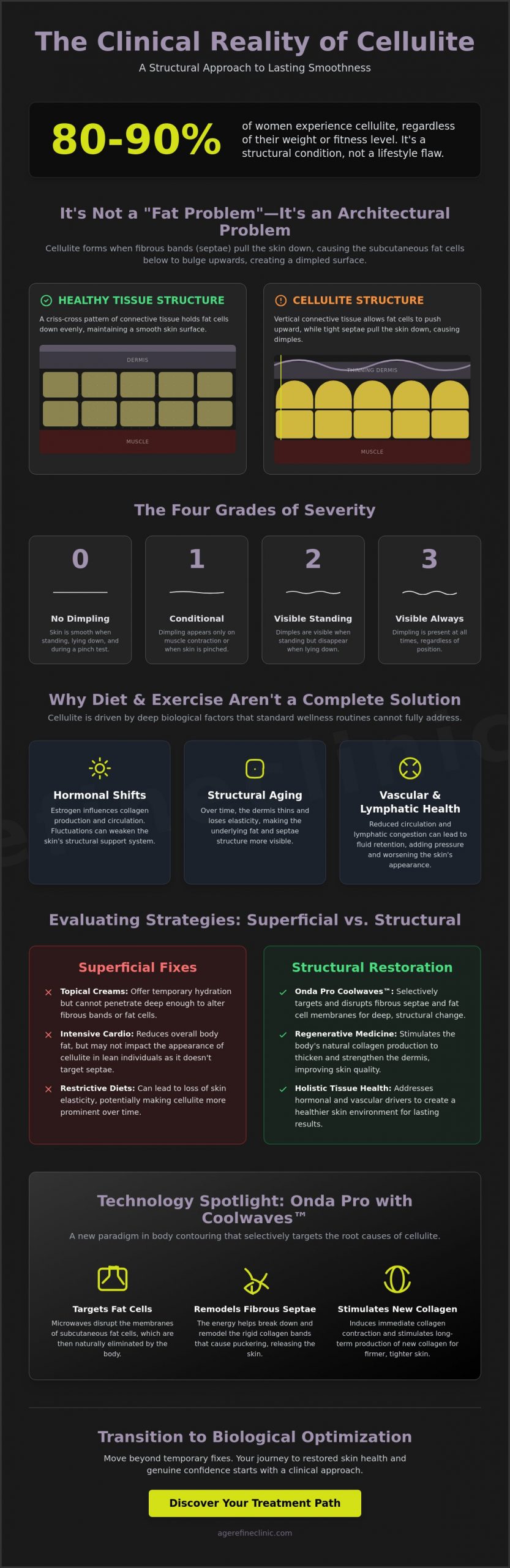
To visualize what’s happening beneath the surface, imagine the relationship between your skin and the underlying muscle. In women, the connective tissue patterns are often vertical, like pillars, whereas men typically have a criss-cross structure that holds fat in place more effectively. Septae are the tethering cords of the skin that pull the dermis downward. When these cords tighten or the surrounding fat cells expand, the skin surface takes on a puckered texture. When we discuss how to reduce cellulite on thighs, we are really talking about addressing these structural tethers and the health of the surrounding tissue environment.
The Four Grades of Severity
Clinical intervention is never a one-size-fits-all approach; it depends on your specific tissue grade. Identifying where you stand helps us tailor a restorative plan that addresses the root cause rather than just the symptoms.
- Grade 0: No visible dimpling when standing or lying down.
- Grade 1: Skin appears smooth while standing, but dimpling becomes apparent during the ‘pinch test’ or when muscles contract.
- Grade 2: Dimpling is visible while standing, but usually disappears when you lie down.
- Grade 3: Visible dimples are present regardless of position, often accompanied by areas of skin laxity or deeper structural depressions.
Viewing cellulite through a clinical lens removes the stigma often attached to it. It’s a natural biological occurrence that affects almost every woman, regardless of her dedication to wellness. By shifting our focus from “fixing a flaw” to “optimizing tissue health,” we create a path toward results that are both visible and sustainable. We invite you to view your journey as a partnership in biological restoration and long-term vitality.
The Biological Drivers: Why Cellulite Resists Diet and Exercise
Vitality is often mistaken for a mere lack of body fat, but true tissue health is far more nuanced. Many women discover that even at their peak fitness, the quest for how to reduce cellulite on thighs remains unfulfilled. This is because cellulite isn’t a “fat problem” that can be burned away through metabolic effort. It’s a structural arrangement of the dermis and connective tissue. Even lean individuals experience dimpling because the biological drivers are hormonal and structural, not just caloric.
Estrogen plays a pivotal role in the integrity of thigh tissue. It influences vascular health and the strength of the skin’s foundation. When estrogen levels fluctuate or decline, blood flow to the connective tissue can decrease, leading to lower collagen production. Simultaneously, dermal thinning occurs as we age. This makes the underlying structural irregularities much more visible to the naked eye. When the skin loses its density, it can no longer mask the natural variations in the subcutaneous layer.
Chronic inflammation and lymphatic congestion further complicate the landscape. When the lymphatic system is sluggish, fluid builds up between fat cells and connective tissue. This pressure distorts the skin’s surface and contributes to a heavy, uneven texture. Addressing these biological drivers requires more than a gym membership; it requires a sophisticated understanding of Dermatologist-recommended cellulite treatments that target the root cause. Understanding these structural tethers is the first step toward a personalized plan for biological restoration where we prioritize tissue health.
Fibrous Septae and the ‘Tethering’ Effect
Imagine your skin as a mattress. The septae are the internal springs that have become too short and rigid. These tightened bands pull down on the skin surface, creating the characteristic “quilted” look. Mechanical tension of this nature cannot be solved by calorie deficits alone. From a biological optimization perspective, we must focus on tissue flexibility and the release of these tethers. This is a critical component for anyone exploring how to reduce cellulite on thighs through professional, non-invasive means.
Collagen Degradation and Skin Laxity
The strength of your skin relies on Type I and Type III collagen. Over time, UV damage and lifestyle factors accelerate the degradation of these vital proteins. When collagen breaks down, the skin becomes lax and thin. This loss of structural support worsens the appearance of dimpling. Restoring dermal thickness is a prerequisite for smooth thighs. Without a dense, healthy dermis, any attempt to smooth the surface will be temporary at best. We focus on regenerative processes that rebuild this foundation from within.
Evaluating Reduction Strategies: From Home Care to Clinical Excellence
True skin health is a reflection of internal harmony. While the market is saturated with topical solutions, the journey of how to reduce cellulite on thighs often begins with a realization that the surface is merely a canvas. Home care rituals provide a sense of agency and support vascular health, but they aren’t equipped to rewrite the structural narrative of the tissue. Shifting your focus from maintenance to corrective procedures is a pivotal step in achieving genuine, lasting smoothness. It’s about moving from a philosophy of “covering up” to one of biological restoration.
The reality of the beauty industry is that surface treatments are only one piece of the puzzle. While products containing retinols and caffeine are popular, their effects are inherently limited by their inability to reach the deeper layers of the dermis. To achieve a meaningful change in texture, we must look at cellulite treatment options that address the architecture of the skin. This transition from at-home maintenance to medical-grade excellence allows for a more targeted approach to tissue health and structural integrity.
The Limitations of Superficial Remedies
Most over-the-counter creams rely on caffeine to temporarily constrict blood vessels or retinols to subtly increase skin density. These effects are often fleeting. They provide a “plumping” sensation that masks dimpling for a short period without addressing the tightened septae beneath. While lymphatic drainage through dry brushing or foam rolling can reduce localized swelling and improve circulation, these methods cannot remodel the collagen fibers that cause structural tethering. We view these as supportive daily habits. They are excellent for maintenance, but they aren’t long-term biological solutions for how to reduce cellulite on thighs.
Modern Non-Invasive Technologies
Innovation has moved us toward a “less is more” philosophy that prioritizes both efficacy and comfort. Energy-based treatments like Radiofrequency (RF) and Acoustic Wave Therapy (AWT) represent a significant leap in aesthetic medicine. These technologies deliver controlled energy into the deeper dermal layers to stimulate the production of new, healthy collagen. Unlike mechanical subcision, which physically cuts the connective bands, energy treatments focus on tissue remodeling and skin tightening. In Orange County, the demand for these “no-downtime” solutions is growing rapidly. Patients are increasingly seeking treatments that integrate into their active lifestyles while providing scientifically-backed results that look and feel natural.
Designing Your Treatment Path: A Framework for Lasting Results
Achieving a refined, smooth skin texture is a journey of clinical precision rather than chance. When you are exploring how to reduce cellulite on thighs, it’s essential to follow a structured framework that respects your unique biological profile. We don’t believe in temporary fixes; instead, we focus on a methodical progression that transitions your tissue from a state of congestion to one of biological optimization. This four-step framework ensures that every intervention is purposeful and aligned with your long-term wellness goals.
The initial phase of your journey involves identifying your primary driver. We must determine if your dimpling is caused by fat protrusion pushing through the connective tissue or if it’s primarily a result of dermal laxity and skin thinning. Once the driver is clear, we assess your cellulite grade and overall tissue health to set realistic expectations. From there, we combine energy-based reduction with regenerative support to remodel the skin’s architecture from the inside out. Finally, we establish a personalized maintenance protocol to protect your collagen gains and ensure your results remain resilient over time.
- Step 1: Distinguish between structural tethering and skin sag.
- Step 2: Map your specific cellulite grade (0–3) to determine treatment intensity.
- Step 3: Integrate advanced technologies with cellular-level support.
- Step 4: Protect your investment with targeted internal wellness habits.
Matching Treatment to Your Cellulite Grade
Early-stage prevention for Grade 1 cellulite focuses on maintaining the density of the dermis and supporting healthy microcirculation. For those with advanced Grade 2 or 3 dimpling, corrective strategies must be more robust, focusing on the release of fibrous tethers and significant collagen induction. A multi-modal approach that combines different energy frequencies and regenerative techniques is the gold standard for restorative care in Irvine. This comprehensive strategy ensures that we address the skin surface, the subcutaneous fat, and the connective septae simultaneously for a truly harmonious result.
The Importance of Internal Wellness
We view body contouring as a partnership in longevity, where your internal health provides the foundation for your external transformation. Hydration and Peptide Therapy are vital components of this process, as they provide the essential building blocks for the new collagen fibers we are stimulating. Additionally, IV Therapy plays a crucial role in flushing the metabolic byproducts that are released during the fat reduction process, keeping your system balanced and vibrant. By supporting your body’s natural regenerative pathways, we enhance the efficacy of every clinical session. If you’re ready to move beyond surface-level changes, schedule a consultation for biological restoration to begin your personalized path toward lasting smoothness.
The AgeRefine Approach: Restorative Body Contouring in Irvine
Beauty is a reflection of cellular vitality and internal balance. At AgeRefine, we’ve moved past the era of aggressive, superficial changes that offer only fleeting results. Our approach to how to reduce cellulite on thighs centers on biological biostimulation. By utilizing the body’s natural regenerative pathways, we achieve results that feel authentic and look entirely natural. It’s a “less is more” philosophy rooted in the latest medical advancements, where we prioritize the health of your tissue as much as its appearance.
Aesthetics are a partnership between innovative technology and your body’s unique ability to heal. We don’t just treat the surface; we optimize the underlying architecture. This methodical process ensures that every session contributes to a long-term journey of wellness and confidence. By focusing on the root causes of skin dimpling, we provide a sophisticated alternative to traditional, more invasive methods.
Onda Pro: Precision Microwave Technology
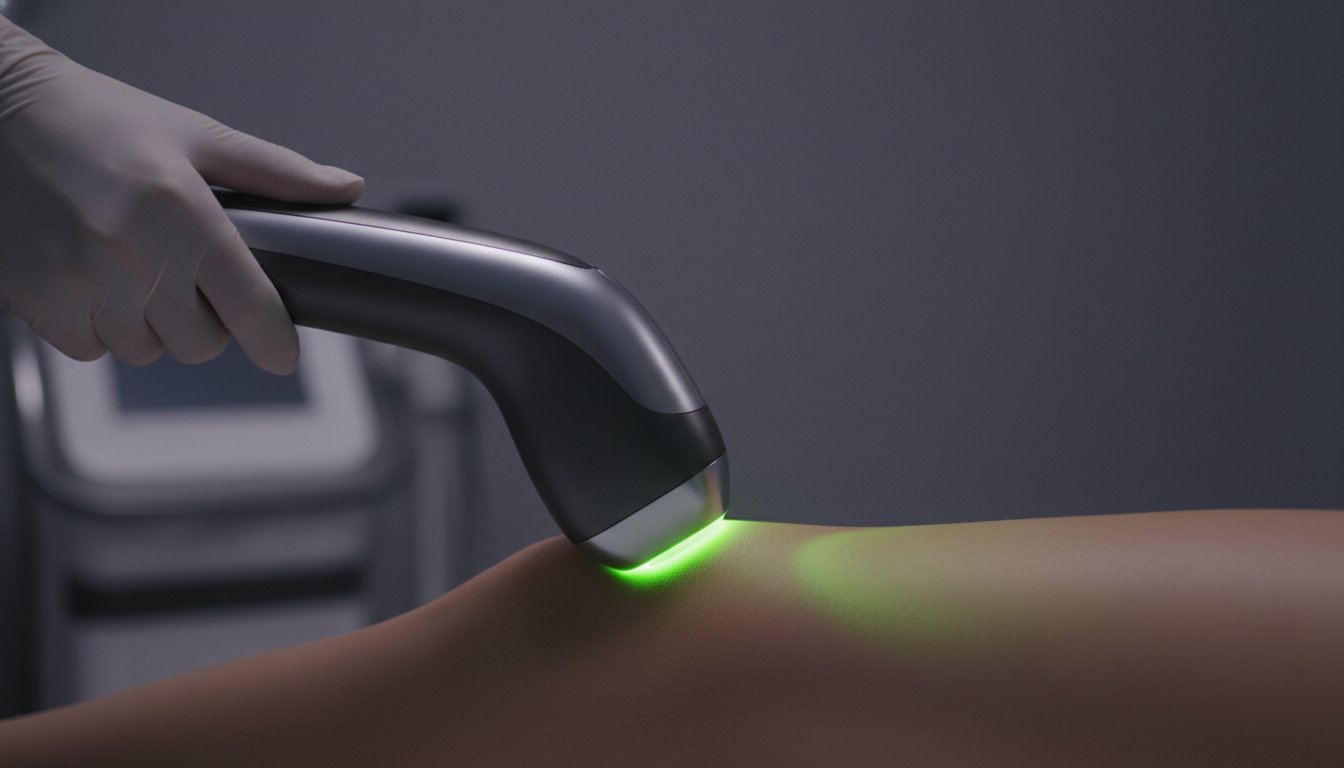
Onda Pro represents a paradigm shift in body contouring and tissue smoothing. Traditional radiofrequency treatments often struggle with depth; they lose significant energy at the skin’s surface, which can lead to discomfort and limited results in the deeper fat layers. In contrast, Onda Pro utilizes 2.45 GHz Coolwaves™. These microwaves are specifically tuned to bypass the water in the dermis, delivering 80% of their energy directly to the subcutaneous fat and the fibrous septae. This precision allows us to target the structural tethers of cellulite with clinical accuracy while keeping the skin surface cool and protected. It’s a virtually painless advantage that makes it the preferred choice for the sensitive tissue of the inner and outer thighs.
We often pair this microwave technology with XERF for comprehensive skin revitalization and texture refinement. While Onda Pro addresses the deeper architecture and fat protrusion, XERF focuses on revitalizing the dermal layer. This synergy ensures that we aren’t just reducing volume; we’re restoring the skin’s elasticity and density for a smoother, firmer appearance that lasts.
Regenerative Support: Peptides and Exosomes
True restoration requires internal support to sustain clinical gains. We integrate Exosome Injections and Peptide Therapy to accelerate the biological response and enhance skin tightening post-treatment. Exosomes act as sophisticated cellular messengers that signal your tissue to produce high-quality collagen and elastin in the weeks following your procedure. Simultaneously, peptide injections provide systemic support for tissue repair and metabolic health. This multi-layered strategy ensures your results are not just visible on the surface, but deeply rooted in optimized biological health. We prioritize your long-term wellness journey, ensuring your confidence is built on a foundation of genuine vitality.
Schedule your aesthetic consultation in Irvine at AgeRefine Clinic to begin your personalized path toward lasting skin smoothness and biological restoration.
Embrace a Future of Skin Smoothness and Vitality
True confidence begins with the knowledge that your aesthetic journey is supported by medical science. You’ve learned that dimpling is a structural reality of the skin’s architecture, involving fibrous tethers and collagen health that diet alone cannot rewrite. By shifting your focus toward professional, energy-based treatments and regenerative support, you’re choosing a path of biological optimization. Understanding how to reduce cellulite on thighs is no longer a matter of guesswork; it’s a methodical process of restoration and tissue health.
Our boutique clinic in Irvine, CA, offers a sanctuary where clinical authority meets empathetic care. Led by a Board Certified Nurse Practitioner, we specialize in ONDA Pro and XERF technologies to deliver natural-looking, long-term results. We invite you into a partnership focused on your longevity and internal well-being. It’s time to reclaim your confidence with a plan tailored specifically to your unique biological profile. You deserve to feel empowered in your skin.
Book Your Personalized Cellulite Analysis at AgeRefine Clinic and take the first step toward lasting skin smoothness. We’re here to guide you through every stage of your transformation.
Frequently Asked Questions
Can you actually get rid of cellulite on your thighs permanently?
Cellulite reduction is a journey of long-term management rather than a one-time permanent fix. While advanced clinical technologies can significantly remodel the tissue architecture for years, your body continues its natural aging process. Maintaining a healthy lifestyle alongside periodic maintenance sessions ensures that your results remain resilient. We focus on biological restoration to provide the most durable and natural-looking outcomes possible for your skin.
How many sessions of Onda Pro are needed for visible thigh smoothing?
Most patients require between 4 and 6 sessions of Onda Pro to achieve optimal results. These appointments are typically spaced several weeks apart to allow the body’s lymphatic system to process treated fat cells and build new collagen. You’ll likely begin to see a visible improvement in skin texture after the second or third visit. Your personalized plan will depend on your initial cellulite grade and tissue health.
Does losing weight make thigh cellulite look better or worse?
Weight loss can have a varied impact on how to reduce cellulite on thighs. While reducing the volume of fat cells can decrease the pressure against the skin, significant weight loss sometimes leads to increased skin laxity. When the skin becomes loose, the underlying structural tethers may actually become more prominent. We recommend combining volume reduction with skin-tightening treatments like XERF to ensure the skin remains firm and smooth.
What is the difference between fat reduction and cellulite reduction?
Fat reduction and cellulite reduction target different layers of the body’s anatomy. Traditional fat reduction focuses solely on decreasing the size or number of adipose cells to change your silhouette. Cellulite reduction, however, must address the fibrous septae that pull the skin down and the dermal thinning that makes dimples visible. Effective clinical protocols often treat both components simultaneously to restore a harmonious and even surface.
Are cellulite treatments painful, and is there any downtime?
Modern clinical treatments like Onda Pro are designed for patient comfort and require no downtime. The integrated cooling system ensures the skin surface remains protected while energy is delivered to deeper layers, making the experience virtually painless. You can return to your daily activities immediately following your appointment. This “no-downtime” approach is ideal for those seeking professional results without the recovery period associated with more invasive procedures.
Can exosome therapy help with skin texture on the legs?
Exosome therapy is a highly effective tool for enhancing skin texture and accelerating the regenerative process. These cellular messengers signal your body to increase the production of high-quality collagen and elastin, which are essential for firm, resilient skin. When integrated into a broader treatment plan, exosomes help refine the skin’s surface and improve the overall biological health of the leg tissue. It’s a key component of our restorative philosophy.
Is thigh cellulite caused by toxins in the body?
Cellulite is a structural skin condition rather than a result of toxins in your system. While a healthy metabolism and efficient lymphatic drainage support overall tissue health, the dimpled appearance is caused by connective tissue bands and fat distribution. Reducing systemic inflammation through IV therapy can improve the environment of your skin cells, but professional intervention is necessary to address the physical tethering that defines cellulite.
What is the best age to start professional cellulite treatments?
There is no single “best” age to begin, but early intervention often leads to more resilient results. Many women start professional treatments in their late 20s or early 30s when they first notice changes in skin density. Starting early allows us to focus on collagen preservation and prevention. However, our restorative technologies are effective for women at any stage of life who are looking for how to reduce cellulite on thighs.
Leave a Reply